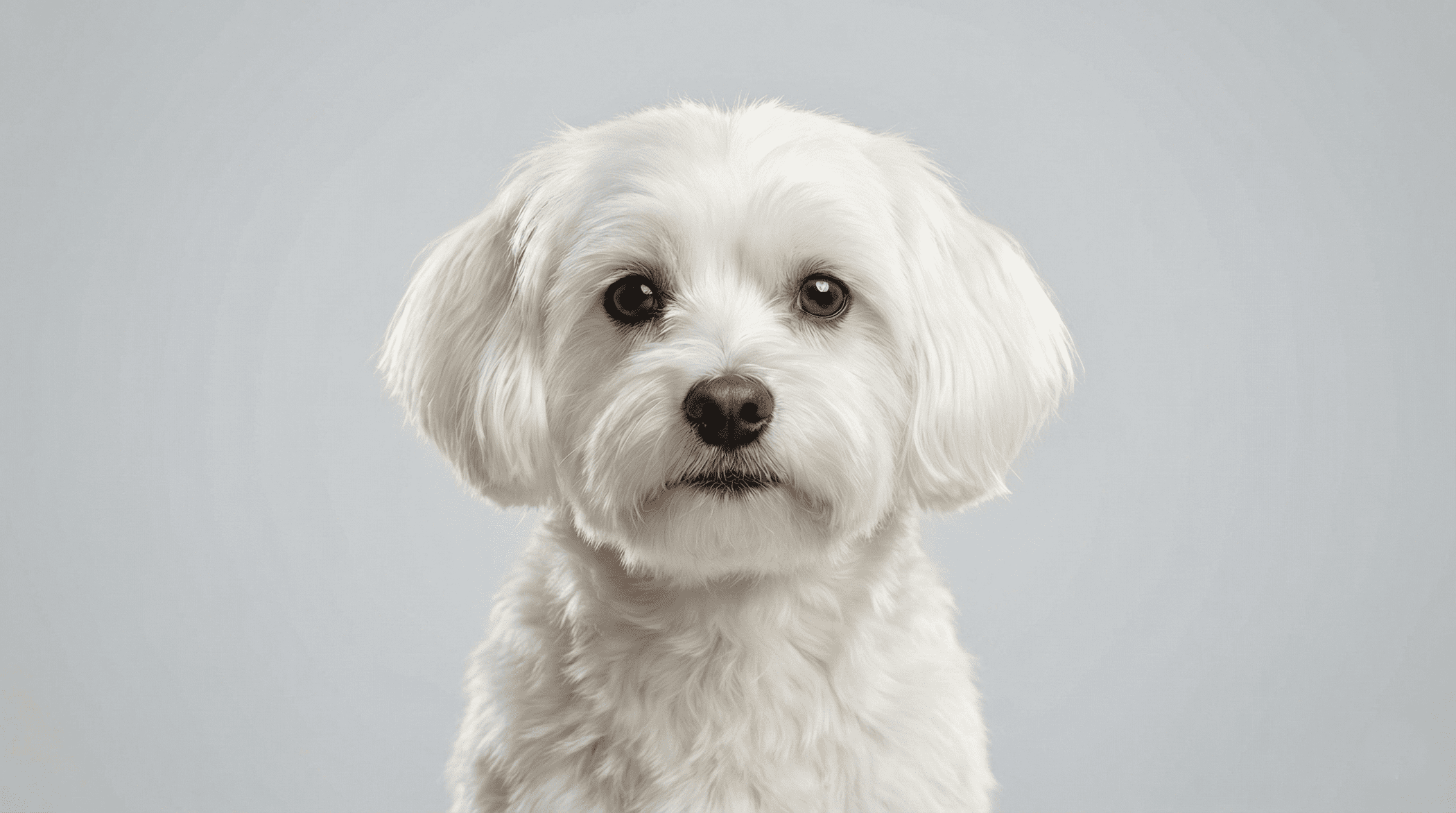
“Maltese Cross” is a category, not a breed
A Maltese Cross is a Maltese crossed with another small breed — most often a Shih Tzu, a Toy or Miniature Poodle, a Chihuahua or a Pomeranian. The label tells you one half of the dog and nothing about the other, which is why two dogs sold under the same description can differ substantially in coat, muzzle shape, temperament and adult weight.
Before you commit, ask what the other parent was, and ask to see it. That answer determines whether you are buying a dog with a Shih Tzu’s flatter face and its heat limitations, a Poodle’s curl and its grooming bill, or a Chihuahua’s reserve with strangers. It also determines which second set of hereditary conditions applies. Everything below covers the Maltese half, which is the only half you can rely on.
Use a harness, not a collar — and why that is not a preference
Tracheal collapse is the defining structural problem of toy breeds, the Maltese included. The cartilage rings supporting the windpipe weaken and flatten, and the result is a characteristic dry, honking cough that worsens with excitement, heat and pressure on the throat.
Lead pressure applied directly to a small dog’s neck is a recognised contributor. A well-fitted harness distributes that force across the chest instead, and for a three-to-five kilogram dog this is the single cheapest, highest-impact decision an owner makes. Fit it from the first walk rather than switching after a cough appears — tracheal damage does not reverse.
The rest of the Maltese health picture
Patellar luxation
A dislocating kneecap, graded I to IV, is common across toy breeds. Grades II and above often need surgical correction; grade I is usually managed with lean body condition and controlled exercise. Discourage jumping down from lounges and beds — a small ramp or step is not indulgent, it is orthopaedic sense on a four-kilogram frame.
Dental disease
Periodontal disease is close to inevitable in an unmanaged toy jaw, because a full set of teeth is crowded into a very small space. Daily brushing from puppyhood is the highest-value habit available for this dog, and retained baby teeth around five to seven months should be checked rather than left.
White dog shaker syndrome
Also called generalised tremor syndrome, this neurological condition is over-represented in small white breeds and the Maltese specifically. It produces whole-body tremors, unsteadiness and rapid eye movements, typically first appearing between six months and three years and often triggered by stress or excitement. It looks alarming and it responds well to corticosteroid treatment, usually within days. Diagnosis is by exclusion — low blood sugar, toxin exposure and epilepsy are ruled out first — so a tremoring dog needs a same-day veterinary assessment rather than a wait-and-see.
Puppy hypoglycaemia
Very small puppies have almost no glycogen reserve and can crash into low blood sugar if a meal is missed. In the first months, feed small amounts frequently rather than twice a day, and treat lethargy, wobbliness or unresponsiveness in a toy puppy as urgent.
The coat, and one honest correction
The Maltese carries a long, silky single coat with no undercoat. It sheds very little, and it mats for exactly that reason — hair that would otherwise drop out stays put and tangles. Brush daily and expect a professional groom every six to eight weeks.
This coat is frequently marketed as hypoallergenic. It is not, and no dog is. The allergens people react to are in dander, saliva and urine, not hair. A low-shedding coat distributes less of that material around a home, which is why some allergy sufferers tolerate these dogs better — but that is a difference of degree, not a guarantee. If allergies are the reason you are choosing this dog, spend time with the actual puppy before committing.
Tear staining beneath the eyes is near-universal on a white coat and is managed by daily wiping, not solved. If it appears suddenly or the eye looks sore, that is a veterinary matter rather than a cosmetic one.
Living with a very small dog in Australia
At three to five kilograms this is a genuinely fragile animal. The most common injuries are entirely preventable: jumps from furniture and arms, being stepped on, and rough handling by well-meaning children. Supervise, and teach children to sit on the floor to interact rather than to pick the dog up.
In Victoria, microchipping and council registration are required from three months of age under the Domestic Animals Act 1994, renewing annually on 10 April. Desexed registration across the Victorian councils in our fee survey ranged from about $19.50 to $93.30 a year.
Two Australian notes: a white, thinly-coated dog burns, so shade and timing matter on a clipped coat in summer; and a dog this small is close to hot pavement, so test the surface with the back of your hand before walking.
Registration is set by your local council. In Victoria, registering a desexed Maltese Cross costs between $19.50 and $93.30 a year depending on where you live, and roughly three times that if the dog is not desexed. See every Victorian council’s 2026–27 fee, or compare registration costs in every state.
Related breeds
The Maltese Cross is a small, hybrid breed originating from Malta. Classified as a designer breed, these dogs typically weigh between 3 and 5 kg and have a lifespan ranging from 12 to 15 years. Known for their long, silky coats, Maltese Cross dogs are low-shedding and have a low shedding level, necessitating weekly home grooming. Their temperament is marked by high sociability, moderate energy levels, and a trainability score of 4 out of 5. Daily exercise should be around 30 minutes, and they exhibit high paediatric and interspecies compatibility. However, Maltese Cross dogs are prone to specific health concerns, including patellar luxation, dental disease, and tracheal collapse. Health complexity is low, at 1.4. Their moderate separation anxiety and obesity risk should be factored into their care regimen. The breed enjoys moderate popularity in Australia, ranking in the top 30 and holds an estimated intelligence rank of #59.
Due to their health complexity, regular veterinary check-ups are imperative for early detection of patellar luxation, dental disease, and tracheal collapse. Standard veterinary protocols should include annual health screenings and dental check-ups to maintain overall health.
Daily care for a Maltese Cross involves 30 minutes of moderate exercise and weekly grooming for coat maintenance. A balanced diet is essential to manage obesity risk. Regular socialization is necessary to mitigate separation anxiety. A consistent training regimen will leverage their high trainability score.