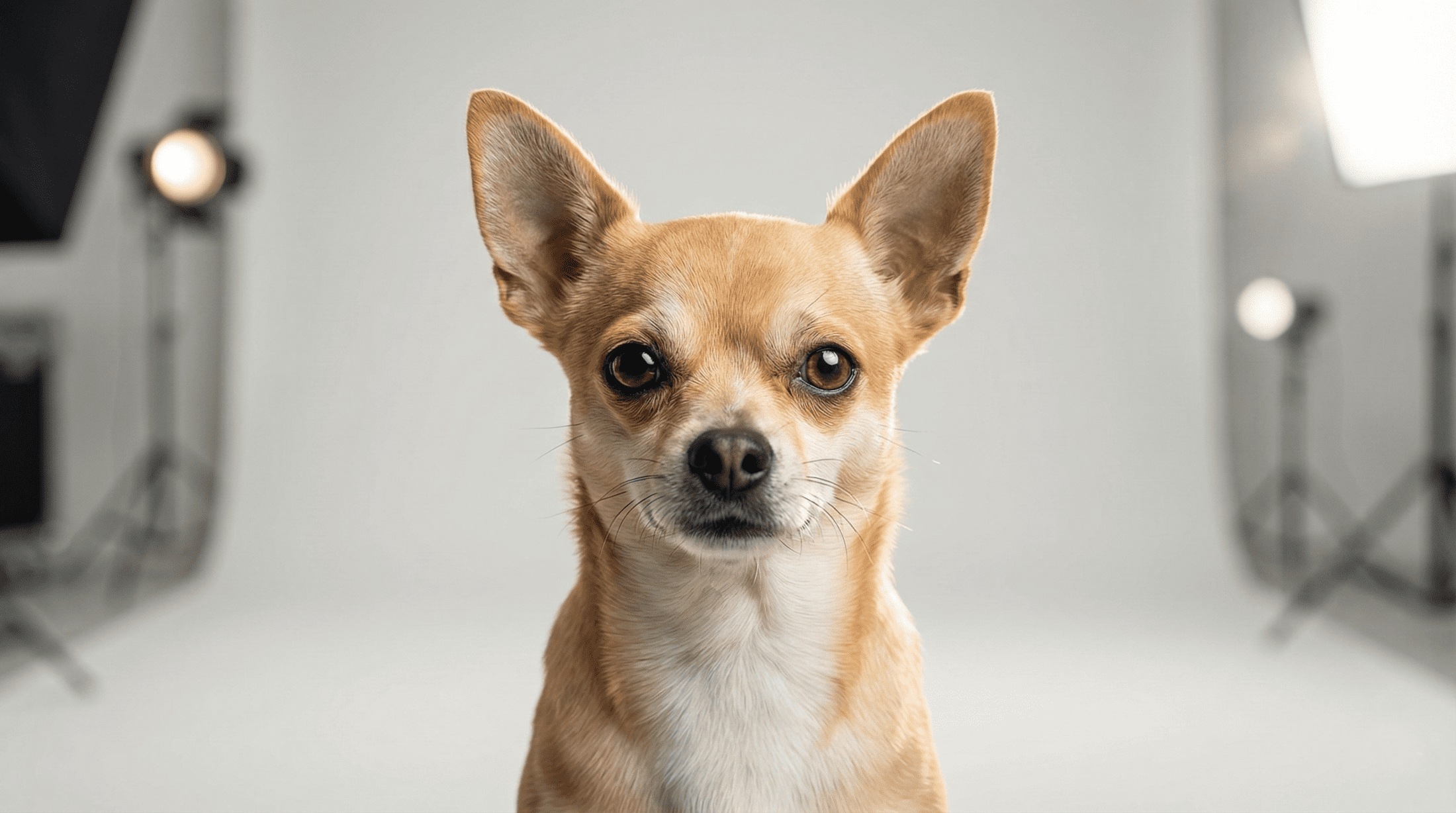
The smallest breed, and one of the longest-lived
The Chihuahua is the smallest dog breed in the world, from Mexico, and at 1.5 to 3 kilograms it sits at the extreme end of what a dog can be. Our specification table shows a lifespan of 12 to 20 years — the longest on our register — which makes this a commitment closer to two decades than one.
Temperamentally it is bold, devoted, alert and genuinely courageous, with no apparent awareness of its size. It bonds intensely, often to one person. It is rated only moderate with children, and that rating is doing honest work: a dog this small is easily injured by ordinary childhood handling, and a Chihuahua that has learned that snapping is the only way to stop being picked up is a predictable outcome rather than a character flaw.
The behaviour problem that is really a training problem
Chihuahuas have a reputation for being snappy, nervous and reactive. Much of that reputation is manufactured by owners rather than by genetics.
Very small dogs are routinely permitted behaviour that would never be tolerated in a large one. They are picked up rather than asked to move, carried past things they find frightening rather than allowed to investigate, and rarely taken to training. A Chihuahua that growls is called feisty; a Rottweiler that growls gets professional help.
The consequence is a dog that has never learned to cope. The fix is not complicated: train a Chihuahua exactly as you would a 30-kilogram dog. Socialise it broadly and carefully in the first four months, let it walk on its own feet, teach it to be handled and examined, and give it a way to say no other than its teeth. Done properly, this is a confident, funny, delightful little dog.
Health: fragility is the theme
Physical injury
The most common serious injuries in Chihuahuas are entirely preventable: falls from arms and furniture, being stepped on, being sat on, and being injured by larger dogs. Supervise around big dogs constantly — a large dog does not need to be aggressive to cause fatal injury to a 2-kilogram animal through play. Teach children to sit on the floor to interact rather than to pick the dog up.
Tracheal collapse — use a harness
The cartilage rings supporting the windpipe weaken and flatten, producing a characteristic dry, honking cough that worsens with excitement, heat and pressure on the throat. Lead pressure on the neck of a very small dog is a recognised contributor. Use a well-fitted harness from the first walk — tracheal damage does not reverse, and this costs nothing.
Patellar luxation
A dislocating kneecap, graded I to IV, very common in toy breeds. Grades II and above frequently need surgery; grade I is managed with lean condition and controlled exercise. Discourage jumping down from furniture and provide steps or a ramp.
Dental disease
This is the most under-appreciated health issue in the breed. A full complement of teeth is crowded into a jaw the size of a thumb, and periodontal disease is close to universal without active management. Untreated it causes pain, tooth loss and systemic infection.
Daily toothbrushing from puppyhood does more for a Chihuahua’s long-term health and comfort than anything else you will do. Retained baby teeth around five to seven months are common in the breed and should be checked rather than left, because they trap debris against the adult tooth.
Molera
Many Chihuahuas are born with a molera — a soft spot where the skull bones have not fully fused, similar to a human infant’s fontanelle. It is normal and accepted in the breed standard, and in most dogs it shrinks with age. It does mean the skull has a vulnerable point, so handle the head gently and be careful around children.
Separately, hydrocephalus occurs in the breed. A domed skull with a large open molera, an unusually large head, unsteadiness, disorientation or seizures in a puppy warrants prompt veterinary assessment.
Hypoglycaemia
A puppy this small carries almost no glycogen reserve and can crash into low blood sugar if a meal is missed. Feed small amounts frequently through the first months, and treat wobbliness, lethargy or unresponsiveness as urgent.
Heart disease
Degenerative mitral valve disease is common in small breeds. From about six years, ask your vet to listen to the heart at every annual visit rather than only when something seems wrong.
Exercise, coat and Australian conditions
Twenty minutes of daily activity meets the physical requirement, but the walk matters for more than exercise — a Chihuahua that never leaves the house becomes reactive and noisy. Let it walk rather than carrying it.
Both smooth and long coats shed moderately. Smooths need a weekly rubber curry; long coats need brushing several times a week with attention to the ear and leg feathering.
Australian conditions need thought at both ends. A dog with this little body mass loses heat rapidly and genuinely needs a coat on cold mornings — the shivering is real, not theatrical. In summer, a 2-kilogram dog walks very close to hot ground, so test the pavement with the back of your hand, and provide shade and water. Birds of prey are a genuine if uncommon risk for very small dogs left unattended in open yards in parts of Australia.
Ownership in Australia
In Victoria, microchipping and council registration are required from three months of age under the Domestic Animals Act 1994, renewing annually on 10 April. Desexed registration across the Victorian councils in our fee survey ranged from about $19.50 to $93.30 a year.
Over a potential twenty-year life, the two recurring costs that define this breed are dental care and the consequences of skipping it. Start brushing on day one.
Registration is set by your local council. In Victoria, registering a desexed Chihuahua costs between $19.50 and $93.30 a year depending on where you live, and roughly three times that if the dog is not desexed. See every Victorian council’s 2026–27 fee, or compare registration costs in every state.
Related breeds
The Chihuahua, a purebred from Mexico, is classified within the Toy group. With a health complexity score of 1.6, it has a lifespan ranging from 12 to 20 years. Weighing between 1.5 to 3 kg, this breed features both smooth and long coat varieties, necessitating different grooming protocols: weekly brushing for smooth coats, and bi-weekly for long coats. Chihuahuas are not hypoallergenic and exhibit moderate shedding. Their temperament includes traits such as liveliness, devotion, alertness, quickness, and courage, scoring 3 in trainability. Despite their moderate energy level, they require only 20 minutes of daily exercise. paediatric and interspecies compatibility are both moderate. Prone to high separation anxiety and moderate obesity risk, key health issues include patellar luxation, tracheal collapse, dental problems, heart disease, and hypoglycemia. In Australia, this breed ranks within the top 30 in popularity and is estimated to incur an annual veterinary cost of $1008.
Monitoring for hereditary conditions such as patellar luxation, tracheal collapse, dental problems, heart disease, and hypoglycemia is critical. Regular check-ups, dental care, and maintaining a balanced diet are essential parts of a preventative healthcare regimen for Chihuahuas.
Chihuahuas require 20 minutes of daily exercise, typically in the form of short walks or indoor play. Smooth coat varieties need weekly brushing, while long coat types require bi-weekly brushing. Both coat types necessitate regular maintenance to prevent matting and manage shedding.