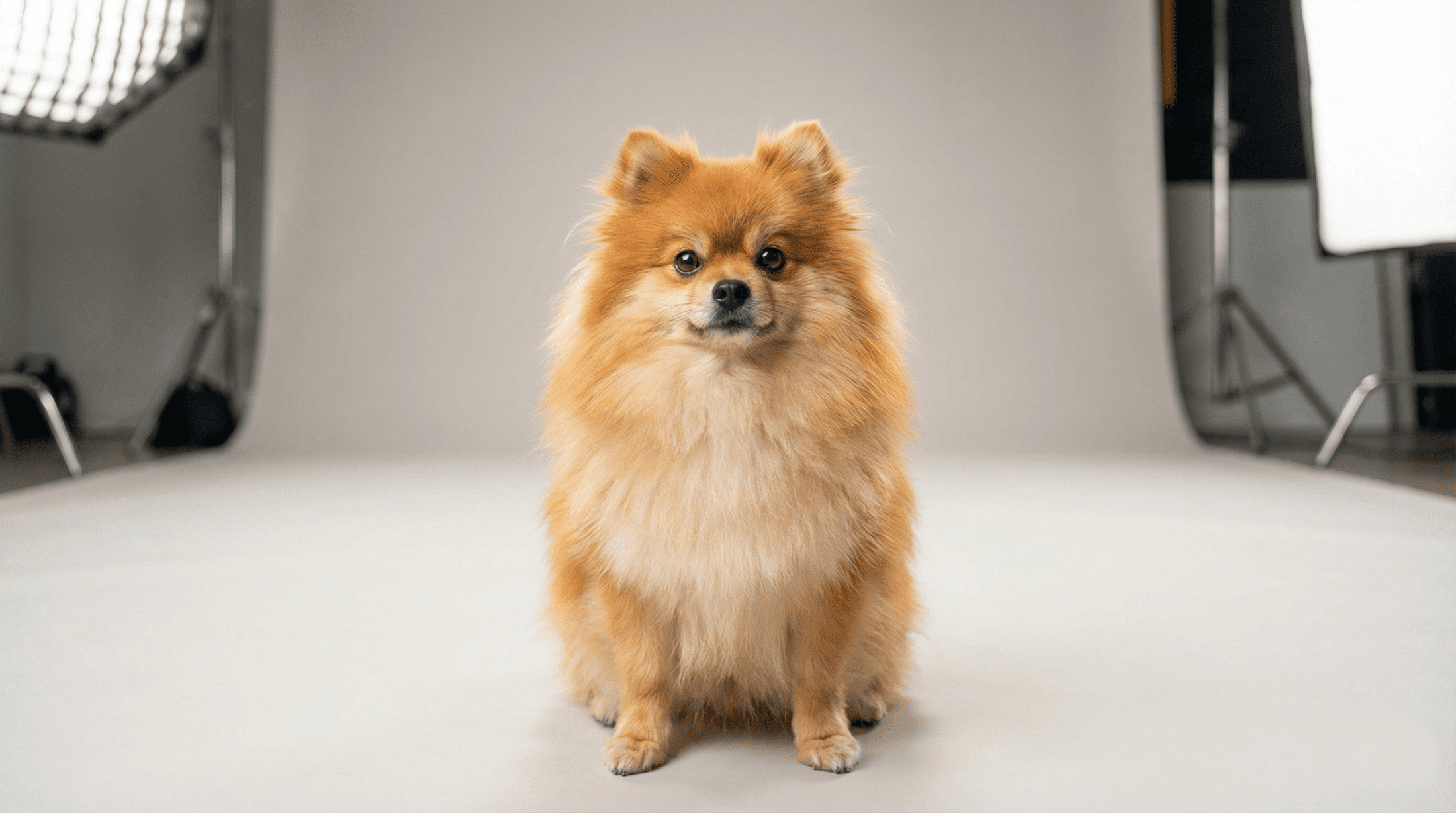
Pomeranian at a glance
| Lifespan |
12 to 16 years |
| Adult weight |
1.4 to 3.2 kg |
| Size class |
Toy |
| Main health risks |
Patellar luxation, tracheal collapse, dental disease |
How long do Pomeranians live?
Most live 12 to 16 years, a long life for a dog. Dental disease and kneecap problems are the most common reasons for vet visits, so daily tooth brushing and keeping the dog lean help it reach the upper end of that range.
How big do Pomeranians get?
Small: an adult Pomeranian usually weighs 1.4 to 3.2 kg. Most reach their adult size by about a year old. Their coat makes them look bigger than they are, and their small size makes them easy to injure, which is worth knowing in a home with young children.
A spitz dog scaled down — and it never forgot
The Pomeranian descends from the large German Spitz sled and herding dogs of northern Europe, miniaturised over the nineteenth century into a 1.4 to 3.2 kilogram companion. What did not miniaturise is the temperament. This is a confident, alert, vocal spitz in a very small body, with a top-25 intelligence ranking and a genuine streak of independence — the trainability score of 3 reflects opinion, not incapacity.
The most common complaint about the breed is barking, and it is worth understanding rather than resenting: spitz breeds were watchdogs, and announcing arrivals is what they were kept for. It responds well to early work on a settle cue and to not rewarding the behaviour with attention. It responds badly to being ignored for three years and then addressed.
The second most common issue is that very small dogs are frequently allowed behaviour that would be unacceptable in a large one. A Pomeranian that guards laps, snaps at hands or cannot be handled is not being “feisty” — it has simply never been asked. Train it as you would a 30-kilogram dog and you will have a delightful animal for sixteen years.
Use a harness, never a collar
Tracheal collapse is a structural problem across toy breeds and the Pomeranian is firmly among the affected. The cartilage rings supporting the windpipe weaken and flatten, producing a dry, honking cough that worsens with excitement, heat and any pressure on the throat.
Lead pressure applied directly to the neck of a 2-kilogram dog is a recognised contributor. A well-fitted harness spreads that load across the chest. Do this from the first walk — tracheal damage is not reversible, and this is the cheapest high-impact decision available to a Pomeranian owner.
Health
Alopecia X
The condition most associated with this breed, sometimes called black skin disease or, colloquially, “post-clipping alopecia”. Coat is lost symmetrically from the trunk, thighs and tail while the head and legs keep their hair, and the exposed skin often darkens. It is a hair-cycle disorder, it is cosmetic rather than painful, and it is not fully understood.
The practical implication is specific and important: do not shave a Pomeranian. Clipping a double coat to the skin can trigger or worsen the condition, and the coat may never grow back properly. If a groomer suggests a “lion cut” or a summer shave for heat, decline — a double coat insulates against heat as well as cold, and removing it makes the dog hotter, not cooler, while risking permanent coat loss.
Similar-looking hair loss can also indicate hypothyroidism or Cushing’s disease, both treatable, so symmetrical coat loss deserves a proper veterinary work-up rather than an assumption.
Mitral valve disease
Degenerative heart-valve disease is common in small breeds and the Pomeranian is affected. It is usually silent at first, detected as a murmur on routine examination, and progresses over years. From about six years of age, ask your vet to listen to the heart at every annual visit rather than only when something seems wrong. A murmur found early is a monitoring plan; a murmur found at the point of coughing and exercise intolerance is a management problem.
Patellar luxation
A dislocating kneecap, graded I to IV. Grades II and above frequently require surgery; grade I is generally managed with lean condition and controlled exercise. Discourage jumping down from furniture — a ramp or steps for a 2-kilogram dog is sensible orthopaedics, not indulgence.
Dental disease
Periodontal disease is close to universal in unmanaged toy jaws. Daily toothbrushing from puppyhood is the highest-value habit available, and retained baby teeth around five to seven months should be checked rather than left in place.
Puppy hypoglycaemia
A puppy this small carries almost no glycogen reserve. Feed small amounts frequently in the first months, and treat wobbliness, lethargy or unresponsiveness as urgent.
Coat and Australian conditions
The Pomeranian carries a true double coat — a dense insulating undercoat beneath a long, standing guard coat — and sheds moderately year-round with heavier seasonal moults. Brush two or three times a week with a pin brush and undercoat rake, and daily during a moult. Regular grooming every six to eight weeks keeps it manageable, but ask for tidying rather than clipping.
Australian summers need thought for a northern-climate coat on a very small dog. Walk early or late, provide deep shade and constant water, and resist the instinct to shave for cooling — brushing the undercoat out thoroughly achieves what shaving appears to promise, without the risk to the coat. And because a 2-kilogram dog walks very close to hot ground, test the pavement with the back of your hand.
Ownership in Australia
In Victoria, microchipping and council registration are required from three months of age under the Domestic Animals Act 1994, renewing annually on 10 April. Desexed registration across the Victorian councils in our fee survey ranged from about $19.50 to $93.30 a year.
One safety note that matters for a dog under three kilograms: supervise around larger dogs and around children, and be aware that birds of prey are a genuine, if uncommon, risk for very small dogs left unattended in open yards in parts of Australia.
Registration is set by your local council. In Victoria, registering a desexed Pomeranian costs between $19.50 and $93.30 a year depending on where you live, and roughly three times that if the dog is not desexed. See every Victorian council’s 2026–27 fee, or compare registration costs in every state.
Related breeds
The Pomeranian, originating from Germany, is a small purebred member of the Toys group. With a weight range of 1.4 to 3.2 kg and a lifespan of 12 to 16 years, this breed is characterized by its double coat and long fur that requires weekly brushing. Pomeranians have a moderate shedding level and are not hypoallergenic. A lively, friendly, and sometimes stubborn temperament, combined with an intelligence ranking of 23, makes them moderately trainable. They possess a moderate energy level, necessitating approximately 30 minutes of daily exercise. Pomeranians are very good with children and moderate sociability with other pets. Veterinary costs, particularly for conditions like Patellar Luxation, Tracheal Collapse, Dental Disease, Mitral Valve Disease, and Alopecia X, average $948 annually. Owners should also consider setting aside a contingency fund of $1200 for unexpected medical expenses. Australia's top 30 popularity ranking for this breed underscores its widespread appeal.
Pomeranians are prone to inherited conditions such as Patellar Luxation, Tracheal Collapse, Dental Disease, Mitral Valve Disease, and Alopecia X. Regular veterinary checkups and early detection are crucial for effective management of these conditions.
Pomeranians require daily exercise of approximately 30 minutes and weekly coat maintenance protocols. Due to their moderate shedding, frequent grooming during shedding seasons is essential. Providing a balanced diet and regular checkups help maintain their overall health.