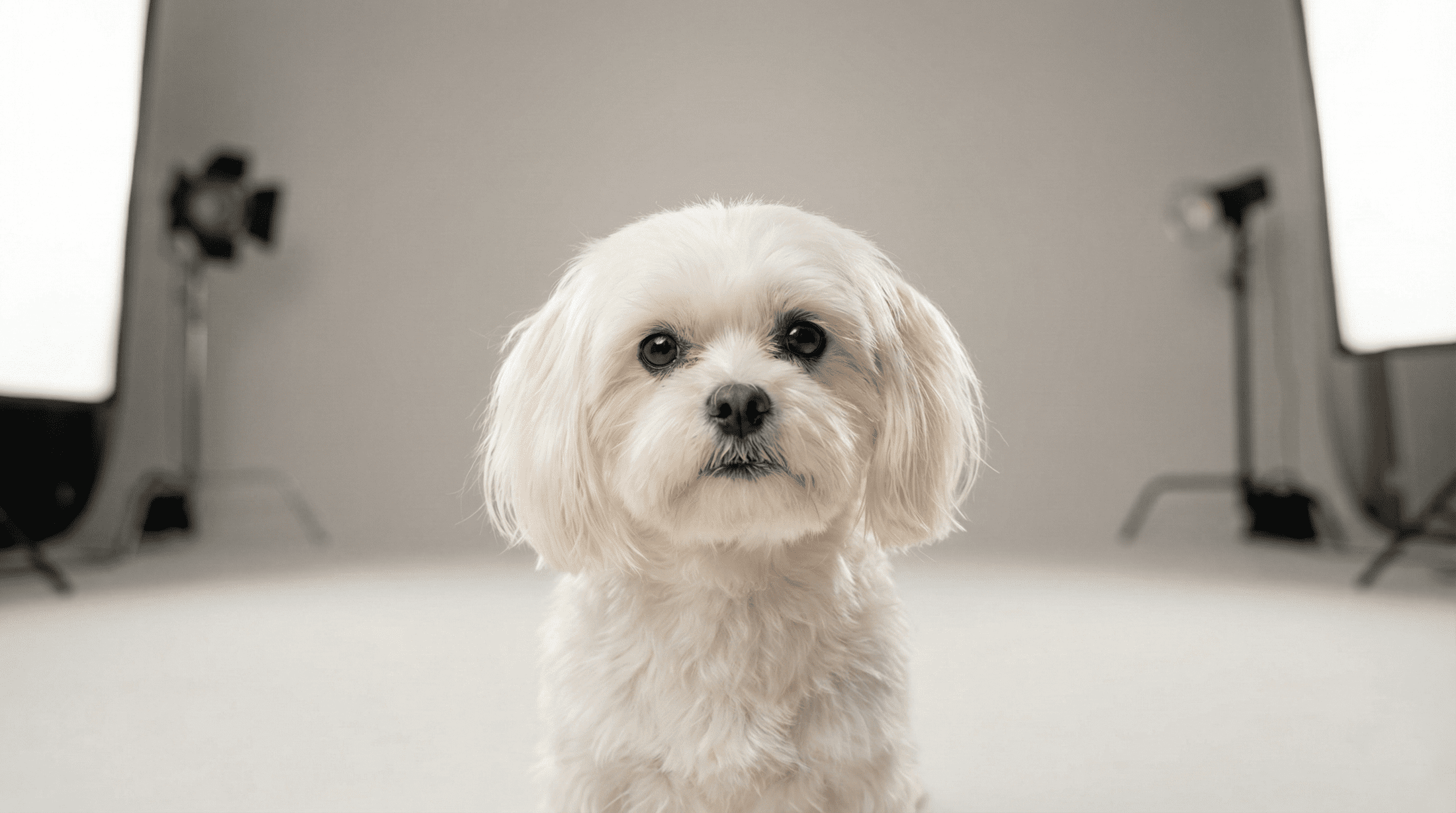
A Maltese Shih Tzu is cheap to feed but needs regular professional grooming, about every six weeks, which is one of the biggest ongoing costs over a 12 to 15 year life. Dental disease is the most common health cost in small breeds like this one, so budget for regular dental care and possibly cleans under anaesthetic. Budget about $850 a year for vet costs and set aside about $950 a year for unexpected bills.
// IS THIS BREED RIGHT FOR YOU?
ThinkPets ratings are our editorial judgement from the breed's size, energy, trainability, temperament and care needs. They are not measured outcomes or probabilities. How we rate
Apartment Living
Excellent
Families w/ Kids
Excellent
First-Time Owners
Excellent
Active Lifestyle
Fair
Interactive Suitability Assessment
Answer these questions to calculate your personal compatibility score with Maltese Shih Tzus.
How much time can you dedicate to exercise daily?
What size is your yard/living space?
Hours the dog will be alone daily?
Your Compatibility
—%
Select options to calculate your compatibility.
// BREED FACTS
Grooming
Coat Type
Long, silky single coat; straight or slightly wavy
What is the life expectancy of a Maltese Shih Tzu?
Most live 12 to 15 years. Dental disease is the most common health problem in small dogs like this, so regular dental care is one of the best ways to keep one healthy for longer.
How much does a Maltese Shih Tzu cost?
Budget about $2,500 to buy a puppy and set up in the first year, then about $1,862 a year for food, grooming and routine vet care. Over a 12-year life that comes to roughly $28,292 in our standard estimate. Breeder prices vary widely, and a serious health problem can push the total well beyond this. The full breakdown is in the cost section below.
What a Maltese Shih Tzu actually is
The MalteseShih Tzu — usually shortened to Malshi — is a first-generation cross between two toy companion breeds: the Maltese and the Shih Tzu. It is not a breed. Dogs Australia (ANKC) does not recognise it, which means there is no breed standard, no pedigree register, and no conformation benchmark a breeder can be measured against. Every Malshi is an individual outcome of two parent lines, and the practical consequence is variability. Coat texture, muzzle length and adult weight can differ noticeably between littermates from the same pairing.
That variability is the most useful thing to understand before you buy one. A Malshi that inherits the Maltese muzzle is a materially different dog — in heat tolerance and airway terms — from one that inherits the Shih Tzu’s flatter face. Ask to see both parents in person, not just the mother, and look specifically at the sire’s muzzle length.
The coat is the real ongoing commitment
The Malshi carries a long, silky single coat with no dense undercoat. That is why shedding is low — and it is also exactly why the coat mats. Hair that would otherwise drop out stays in place and tangles, particularly behind the ears, in the armpits and around the harness line. Daily brushing is not a suggestion for this dog; it is the maintenance schedule, with a professional clip roughly every six weeks between grooms.
Low shedding and low maintenance are not the same thing, and this is the point most first-time Malshi owners get wrong. Expect tear staining beneath the eyes as well, a trait that comes through the Maltese line and needs daily wiping rather than a one-off fix. Note also that lower shedding is not the same as hypoallergenic — no dog is genuinely non-allergenic, though some people react less to a low-shedding coat.
Health: what each parent breed brings
Patellar luxation
A dislocating kneecap is the orthopaedic problem to expect, and both parent breeds are predisposed to it. It is graded I to IV by severity; grades II and above frequently require surgical correction, while grade I is often managed conservatively with weight control and controlled exercise. Ask any breeder whether both parents have been examined by a veterinarian for patellar stability.
Portosystemic shunt
Both the Maltese and the Shih Tzu are over-represented for congenital portosystemic shunt — an abnormal vessel that routes blood past the liver, so toxins are never filtered. It is uncommon in the general dog population but disproportionately seen in these lines. The signs are easy to dismiss in a toy puppy: poor growth, smaller-than-expected stature, weak muscle development, and disorientation or lethargy an hour or two after eating. Bile acid testing diagnoses it, and it is worth raising with your vet at the first puppy consult rather than waiting.
Dental disease
Periodontal disease is close to universal in unmanaged toy breeds, because a full complement of teeth is crowded into a shortened jaw. Daily toothbrushing from puppyhood does more for this dog’s long-term health than almost any other single habit. Watch for retained deciduous teeth around five to seven months, which trap debris and accelerate the problem.
Heat and airway
Where the Shih Tzu influence is strong in the face, brachycephalic airway compromise follows. In Australian conditions that translates to a concrete rule: exercise early morning or after dusk through summer, never in the middle of the day, and never leave the dog in a stationary vehicle. A flat-faced dog cannot cool itself efficiently by panting.
Exercise and the temperament trade-off
Around thirty minutes of daily activity meets this dog’s physical needs — it is a low-to-moderate energy companion, not an endurance animal. The demand is emotional rather than athletic. Separation anxiety runs high in the Malshi, and it is the single most common reason these dogs are surrendered or rehomed. Condition tolerance for being alone deliberately from the first week: short, unremarkable departures, built up gradually, with the dog settled before you leave rather than after. This is not a breed to bring into a household where it will be alone ten hours a day.
Owning one in Australia
In Victoria, registration with your local council is required under the Domestic Animals Act 1994 once the dog reaches three months of age, and microchipping must be done before that registration. Registration then renews annually on 10 April. Across the Victorian councils in our fee survey, annual registration for a desexed dog ranged from about $19.50 to $93.30, with entire dogs charged two to four times that — a real incentive to desex, and one worth factoring in before you choose.
The Malshi’s small size makes apartment living genuinely workable, which is a large part of its popularity in Australian capital cities. Check your owners corporation rules before committing, and treat the grooming budget — not the food budget — as the recurring cost that defines this dog.
The Maltese Shih Tzu, widely known in Australia as the Malshi, is a crossbreed produced from a Maltese and a Shih Tzu. It is not recognised by the Australian National Kennel Council, which registers purebred breeds only. Adults typically weigh between 3 and 7 kg and live 12 to 15 years, placing them in the small mass classification. The coat is long, silky and single-layered, straight or slightly wavy, and sheds very little — a trait that accounts for much of the breed’s popularity in Australian apartments. That low shedding comes at a grooming cost: daily brushing is required to prevent matting, with professional clipping roughly every six weeks. Energy demands are modest at around 30 minutes of daily activity, achievable through short walks and indoor play. Temperament is gentle, sociable and strongly attached to the household, which brings a corresponding tendency toward separation anxiety when left alone for long periods. Health monitoring should focus on dental disease, patellar luxation, brachycephalic obstructive airway syndrome inherited from the Shih Tzu line, and eye conditions including tear-duct irritation.
// 02 Health Considerations
Routine veterinary review should monitor for dental disease, patellar luxation, and eye conditions including tear-duct irritation and corneal exposure. Brachycephalic obstructive airway syndrome may be present where Shih Tzu facial structure is inherited; monitor breathing during exertion and in Australian summer heat. Maintain weight control to reduce joint loading, and keep vaccination and parasite prevention current.
// 03 Care Requirements
Daily care for a Maltese Shih Tzu centres on coat management. Brush thoroughly each day to prevent matting in the long single coat, and book professional clipping approximately every six weeks. Clean beneath the eyes regularly to manage tear staining. Provide around 30 minutes of daily activity split across short walks and indoor play. Dental care is a priority for this breed: brush teeth several times weekly, as small-breed dental disease is the most commonly reported health issue.
// 04 FAQs
No. The Maltese Shih Tzu is a crossbreed of the Maltese and the Shih Tzu, and is not registered by the Australian National Kennel Council, which recognises purebred breeds only. It remains one of the most popular companion dogs in Australia regardless.
No dog is genuinely hypoallergenic, but the Maltese Shih Tzu sheds very little, which reduces the volume of dander distributed through the home. Allergic individuals should still spend time with the breed before committing.
Approximately 30 minutes of daily activity is sufficient. Short walks, indoor play and scent or puzzle games meet both the physical and mental requirement.
Daily brushing is required to prevent matting in the long single coat, with professional clipping approximately every six weeks. The grooming commitment is the main practical cost of the low-shedding coat.
Shedding is low. The coat is a single layer without a dense undercoat, so loose hair tends to be caught in the coat rather than dropped, which is why daily brushing matters.
Yes. They are very good with children and the temperament is gentle and sociable. Given an adult weight of 3 to 7 kg, supervision with very young children is sensible to protect the dog rather than the child.
The tendency is high. The breed is strongly attached to its household and copes poorly with long periods alone. Gradual alone-time conditioning and mental enrichment reduce the risk.
Between 12 and 15 years, subject to dental care, weight management and routine veterinary review.
Dental disease is the most commonly reported issue in the breed. Also monitor for patellar luxation, eye conditions including tear-duct irritation, and brachycephalic obstructive airway syndrome where Shih Tzu facial structure is inherited.
Yes. Small size, modest exercise demands and low shedding make the breed well suited to apartments, provided daily walks and company are consistent.