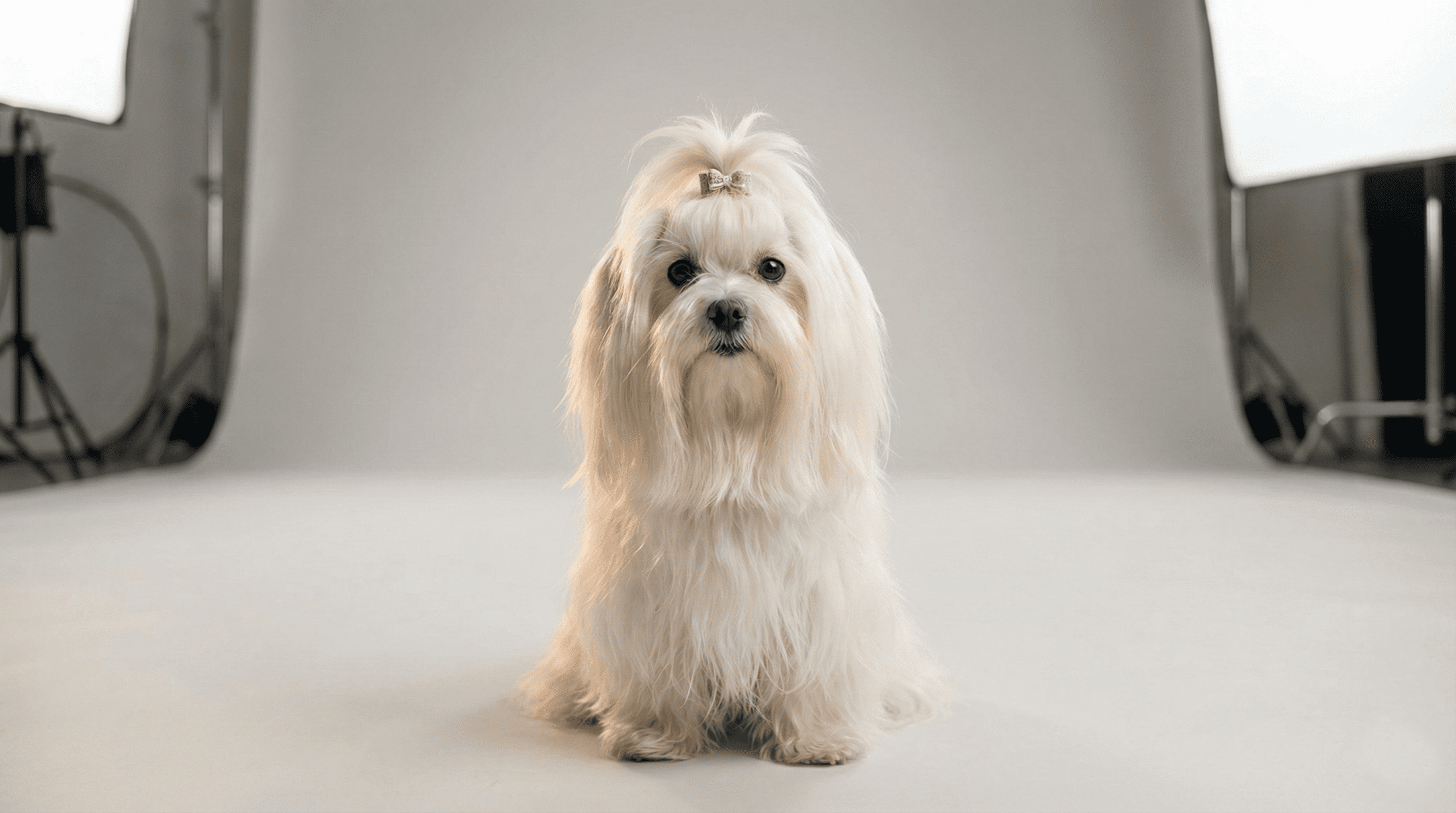
One of the oldest companion breeds — and a genuinely small dog
The Maltese has been a companion animal for well over two thousand years, with no working history to speak of. It was bred to sit with people, and it is unusually good at it. At 2 to 4 kilograms it is also one of the smallest dogs on our register, and that size is the single most important practical fact about owning one.
A dog this light is fragile in ways owners consistently underestimate. The most common injuries are entirely preventable: jumps from a lounge or from someone’s arms, being stepped on, and rough handling by well-meaning children. Teach children to sit on the floor to interact rather than to pick the dog up, and provide steps or a ramp to furniture rather than letting a 3-kilogram dog land on hard floors.
Use a harness, not a collar
Tracheal collapse is the structural problem of toy breeds and the Maltese is squarely among them. The cartilage rings supporting the windpipe weaken and flatten, producing a characteristic dry, honking cough that worsens with excitement, heat and any pressure on the throat.
Direct lead pressure on a small dog’s neck is a recognised contributor. A well-fitted harness distributes that force across the chest instead. For a Maltese this is the cheapest, highest-impact decision an owner makes — and it should be made from the first walk, because tracheal damage does not reverse.
The rest of the health picture
Portosystemic (liver) shunt
The Maltese is among the breeds most over-represented for congenital portosystemic shunt: an abnormal vessel that routes blood past the liver so toxins are never filtered. In a toy puppy the signs are easy to attribute to being small — poor growth, smaller stature than littermates, weak muscle development, and disorientation, wobbliness or lethargy an hour or two after eating.
Bile acid testing diagnoses it, and it is worth raising at the first puppy consultation rather than waiting for a pattern to establish. Caught early, it is often surgically correctable.
White dog shaker syndrome
Also called generalised tremor syndrome, this neurological condition is over-represented in small white breeds and in the Maltese specifically. It produces whole-body tremors, unsteadiness and rapid eye movements, typically first appearing between six months and three years, often triggered by stress or excitement.
It looks frightening and it responds well to corticosteroid treatment, usually within days. Diagnosis is by exclusion — low blood sugar, toxin exposure, epilepsy and infection are ruled out first — so a tremoring Maltese needs a same-day veterinary assessment rather than observation.
Patellar luxation
A dislocating kneecap, graded I to IV. Grades II and above frequently require surgical correction; grade I is generally managed with lean body condition and controlled exercise. Discouraging jumping down from furniture helps here as well as protecting against injury.
Dental disease
Periodontal disease is close to universal in unmanaged toy jaws, where a full set of teeth is crowded into very little space. Daily toothbrushing from puppyhood does more for this dog’s long-term health than almost anything else, and retained baby teeth around five to seven months should be checked rather than left. Our dog dental care guide explains how to start brushing and which dental chews have evidence behind them.
Puppy hypoglycaemia
Very small puppies carry almost no glycogen reserve and can crash into low blood sugar if a meal is missed. In the first months feed small amounts frequently, and treat wobbliness, lethargy or unresponsiveness in a toy puppy as urgent.
The coat is the daily commitment
The Maltese carries a long, silky single coat with no undercoat. It sheds very little — and that is precisely why it mats, because hair that would otherwise drop out stays in place and tangles. Daily brushing is the maintenance schedule for a full-length coat, not a suggestion.
Many Australian owners keep their Maltese in a short “puppy clip”, which reduces daily brushing to a manageable few minutes and is entirely reasonable. Either way, expect a professional groom every six to eight weeks.
Low shedding is often marketed as hypoallergenic. It is not, and no dog is — the proteins people react to are in dander, saliva and urine rather than hair. A low-shedding coat simply circulates less of that material through a home, which is why some allergy sufferers cope better. That is a difference of degree, not a guarantee.
Tear staining beneath the eyes is near-universal on a white coat and is managed by daily wiping rather than cured. A sudden change, or a sore-looking eye, is a veterinary matter rather than a cosmetic one.
Exercise and Australian conditions
Thirty minutes of daily activity meets this dog’s physical needs. It is adaptable, apartment-suited and genuinely portable — but it still needs to walk, sniff and see the world, and a Maltese that never leaves the house becomes reactive and noisy.
In summer, a white dog in a short clip has far less sun protection than a full coat provides, and a 3-kilogram dog walks very close to hot ground. Walk early or late, test the pavement with the back of your hand, and provide shade and water.
Ownership in Australia
In Victoria, microchipping and council registration are required from three months of age under the Domestic Animals Act 1994, renewing annually on 10 April. Desexed registration across the Victorian councils in our fee survey ranged from about $19.50 to $93.30 a year.
At 12 to 15 years this is a long commitment, and the recurring cost that defines it is grooming rather than food. Budget for it honestly before you buy.
Registration is set by your local council. In Victoria, registering a desexed Maltese costs between $19.50 and $93.30 a year depending on where you live, and roughly three times that if the dog is not desexed. See every Victorian council’s 2026–27 fee, or compare registration costs in every state.
Related breeds
The Maltese, originating from the Mediterranean Basin, is classified as a purebred within the Toy group. Possessing a long, silky single coat, this breed has a low shedding level. Weighing between 2 to 4 kg, it falls into the small mass classification. The breed's lifespan ranges between 12 to 15 years. It requires daily brushing due to high grooming needs. Maltese dogs exhibit low-reactivity/high sociability and moderate energy levels, necessitating approximately 30 minutes of daily exercise. They are very good with children and get along well with other pets. Prone to conditions such as Patellar Luxation, Tracheal Collapse, Hepatic Shunt, Progressive Retinal Atrophy, and White Dog Shaker Syndrome, regular veterinary check-ups are crucial. With a moderate separation anxiety and obesity risk, it's important to manage their weight and ensure they aren't left alone for extended periods. Initial puppy costs are approximated at $3000, with an annual veterinary cost of $960, and advising a contingency fund of $1200 due to potential health issues.
Routine veterinary check-ups are essential for monitoring hereditary conditions such as Patellar Luxation, Tracheal Collapse, Hepatic Shunt, Progressive Retinal Atrophy, and White Dog Shaker Syndrome. Ensuring vaccinations and parasite control are up-to-date is crucial. Regular dental care is also advised to prevent oral health issues.
The Maltese requires daily coat maintenance to prevent matting, involving thorough brushing. Exercise needs are about 30 minutes a day, consisting of short walks and active play. It is crucial to maintain their weight to avoid obesity, and regular socialisation with children and other pets should be encouraged.