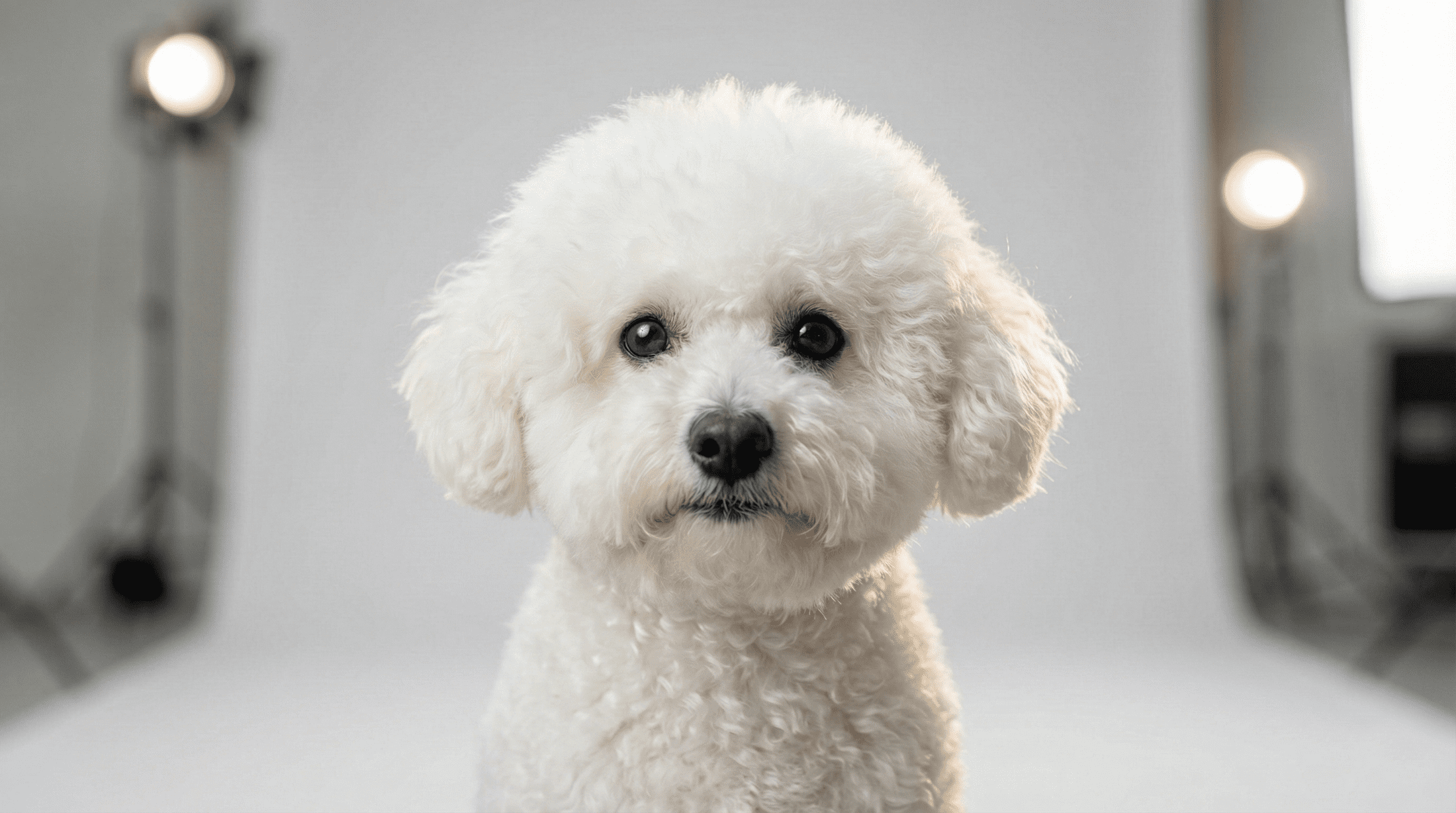
Bichon Frise at a glance
| Lifespan |
12 to 15 years |
| Adult weight |
3 to 6 kg |
| Shedding |
Low, but needs regular professional grooming |
| Main health risks |
Patellar luxation, allergies, dental problems, bladder stones and infections |
What is the life expectancy of a Bichon Frise?
Most live 12 to 15 years. Allergies, dental problems and bladder issues are the conditions most likely to need ongoing vet care.
How much does a Bichon Frise cost?
Budget about $3,000 to buy a puppy and set up in the first year, then about $1,938 a year for food, grooming and routine vet care. Over a 12-year life that comes to roughly $30,575 in our standard estimate. Breeder prices vary widely, and a serious health problem can push the total well beyond this. The full breakdown is in the cost section below.
A companion breed with an unusually good temperament for families
The Bichon Frise is a small Mediterranean companion breed with no working history — it was bred for company, and for centuries it did nothing else. The result is a cheerful, playful, affectionate dog rated excellent with children on our scale, which is unusual for a toy-sized breed and reflects a genuinely robust, good-humoured temperament rather than a nervous one.
It is also sensitive. Bichons respond very well to reward-based training — the trainability score of 4 is accurate — and poorly to harsh handling, which produces an avoidant, anxious dog. Thirty minutes of daily activity meets the physical requirement, though the breed enjoys and benefits from more.
Two behavioural notes worth planning for. House-training takes longer with Bichons than with many breeds and needs consistency rather than frustration. And this is a dog bred entirely for human company — it does not cope well with long days alone, and separation distress is far easier to prevent from the first week than to treat later.
The coat is the defining commitment
The Bichon carries a curly double coat that grows continuously rather than shedding out. Shedding is low precisely because the loose hair stays in the coat — where it mats.
That is not a minor maintenance point. A Bichon coat left alone will felt into a solid mat against the skin, which is painful, traps moisture and causes skin infection, and can only be resolved by shaving off. Brush thoroughly several times a week, working right down to the skin rather than over the surface, and expect a professional groom every four to six weeks for the dog’s entire life.
Over a fifteen-year lifespan that is the single largest recurring cost of the breed, and it comfortably exceeds the food bill. Budget for it before you buy rather than after the first matting emergency.
On the hypoallergenic question
The Bichon Frise is frequently marketed as hypoallergenic. It is not, and no dog is. The proteins people react to are found in dander, saliva and urine rather than in hair, so a low-shedding coat only reduces how much of that material circulates through a home. Some allergy sufferers do genuinely cope better with the breed — but that is a difference of degree rather than a guarantee, and it cannot be predicted before you meet the individual dog. If allergies are your reason for choosing a Bichon, spend real time with the specific puppy first.
Health
Skin and allergies
Allergic skin disease is common in the breed and is the most frequent reason Bichons see a vet. In Australia it is usually seasonal and grass-pollen driven, presenting as face-rubbing, paw-licking, armpit scratching and recurrent ear infections.
Two practical points. First, identify which months affect your dog and treat ahead of the flare rather than after it. Second, recurrent ear infections in a Bichon are usually a symptom of the underlying allergy rather than an independent problem — treating the ear repeatedly without addressing the cause is how owners end up in a cycle of medication.
Bladder stones
The Bichon Frise is over-represented for urolithiasis, particularly calcium oxalate stones, and this is one of the more important things an owner can know.
Straining to urinate, frequent small attempts, blood in the urine or obvious discomfort warrants prompt veterinary attention. In a male dog, straining and producing nothing is a life-threatening emergency — a blocked urethra is fatal within hours.
Prevention is largely about dilution: constant access to fresh water, multiple bowls, and frequent opportunities to urinate rather than holding on all day. If your dog has had stones, diet is a genuine medical intervention and worth discussing with your vet rather than choosing on marketing.
Patellar luxation
A dislocating kneecap, graded I to IV, common in small breeds. Grades II and above frequently require surgery; grade I is managed with lean condition and controlled exercise. Discourage jumping down from furniture and provide steps or a ramp.
Dental disease
Periodontal disease is close to universal in unmanaged small jaws. Daily toothbrushing from puppyhood is the highest-value habit available for this dog, and retained baby teeth around five to seven months should be checked rather than left.
Eyes
Cataracts occur in the breed, including juvenile forms — ask a breeder about current eye certification for both parents. Tear staining is near-universal on a white coat and is managed with daily wiping rather than cured; a sudden change or a sore-looking eye is a veterinary matter rather than a cosmetic one.
Ownership in Australia
In Victoria, microchipping and council registration are required from three months of age under the Domestic Animals Act 1994, renewing annually on 10 April. Desexed registration across the Victorian councils in our fee survey ranged from about $19.50 to $93.30 a year.
In summer, a clipped white dog has far less sun protection than the full coat provides — ask your groomer to leave reasonable length through the warmer months, and provide shade. And because a 4-kilogram dog walks very close to hot ground, test the pavement with the back of your hand before you set out.
The honest summary: one of the best small-dog temperaments for a family with children, attached to a coat that requires real commitment and real money. The temperament is worth it — but the grooming is not negotiable.
Registration is set by your local council. In Victoria, registering a desexed Bichon Frise costs between $19.50 and $93.30 a year depending on where you live, and roughly three times that if the dog is not desexed. See every Victorian council’s 2026–27 fee, or compare registration costs in every state.
Related breeds
The Bichon Frise, originating from Spain/France, is a small breed classified under 'Toys,' with a mass between 3-6 kg. Their curly, double coat is low-shedding and requires high grooming needs, despite low shedding. This breed is excellent with children and good with other pets, featuring moderate trainability, energy levels, and separation anxiety. Key health issues include patellar luxation, allergies, dental problems, bladder infections, and cataracts. Their average lifespan ranges from 12 to 15 years. Exercise requirements are moderate, entailing around 30 minutes of daily activity. The annual veterinary cost is approximately AUD 990. Their intelligence ranking is 45, making them moderately trainable. Bichon Frises have an obesity risk and require close dietary management. The estimated first-year puppy cost is AUD 3000, with a contingency fund of AUD 1200 for unexpected health issues. The breed is popular, ranking in the Top 60 in Australia.
Bichon Frises should undergo regular veterinary examinations to monitor for patellar luxation, allergies, dental issues, bladder infections, and cataracts. Dental checkups are particularly crucial to prevent periodontal disease. Annual comprehensive health assessments are recommended to identify and manage potential health problems early on.
The Bichon Frise requires daily exercise of about 30 minutes and consistent coat maintenance. Weekly grooming is necessary to prevent matting and maintain their low-shedding coat. Their diet needs to be monitored to avoid obesity risk. Regular veterinary visits are essential for dental health and monitoring hereditary conditions.