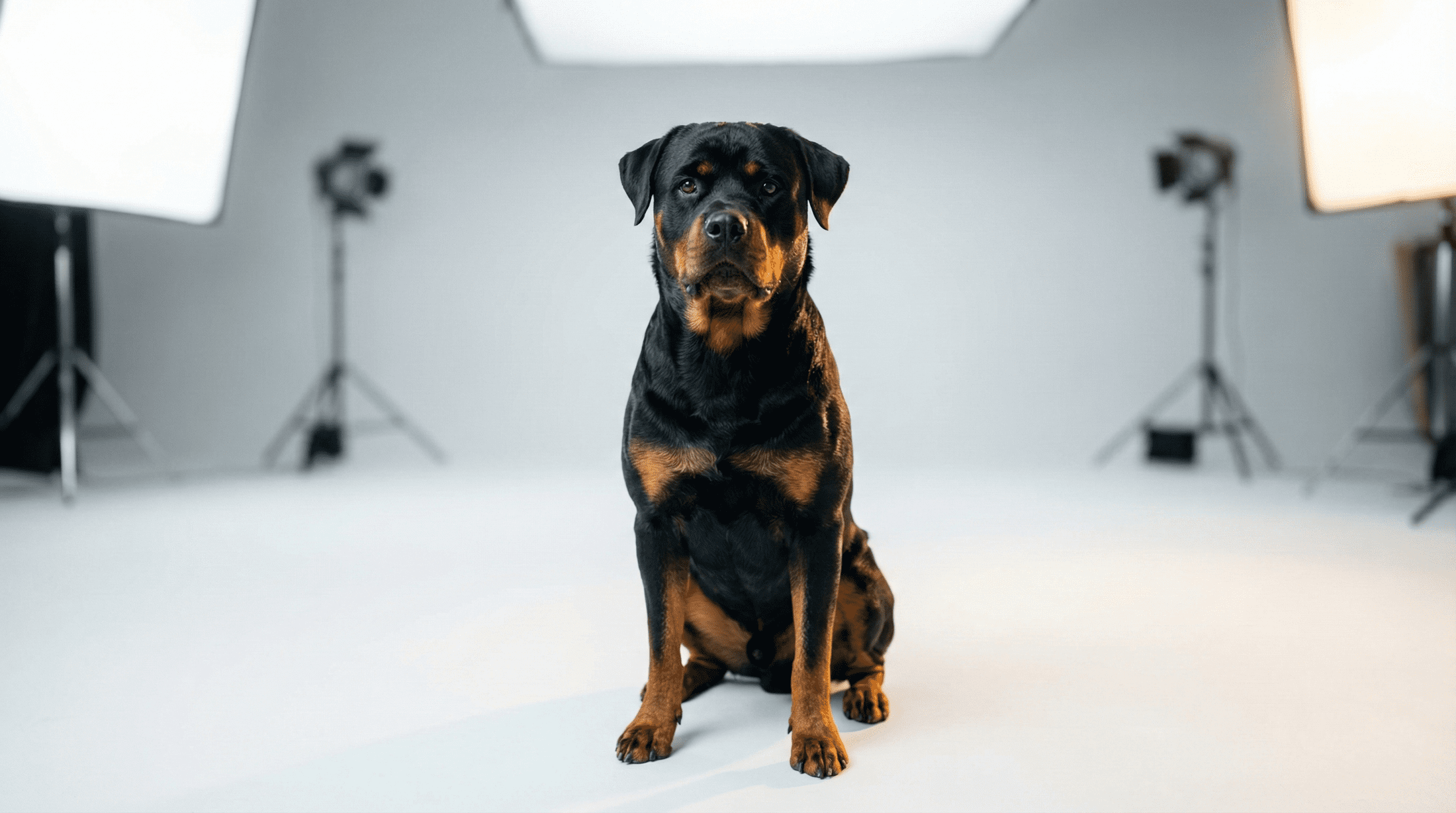
Not a restricted breed — and the distinction matters
The Rottweiler is not a restricted breed anywhere in Australia. The breeds actually restricted under Australian law are the American Pit Bull Terrier (or Pit Bull Terrier), Dogo Argentino, Japanese Tosa, Fila Brasileiro and Perro de Presa Canario. The Rottweiler is on none of those lists, and it is a Dogs Australia recognised breed with a published standard.
That matters practically at rental applications, owners corporation approvals and insurance questionnaires, where forms sometimes ask about restricted breeds. The answer for a Rottweiler is no. Your council registration and any ANKC pedigree paperwork are the documents to produce.
What is true is that this is a 35 to 60 kilogram guardian breed with genuine protective instinct, and that carries obligations. Some Victorian councils apply additional conditions to guard dogs and to dogs kept on non-residential property — at least one automatically deems a guard dog to be a dangerous dog — so read your own council’s conditions if the dog will live anywhere other than a standard residence.
Temperament: what a correct Rottweiler is
The breed descends from Roman drover dogs and takes its name from the German town of Rottweil, where it moved cattle and guarded the butchers’ money on the return journey. It is a working guardian, and the temperament that job requires is specific: calm, confident, discriminating, and slow to react rather than quick.
A correct Rottweiler is aloof with strangers, not aggressive toward them. It assesses. It is deeply attached to its own household and notably tolerant with children in it. Nervousness, unpredictability and indiscriminate reactivity are serious faults, not breed traits, and they are worth walking away from a litter over — look hard at the parents’ temperament, not just their conformation.
With a top-ten intelligence ranking and a trainability score of 4, the breed is highly capable. But this is a dog that will form its own view if you do not supply one, and 60 kilograms of independent opinion is a different proposition from 6. Structured obedience through the first two years is not optional, and early, wide, positive socialisation matters more in this breed than in almost any other.
Ninety minutes of daily activity is the baseline, and it should include mental work — obedience, scent work, cart-pulling or structured retrieve. An under-occupied guardian breed patrols and escalates.
Health — and an honestly short lifespan
At 8 to 10 years, the Rottweiler has one of the shortest lifespans on our register, which is typical of giant and near-giant breeds. Two conditions account for much of it.
Osteosarcoma
Bone cancer occurs disproportionately in large, heavy-boned breeds and the Rottweiler is among the most affected of all. It typically presents as persistent lameness with localised swelling, most often in a limb, in a middle-aged or older dog, and it is aggressive.
The practical response is simple and it matters: lameness in an adult Rottweiler that does not resolve within a couple of weeks warrants imaging, not an assumption about arthritis or a soft-tissue strain. Early identification changes the options available.
Subaortic stenosis
A congenital narrowing below the aortic valve, and one of the most common heart defects in the breed. It obstructs blood flow out of the heart and, in significant cases, can cause exercise intolerance, fainting or sudden death in a young dog.
It is detected as a murmur on auscultation, which makes the puppy’s first veterinary examination genuinely important rather than routine. Ask your vet to listen specifically, and ask a breeder whether the parents have been cardiac-screened. A murmur in a Rottweiler puppy should be investigated by echocardiography rather than watched.
Joints
Hip and elbow dysplasia are both screened radiographically — ask for the parents’ actual scores rather than an assurance of health. For a dog that may reach 60 kilograms, the two things you control are enormous: keep it lean through the first two years while growth plates are open, and avoid forced repetitive exercise, stair work and jumping in a growing puppy. Rapid growth on a rich diet is a documented risk factor for developmental joint disease in giant breeds.
Bloat
As a large, deep-chested breed the Rottweiler is at risk of gastric dilatation-volvulus — a hard distended abdomen with repeated unproductive retching, restlessness and rapid decline. It is a surgical emergency measured in hours. Know your nearest after-hours clinic in advance, feed two smaller meals rather than one, and consider discussing preventive gastropexy with your vet at the time of desexing.
Coat and Australian conditions
Grooming is straightforward: a short dense double coat, a weekly rubber curry or undercoat rake, and more frequent brushing during seasonal moults. Rottweilers shed more than the short coat suggests.
The black coat absorbs heat efficiently, which is a genuine disadvantage in an Australian summer on a large dark dog. Exercise early morning or after dusk, carry water, provide deep shade, and test the pavement with the back of your hand. Large dogs cool less efficiently than small ones because of their surface-area-to-mass ratio.
Ownership in Australia
In Victoria, microchipping and council registration are required from three months of age under the Domestic Animals Act 1994, renewing annually on 10 April. Desexed registration across the Victorian councils in our fee survey ranged from about $19.50 to $93.30 a year, with entire dogs charged two to four times that.
Two practical realities to plan for. Secure, substantial fencing is essential for a guardian breed, both for containment and to prevent the fence-line reactivity that develops when a protective dog can see but not assess what passes. And public perception is a real part of owning this breed — a Rottweiler under visible, calm control does more for its own reputation than any argument. That control is built in the first two years, or not at all.
Registration is set by your local council. In Victoria, registering a desexed Rottweiler costs between $19.50 and $93.30 a year depending on where you live, and roughly three times that if the dog is not desexed. See every Victorian council’s 2026–27 fee, or compare registration costs in every state.
Large dogs carry more load through their joints for longer. If you are choosing gear for a Rottweiler, see our orthopaedic bed comparison for large breeds and our large-breed dog food comparison.
Related breeds
Rottweilers, originating from Germany, are large purebred working dogs highly regarded for their confidence, loyalty, and protective nature. They exhibit a high health complexity score of 1.8, necessitating consistent exercise with a daily requirement of 90 minutes. With a lifespan averaging 8 to 10 years, these dogs weigh between 35 and 60 kg. The breed's short, dense, straight coat necessitates weekly brushing, categorising them under moderate coat maintenance needs. Despite moderate hypoallergenic properties and shedding levels, Rottweilers are not hypoallergenic. They exhibit high energy levels, strong trainability (score of 4), and moderate separation anxiety and obesity risk. Rottweilers are good with children but may need supervision around other pets. Key medical concerns include hip and elbow dysplasia, osteosarcoma, subaortic stenosis, and progressive retinal atrophy. Ranked 9th in intelligence and among the top 30 popular breeds in Australia.
Rottweilers require regular veterinary exams to monitor breed-specific conditions such as hip and elbow dysplasia, osteosarcoma, subaortic stenosis, and progressive retinal atrophy. Annual health screenings, including X-rays and blood tests, are recommended for early detection and management of these hereditary conditions. Orthopaedic beds for large dogs with joint problems are compared in our guide to orthopaedic dog beds.
Daily care involves providing 90 minutes of exercise, including walks, play, and mental stimulation. Weekly coat maintenance protocols are essential to reduce shedding and maintain coat health. A balanced diet and fresh water must be readily available. Monitoring weight and behavior helps prevent obesity and anxiety issues. Foods suited to large, heavy dogs are compared in our guide to the best dog food for large breeds. The Black Hawk Original Large Breed dry food is an Australian-made option that suits active working dogs.