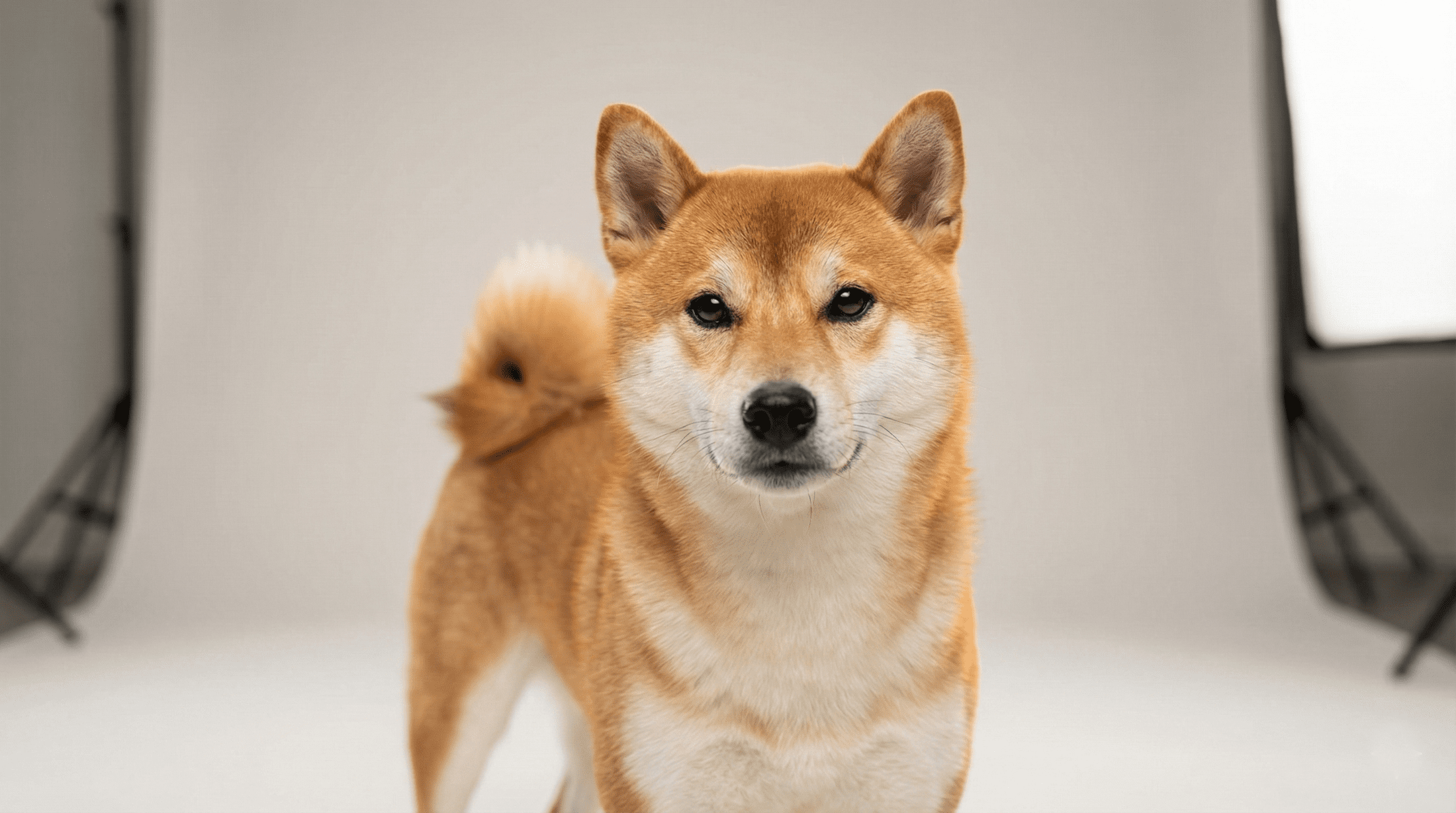
Shiba Inu at a glance
| Lifespan |
13 to 16 years |
| Adult weight |
7 to 11 kg |
| Exercise |
About 60 minutes a day |
| Main health risks |
Skin allergies, patellar luxation, glaucoma |
How long do Shiba Inus live?
Most live 13 to 16 years, one of the longest lifespans of any common breed. A UK study of more than 580,000 dogs found a median lifespan of 14.6 years for the Shiba Inu, among the breeds least at risk of dying young (McMillan et al., Scientific Reports, 2024).
How much does a Shiba Inu cost in Australia?
Budget about $3,500 to buy a puppy and set up in the first year, then about $1,717 a year for food, grooming and routine vet care. Over a 13-year life that comes to roughly $30,887 in our standard estimate. Breeder prices vary widely, and a serious health problem can push the total well beyond this. The full breakdown is in the cost section below.
A primitive breed that behaves like one
The Shiba Inu is the smallest of Japan’s six native breeds, developed for hunting small game in mountainous terrain. Genetically it sits among the more ancient, wolf-adjacent dog breeds, and its behaviour reflects that. This is not a dog that was selected to work cooperatively with a handler.
Our specification table gives it a trainability score of 2 — the lowest on our register — and rates it better with older children. Both of those ratings are honest and both deserve explanation, because the Shiba is one of the most frequently mismatched breeds in Australia. It is bought on appearance and surrendered on temperament.
What a Shiba actually is
Independent, self-possessed, clean, aloof with strangers, and genuinely dignified. Shibas are often described as cat-like, and the comparison is apt: they groom themselves fastidiously, they dislike being handled unnecessarily, and they will consider a request rather than comply with it.
They are not affectionate in the demonstrative way a Labrador is. They form deep attachments and show them subtly. For the right owner that reserve is precisely the appeal; for someone expecting a cuddly companion it reads as rejection.
Two behaviours to plan for. Recall is unreliable — the prey drive is strong, the independence is real, and a loose Shiba will run. Secure fencing and lead walking are permanent requirements, not a training phase. And the “Shiba scream” is real: a piercing, sustained vocalisation produced when the dog objects to being restrained, examined or bathed. It is startling, it is normal, and it is one reason early, patient handling training matters so much.
Same-sex dog intolerance is common, and Shibas can be possessive of food and objects. Both are manageable with early work and much harder to address later.
Health — a robust breed with three specific issues
The Shiba is one of the healthier breeds on our register, with a lifespan of 13 to 16 years, which reflects its comparatively unmodified structure.
Atopic dermatitis
Allergic skin disease is the most common health problem in the breed and the most frequent reason a Shiba sees a vet. It presents as itching rather than a rash at first — face-rubbing, paw-licking and chewing, armpit and groin scratching, and recurrent ear infections.
In Australia the trigger is usually seasonal and grass-pollen driven, so identify which months affect your dog and treat ahead of the flare rather than after it. Recurrent ear infections in a Shiba are usually a symptom of the underlying allergy rather than an independent problem. Modern treatment for canine atopy is genuinely effective — this is a manageable condition provided it is diagnosed properly rather than treated as bad luck.
Glaucoma
Increased pressure within the eye, and it is acutely painful and sight-threatening. Primary glaucoma occurs in the Shiba Inu, and the presentation is a suddenly red, cloudy or bulging eye, obvious pain, squinting, and a dog reluctant to have its head touched.
This is a same-day emergency, not a next-week appointment. Vision loss in untreated glaucoma can occur within hours, and a stoic breed like the Shiba may not make its discomfort obvious — so act on what you can see rather than waiting for the dog to complain.
Patellar luxation
A dislocating kneecap, graded I to IV. Grades II and above frequently require surgery; grade I is managed with lean body condition and controlled exercise.
The coat
The Shiba carries a harsh straight outer coat over a soft dense undercoat, and our table rates shedding high — which surprises owners who assume a compact dog sheds compactly. Shibas shed steadily year-round and then blow their undercoat dramatically twice a year, releasing it in clumps over a week or two.
Brush weekly as routine and daily during a blow, using an undercoat rake rather than a slicker. Do not clip the coat — it insulates against heat as well as cold.
The upside is that Shibas are among the cleanest dogs you can own. They groom themselves constantly, carry very little odour, and rarely need bathing — which is fortunate, given how they feel about it.
Exercise and Australian conditions
An hour of daily activity suits a moderate-energy dog of this size. Shibas enjoy walking, hiking and exploring, and they benefit from mental work — scent games in particular exploit the hunting heritage productively. Formal obedience is possible but should be approached as negotiation rather than instruction.
The double coat is built for a Japanese climate rather than an Australian summer. Exercise early or late in the warmer months, provide deep shade and water, and brush the dead undercoat out thoroughly rather than reaching for clippers.
Ownership in Australia
In Victoria, microchipping and council registration are required from three months of age under the Domestic Animals Act 1994, renewing annually on 10 April. Desexed registration across the Victorian councils in our fee survey ranged from about $19.50 to $93.30 a year.
Keep microchip details current — a Shiba that gets loose covers ground fast and does not come back when called. And if you are drawn to the breed by photographs, spend time with an adult one first. The dogs are superb; the gap between the image and the reality is where the rehoming statistics come from.
Registration is set by your local council. In Victoria, registering a desexed Shiba Inu costs between $19.50 and $93.30 a year depending on where you live, and roughly three times that if the dog is not desexed. See every Victorian council’s 2026–27 fee, or compare registration costs in every state.
Related breeds
The Shiba Inu is a purebred spitz-type dog originating in Japan, where it was developed for hunting small game in mountainous terrain. Adults weigh 7 to 11 kg and live 13 to 16 years, one of the longer lifespans among common breeds. The coat is a true double coat — a harsh straight outer layer over a dense soft undercoat — which sheds moderately year-round and very heavily during one or two annual moults. It should never be shaved, as it insulates against Australian summer heat as well as cold. Temperament is the defining consideration: the Shiba is independent, reserved with strangers and often described as cat-like, with a strong instinctive prey drive and a well-earned reputation for escaping inadequate fencing. Recall is unreliable and secure fencing is essential rather than optional. Around 60 minutes of daily activity is appropriate. Health monitoring should focus on atopic dermatitis and environmental allergies, patellar luxation, glaucoma and hip dysplasia.
Routine veterinary review should monitor for atopic dermatitis and environmental allergies, which commonly present as recurrent skin and ear infections and persistent paw chewing. Also screen for patellar luxation, glaucoma and hip dysplasia. Maintain weight control, as obesity aggravates joint conditions in this breed. Keep vaccination and parasite prevention current, and establish a dental routine early.
Daily care for a Shiba Inu is straightforward outside moulting season. Brush weekly through most of the year, increasing to daily brushing with a de-shedding tool during the one or two annual coat blows. Provide around 60 minutes of daily activity. Secure fencing must be checked and maintained — this breed will exploit gaps and is a known escape risk. Keep the dog leashed in unfenced areas regardless of training level. Monitor paws, skin and ears routinely given the breed’s allergy predisposition.