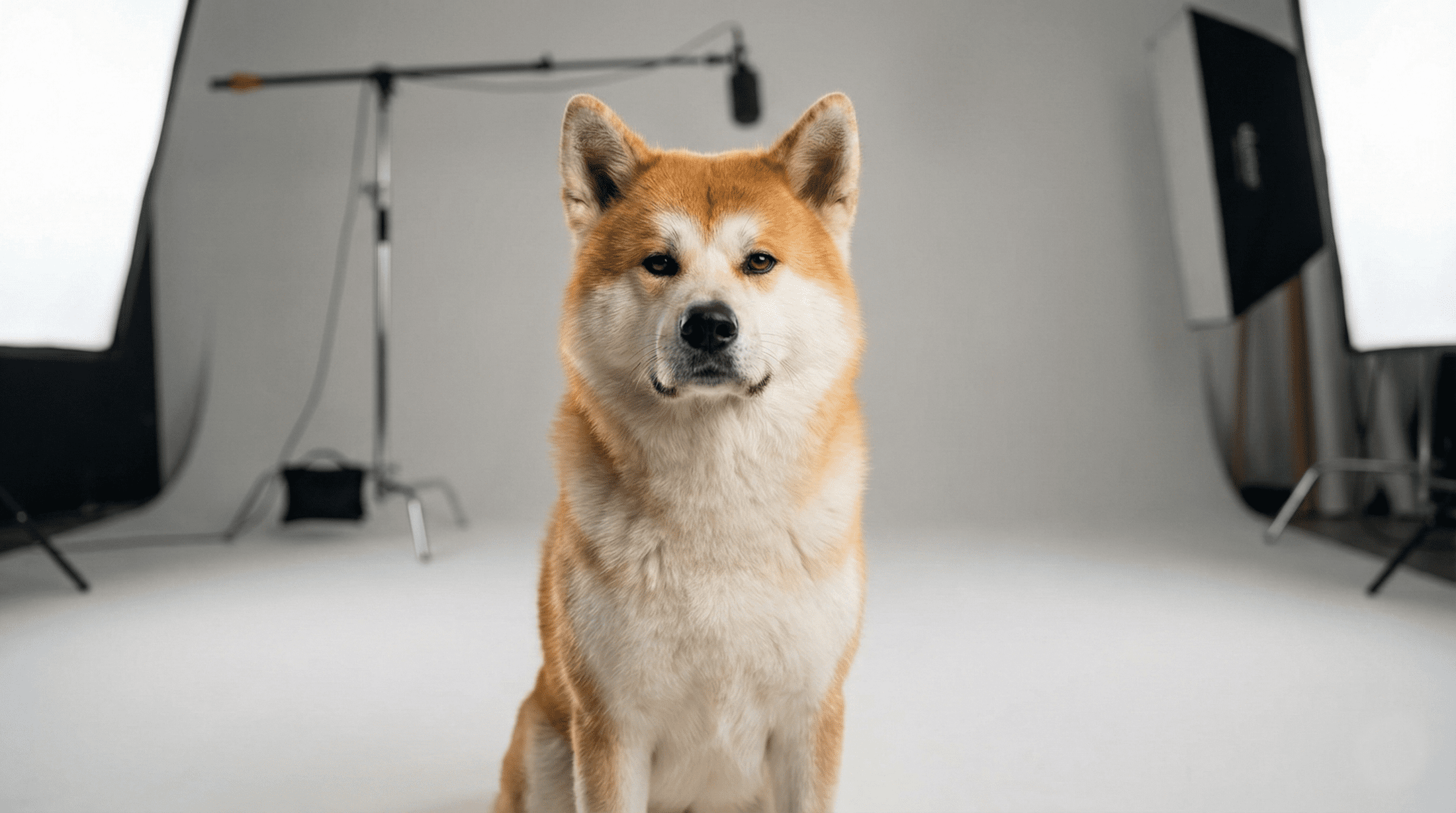
Akita at a glance
| Lifespan |
10 to 13 years |
| Adult weight |
32 to 45 kg |
| Food cost |
About $98 to $148 a month |
| Lifetime cost |
About $27,600 to $38,600 over 10 years (calculator below) |
| Shedding |
Heavy, especially at seasonal moults |
| Main health risks |
Hip dysplasia, hypothyroidism, sebaceous adenitis (a skin condition), bloat, progressive retinal atrophy |
Akitas in Australia
Dogs Australia recognises two separate breeds: the Akita (sometimes called the American Akita), which is larger and heavier, and the Japanese Akita Inu, which is lighter with a more fox-like face. Both are powerful, independent dogs that are loyal to their family and reserved with strangers. Many Akitas do not tolerate other dogs, particularly of the same sex, so early socialisation and careful management matter.
How much does an Akita cost?
Our cost model puts the lifetime cost of an Akita at about $27,600 in a low-cost scenario and about $38,600 in our standard scenario, over a 10-year life. Food is a significant cost for a dog this size, at about $98 to $148 a month. Puppy prices vary between breeders, so compare several and enter your figure in the calculator below.
Two breeds under one name, and a temperament to take seriously
The Akita is a large Japanese guardian breed, and the first thing to establish is which one you are looking at. Internationally the breed has split into the Japanese Akita Inu and the American Akita, which differ in size, head type and permitted colours. Australian breeders work with both, and Dogs Australia recognises them separately. Ask which lineage a litter comes from before you assess anything else.
The second thing to establish is honest: this is not a beginner’s dog. The Akita was developed to guard and to hunt large game independently, and the result is a dog that is loyal and deeply attached to its own household while being genuinely reserved with strangers. That reserve is breed-typical and correct — it is not a training failure — but it means early, deliberate, well-managed socialisation is not optional. Same-sex dog intolerance is also common in the breed and should be planned around rather than discovered at a dog park.
An Akita is powerful, physically and mentally. At 32 to 45 kilograms with a trainability score of 3, this is a dog that will assess an instruction rather than simply comply with it. Owners who enjoy that quality do very well with Akitas. Owners expecting retriever-style biddability generally do not.
The autoimmune picture — this breed’s defining health theme
What distinguishes the Akita medically is not one condition but a cluster. The breed is over-represented for several immune-mediated disorders, and recognising the pattern matters more than memorising any single diagnosis.
Uveodermatologic (VKH-like) syndrome
This is the one most specific to the breed. In Vogt-Koyanagi-Harada-like syndrome the immune system attacks the body’s own pigment-producing cells, principally in the eyes and skin. Research in American Akitas has associated it with an increased frequency of the DQA1*00201 allele, indicating a genuine genetic basis rather than chance.
The signs are visible and easy to dismiss early: loss of pigment on the nose, lips and around the eyes, alongside a red, painful or squinting eye. Because the ocular inflammation can progress to blindness, this combination — fading pigment plus a sore eye — warrants an urgent veterinary appointment rather than a watchful fortnight. Early treatment substantially changes the outcome.
Hypothyroidism
In dogs this is predominantly autoimmune, with the immune system attacking the thyroid gland itself. It presents slowly and vaguely: weight gain without a change in diet, lethargy, coat thinning, recurrent skin or ear infections, and cold intolerance. It is diagnosed on a blood panel and managed inexpensively with daily medication for life. If your Akita seems to be slowing down and thickening in middle age, ask for a thyroid panel rather than accepting it as ageing.
Sebaceous adenitis and pemphigus foliaceus
Sebaceous adenitis is an immune-mediated destruction of the skin’s oil glands, producing dry, scaly skin, hair loss along the topline, a musty odour and secondary infection. Pemphigus foliaceus produces crusting and pustules, characteristically on the face, ear flaps and footpads. Both are diagnosed on skin biopsy and both are manageable — but only once correctly identified, which is why a persistent skin problem in an Akita is worth investigating properly rather than treating repeatedly as an allergy.
The rest
Hip dysplasia is screened radiographically; ask for the parents’ scores. Progressive retinal atrophy occurs in the breed. And as a large, deep-chested dog, the Akita is at risk of gastric dilatation-volvulus — a distended abdomen with unproductive retching and visible distress is a surgical emergency measured in hours. Every Akita owner should know that presentation before it happens.
Coat, exercise and Australian conditions
The Akita carries a thick double coat and sheds heavily, with two dramatic seasonal moults where the undercoat comes out in sheets. Weekly brushing is enough for most of the year; during a moult it becomes daily, with an undercoat rake rather than a slicker. Do not clip the coat — it insulates against heat as well as cold, and clipping removes that protection while doing nothing for shedding.
An hour of daily exercise suits this breed. It is moderate-energy rather than driven, and it does not need the volume a working breed demands — but it does need secure containment. An Akita with a prey drive and an inadequate fence is a predictable problem, particularly around cats and small dogs.
The double coat makes Australian summers the real constraint. This is a northern Japanese breed carrying insulation for snow country. Walk early morning or after dusk through the warmer months, provide deep shade and constant water, and be alert to heat stress. A thick-coated 40-kilogram dog has a poor surface-area-to-mass ratio for shedding heat.
Ownership in Australia
In Victoria, microchipping and council registration are required from three months of age under the Domestic Animals Act 1994, renewing annually on 10 April. Desexed registration across the Victorian councils in our fee survey ranged from about $19.50 to $93.30 a year, with entire dogs charged several times that.
One point worth checking locally: some councils apply additional requirements to large guardian breeds kept on non-residential property, and at least one Victorian council automatically deems a guard dog to be a dangerous dog. If you are keeping an Akita anywhere other than a standard residence, read your own council’s conditions before you register.
Registration is set by your local council. In Victoria, registering a desexed Akita costs between $19.50 and $93.30 a year depending on where you live, and roughly three times that if the dog is not desexed. See every Victorian council’s 2026–27 fee, or compare registration costs in every state.
Large dogs carry more load through their joints for longer. If you are choosing gear for a Akita, see our orthopaedic bed comparison for large breeds and our large-breed dog food comparison.
Related breeds
The Akita is a large, purebred dog from Japan, classified under the Utility breed group. It has a health complexity score of 2.0 and an intelligence ranking of 54. Average weight ranges from 32 to 45 kg. The Akita's thick double coat requires weekly maintenance with high shedding levels. It has a moderate energy level needing about 60 minutes of daily exercise. Known for its loyalty, independence, and courage, the breed exhibits moderate trainability and a predisposition to be reserved with strangers. They are generally very good with children, though they are cautious with other pets. Key health issues include Hip Dysplasia, Hypothyroidism, Progressive Retinal Atrophy (PRA), Sebaceous Adenitis, and Gastric Dilatation-Volvulus (Bloat). The Akita has a moderate risk of separation anxiety and obesity. Annual veterinary costs are estimated at $2100 with an additional contingency fund of $1600.
Due to their health complexity, Akitas should undergo regular veterinary checkups to monitor for hereditary conditions such as Hip Dysplasia, Hypothyroidism, PRA, Sebaceous Adenitis, and Bloat. Preventive care includes weight management, dental hygiene, and routine blood tests to monitor thyroid function.
Daily care for an Akita includes 60 minutes of exercise, divided into walks and playtime. Weekly coat maintenance is essential due to high shedding levels. This involves thorough brushing to prevent matting and skin issues. Regular mental stimulation through interactive toys or training exercises is also recommended to maintain psychological well-being.