The total lifecycle cost of owning a Shar Pei varies between the Baseline and Extended scenarios. The Baseline scenario considers minimal veterinary intervention, while the Extended scenario accounts for chronic conditions requiring ongoing care. Initial costs are around $3000, with annual veterinary costs estimated at $1980 and a contingency fund of $1760 recommended for unexpected expenses.
// IS THIS BREED RIGHT FOR YOU?
ThinkPets ratings are our editorial judgement from the breed's size, energy, trainability, temperament and care needs. They are not measured outcomes or probabilities. How we rate
Apartment Living
Good
Families w/ Kids
Excellent
First-Time Owners
Good
Active Lifestyle
Fair
Interactive Suitability Assessment
Answer these questions to calculate your personal compatibility score with Shar Peis.
How much time can you dedicate to exercise daily?
What size is your yard/living space?
Hours the dog will be alone daily?
Your Compatibility
—%
Select options to calculate your compatibility.
// BREED FACTS
Grooming
Coat Type
Short and bristly
Shedding Level
Low
Home Brushing
Weekly brushing
Professional Grooming
Every 8 weeks
~$96 per session
Exercise
Energy Level
Moderate
Daily Requirement
45+ minutes
Activity Type
Walks, play sessions
Mental Stimulation
Moderate
Diet
Daily Intake
2.5 to 3.5 cups
Split into 2 meals
Obesity Risk
Moderate
Monthly Food Cost
$75 - $125
Premium dry food
Special Considerations
Standard diet
The wrinkles and the fever are the same mutation
This is the single most important thing to understand about the Chinese Shar Pei, and it is unusually well established genetically.
Research published in PLOS Genetics identified a 16.1 kilobase duplication upstream of the HAS2 gene — hyaluronic acid synthase 2 — in Shar Pei dogs. The number of copies of that duplication correlates with how much HAS2 is expressed, and HAS2 drives production of hyaluronan. Shar Pei carry two to five times the blood hyaluronan of other breeds. That excess is what produces the breed’s defining thickened, wrinkled skin.
It is also what produces Familial Shar Pei Fever. When hyaluronan fragments, it acts as a trigger for the innate immune system, provoking sterile fever and inflammation. A high copy number of the duplication is associated both with more expression and with the periodic fever syndrome. In other words, selective breeding for wrinkles has directly enriched the mutation that causes the inflammatory disease. The look and the illness are not coincidental — they are the same genetics.
The serious downstream risk is reactive systemic (AA) amyloidosis, in which chronic inflammation causes amyloid protein to deposit in the kidneys and liver. Some, though not all, affected Shar Pei develop it, and it is the leading cause of the breed’s shortened lifespan — which is why our specification table shows 8 to 10 years where comparable-sized breeds show 12 or more.
What this means practically
Familial Shar Pei Fever presents as episodes of high temperature, often with a characteristically swollen, hot, painful hock joint, lethargy and reluctance to move. Episodes typically last 12 to 36 hours and resolve on their own, which is exactly why they get dismissed.
They should not be. Every episode is an inflammatory event, and cumulative inflammation is what drives amyloid deposition. Keep a written record of every fever — date, temperature, duration — and take it to your vet. Ask about baseline and periodic kidney function monitoring rather than waiting for symptoms of renal disease, because by the time those appear the damage is done. Buy a rectal thermometer and learn your dog’s normal.
Testing is available: Cornell University offers genetic testing related to Shar-Pei Autoinflammatory Disease. Ask a breeder what they know about the copy number and fever history in their lines — and treat vagueness as an answer in itself.
Eyes, ears and skin — all consequences of the same conformation
Entropion
The heavy facial padding rolls the eyelid inward so that lashes and hair abrade the cornea. It is painful, it causes ulceration, and it can threaten sight. In severe puppies the lids are sometimes temporarily tacked while the head grows, with definitive surgery later. A Shar Pei puppy that squints, weeps or holds an eye closed needs veterinary assessment promptly — this is not something to monitor.
Ears
The Shar Pei has unusually small, tight ear canals and small triangular leathers that lie flat against the head. Almost no air reaches the canal, and chronic otitis is very common. Weekly checks and thorough drying after any bath are the routine; a Shar Pei that shakes its head or holds it tilted needs an examination rather than a home remedy.
Skin folds
The folds trap moisture and debris and are prone to pyoderma and to demodectic mange, which the breed is predisposed to. Wipe and, crucially, dry the folds — wiping alone leaves them damp, which is the actual problem. Do this weekly as routine and daily in humid weather.
Temperament and exercise
The Shar Pei is calm, dignified, deeply loyal to its own household and genuinely reserved with strangers. It is not an effusive dog and should not be expected to become one. That reserve makes early, careful socialisation important, and the breed can be intolerant of unfamiliar dogs.
Forty-five minutes of steady daily exercise suits a moderate-energy dog of this build. It is not an endurance animal and should not be treated as one.
Australian summers are the constraint. The shortened muzzle limits cooling efficiency, the heavy skin adds insulation, and the breed originated in a temperate climate. Walk early morning or after dusk in the warmer months, never leave the dog in a stationary vehicle, and treat noisy laboured breathing that will not settle as an emergency.
Ownership in Australia
In Victoria, microchipping and council registration are required from three months of age under the Domestic Animals Act 1994, renewing annually on 10 April. Desexed registration across the Victorian councils in our fee survey ranged from about $19.50 to $93.30 a year.
Be clear-eyed about the veterinary budget for this breed. Entropion surgery, recurring ear treatment, skin management and kidney monitoring are all realistic expectations rather than worst cases. The Shar Pei is a rewarding, characterful dog for the right owner — but it is one of the few breeds where the defining aesthetic and the defining health problem are provably the same piece of DNA, and going in knowing that is the fairest thing you can do for the animal.
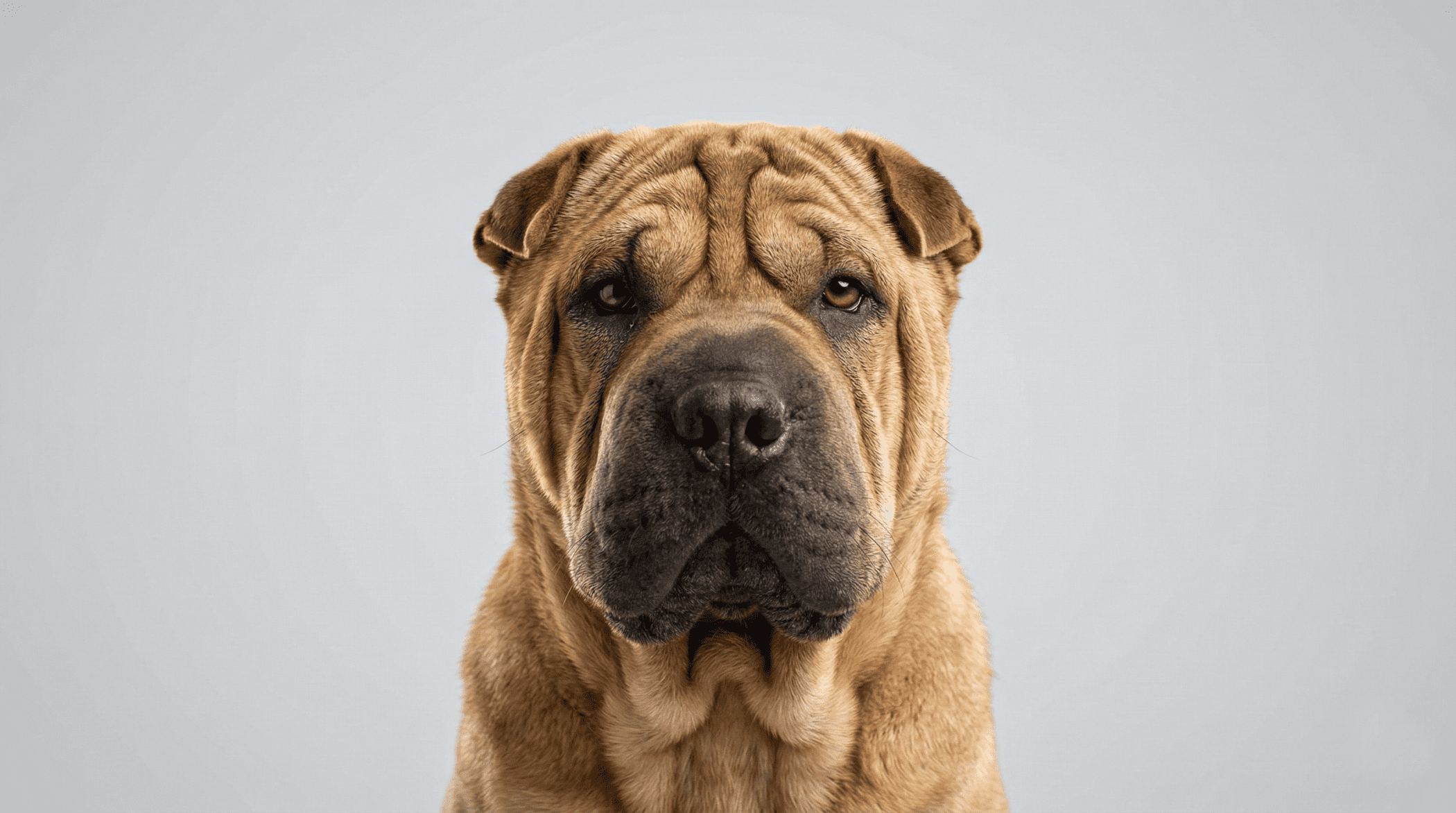
The Shar Pei is a medium-sized dog originating from China, classified as a purebred and part of the non-sporting group. They typically weigh between 18 and 30 kg, with an average lifespan of 8 to 10 years. Shar Peis are known for their short, bristly coat, which has a low shedding level and requires weekly brushing for maintenance. Their temperament is characterized by loyalty, independence, and calmness, though they can be reserved. They have moderate trainability and energy levels, needing approximately 45 minutes of daily exercise. Shar Peis are reasonably good with children but show some variability in sociability with other pets. They can experience moderate separation anxiety and have a moderate risk of obesity. Key health issues include Hip Dysplasia, Entropion, Demodectic Mange, Shar Pei Fever, and Hypothyroidism. The breed ranks 51st in intelligence and is among the top 60 most popular dog breeds in Australia. The estimated first-year puppy cost is $3000, with annual veterinary costs (medical only) at $1980. A contingency fund of $1760 is recommended for unexpected expenses.
// 02 Health Considerations
The Shar Pei's health complexity includes susceptibility to Hip Dysplasia, Entropion, and Shar Pei Fever, among other conditions. Regular veterinary check-ups are crucial to monitor these issues. Standard preventive protocols include annual health screenings, vaccinations, and maintaining a balanced diet.
// 03 Care Requirements
Daily care for a Shar Pei involves 45 minutes of exercise, which helps maintain their moderate energy levels and prevent obesity. Weekly brushing is necessary for their short, bristly coat. Regular interactions, training, and mental stimulation are also essential to ensure psychological well-being.
// 04 FAQs
A Shar Pei typically has a lifespan ranging from 8 to 10 years. This figure can vary based on genetic factors, healthcare, and living conditions.
Shar Peis typically weigh between 18 to 30 kg. Being a medium-sized breed, their weight can impact exercise requirements and dietary needs.
No, the Shar Pei is not a hypoallergenic breed. Individuals with allergies should consider this aspect before adopting.
Shar Peis have a short, bristly coat with a low shedding level. Regular weekly brushing is required for adequate coat maintenance.
A Shar Pei needs about 45 minutes of exercise daily. This helps maintain their moderate energy levels and reduces the risk of obesity.
Common health issues include Hip Dysplasia, Entropion, Demodectic Mange, Shar Pei Fever, and Hypothyroidism. Regular veterinary check-ups are essential.
Shar Peis are generally good with children. Their calm and loyal temperament makes them suitable for families with children.
The estimated annual veterinary cost for a Shar Pei is $1980. This covers medical expenses but does not include other costs such as grooming or food.
Shar Peis are prone to moderate separation anxiety. They may exhibit stress-related behaviours if left alone for extended periods.
Shar Peis have a moderate trainability score of 3. Consistent, positive reinforcement training methods are recommended for best results.