Editorial ratings based on published specifications, manufacturer data and verified owner reviews. We have not physically tested this product.
| DURABILITY | 76 | STRONG | |
| VALUE INDEX | 88 | STRONG | |
| BREED COMPATIBILITY | 82 | STRONG | |
| EASE OF USE | 90 | STRONG | |
| AU SUPPLY CHAIN | 80 | STRONG |
What it’s made of
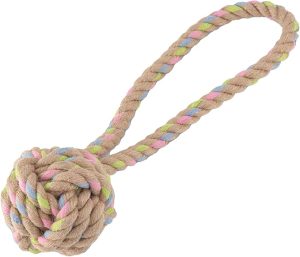
Beco’s Hemp Rope toys use a blend of 37% woven hemp rope and 63% recycled cotton. The same ratio appears across the range on several retailer product pages (Lords & Labradors UK, Southern Agriculture US, Afternoon Paws UK) and Beco’s own Amazon listings. Hemp is grown without pesticides and needs much less water than conventional cotton.
The recycled cotton keeps used textiles out of landfill. Together they make a rope that’s 100% natural fibre, with no plastic or other synthetic material.
The range
There are more shapes than you might expect:
Ball: Small (7.5 cm), Large (9 cm), for chewing and fetch.
Ball on Loop: Medium (7 × 7 × 26 cm), Large (9 × 9 × 30 cm), with a loop handle for tug and longer throws.
Double Knot: Small (15 cm), Medium (25 cm), Large (30 cm), the classic tug rope.
Jungle Ring: one size (16.5 × 4.5 cm), a ring for tug and chewing.
Squeaky Rope: Medium (2 knots, 2 squeakers), Large (3 knots, 4 squeakers, about 55 cm), a rope with squeakers inside.
Jungle Double Knot, Octopus and other characters, made from the same material.
The squeaky versions combine a rope’s light teeth-scrubbing action with the noise that excites a dog’s chase instinct. They’re a good choice for dogs that quickly lose interest in silent toys.
Is it safe if my dog swallows bits?
The main safety argument for hemp over nylon is how the fibres break off. When a dog chews through nylon rope, it creates long, continuous threads that can’t be digested. These can bunch up the intestines, a life-threatening emergency that usually needs surgery and can cost $3,000 to $8,000 or more at an Australian vet hospital.
Hemp breaks off differently, in short, separate pieces rather than long threads. Beco says these short fibres are “unlikely to cause harm if ingested and should pass through naturally.”
An honest note: “unlikely to cause harm” and “should pass through” describe a lower risk, not no risk. Beco itself adds: “We still recommend supervising your dog when they are playing with any toy.” Swallowing a lot of any fibre, natural or synthetic, can still cause problems. Hemp is safer than nylon, not completely safe. Supervise play and put the rope away when you’re not playing together.
Does it clean teeth?
Beco describes the rope as working like “a natural toothbrush, helping to scrub off the bad stuff that gathers on your dog’s teeth throughout the day.” The rough, woven hemp does rub against your dog’s teeth as they chew and tug, which makes sense.
An honest note: chewing on rough surfaces can help reduce some plaque on the tooth surface. But we haven’t found published studies showing that hemp rope works as well as vet-approved dental products (VOHC-accepted chews, enzymatic toothpaste or a professional clean). Treat it as a small bonus alongside proper dental care, not a replacement. Gum disease in dogs develops below the gum line, where chewing can’t reach.
How long it lasts
Hemp rope is made for playing together (tug of war and fetch), not for leaving your dog to chew alone. Left with a determined chewer, the braided knots will gradually come apart as the dog pulls out strands.
Roughly how long it lasts with daily supervised play:
Gentle to moderate chewers: 4 to 12 weeks of daily 15-minute tug or fetch sessions before it frays enough to replace.
Heavy chewers: 1 to 3 weeks before the knots start coming apart. Put it away straight after play.
Very strong breeds (Staffies, Rottweilers, Mastiffs): it may not survive a single session. A heavy-duty rubber tug toy is a better choice.
Cleaning: hemp and cotton soak up a lot of saliva. After each play session, rinse the rope in hot water and let it dry completely, ideally in the sun. If it stays damp, mould and bacteria can grow inside the fibres, so drying it properly really matters.
How it compares
Ordinary nylon rope ($5-$12): cheaper and tougher against strong chewers, but it carries the thread-swallowing risk described above and doesn’t break down in landfill. If gut safety and the environment matter most to you, hemp rope is the better choice. If you have a very strong dog and need maximum toughness, a heavy-duty synthetic rope or rubber tug may suit better, but supervise closely because of the thread risk.
Green & Wilds natural rope (about $15-$25): uses natural jute and cotton, with a similar eco focus. Beco’s hemp blend sheds in shorter fibres, and Beco’s independent certifications (B Corp, Climate Neutral, 1% for the Planet) are stronger. Green & Wilds is a reasonable alternative, just with less independent verification.
West Paw Zogoflex toys: a completely different material, so they complement rather than compete. Hemp rope covers tug of war and soft interactive play; tough rubber-style balls and puzzles cover the rest. A good set of sustainable toys would include both.
What it costs per year: an example
For a moderate chewer with a daily 15-minute supervised tug session:
Nylon rope: $8 per rope, replaced every 6 to 8 weeks = $52 to $70 a year. Doesn’t break down in landfill, and carries the thread-swallowing risk.
Beco Hemp Rope: $18 per rope, replaced every 4 to 8 weeks = $117 to $234 a year. Fully biodegradable, with a lower risk if swallowed and a light teeth scrub each session.
So hemp rope costs about two to three times more per year than nylon. You’re paying extra for lower risk, biodegradability and a company with checked green credentials. Whether that’s worth it depends on your dog and how you play.
When it’s worn out
Hemp and recycled cotton are fully biodegradable, so you can put a worn-out rope in a home compost bin. The only catch is that coloured cotton may contain synthetic dyes that some strict composting systems don’t accept, so check the colour you’ve bought if that matters to you. In landfill, natural fibres break down in months, compared with centuries for nylon.
About the company
Like all Beco products, the Hemp Rope range is made by a company with strong certifications: Certified B Corporation (August 2022, score 101.6), Climate Neutral Certified (April 2021, aiming to halve its direct emissions by 2030), and a 1% for the Planet member (1% of all sales to environmental charities). The Beco Foundation also gives 5% of profits to animal welfare charities. These certifications apply to the company as a whole rather than each product, but they cover its supply chain, manufacturing and how it’s run.
Clever, energetic breeds that love tug games, such as the Border Collie and Australian Shepherd, get a lot out of these ropes.
| Material | 37% woven hemp rope, 63% recycled cotton |
| Construction | Braided, knotted rope |
| Teeth Cleaning | Light scrub during play (not a replacement for dental care) |
| If Swallowed | Sheds short fibres; Beco says "unlikely to cause harm" |
| Squeakers | Squeaky Rope versions only |
| Free Of | Synthetic fibres and plastics (100% natural fibre) |
| Biodegradable | Yes; compostable (dyed cotton may be excluded by some systems) |
| Certification | B Corp (101.6), Climate Neutral, 1% for the Planet |
| Brand | Beco Pets (UK company, founded 2009) |
| Shapes | Ball, ring, loop, double knot, squeaky rope, jungle, octopus |
| Sizes | From a 7.5cm ball to a 55cm large squeaky rope |
| Price in Australia | $13-$25 depending on shape and size |
Is the Beco Hemp Rope safe if my dog swallows pieces?+
It's safer than nylon rope, but not risk-free. Beco says hemp sheds short fibres that are 'unlikely to cause harm if ingested and should pass through naturally', which is a real improvement on nylon threads that can cause serious gut blockages. Beco still recommends supervising play, though, and swallowing a lot of any fibre can cause problems. Use it for supervised play, not as a chew toy left with your dog.
Does the Beco Hemp Rope actually clean my dog's teeth?+
The rough hemp rubs against your dog's teeth during tug play, which can help reduce some surface plaque. But we haven't found studies proving hemp rope works as a dental treatment. Treat it as a small bonus alongside proper dental care from your vet, not a replacement, especially as gum disease develops below the gum line.
Can I leave my dog alone with the Beco Hemp Rope?+
No. It's made for playing together: tug of war, fetch and interactive games. Left alone with it, a determined chewer will unpick the knots and pull out strands. Put it away straight after each play session, out of your dog's reach.
How do I clean the Beco Hemp Rope?+
Rinse it in hot water with a little pet-safe soap after each play session, then let it dry completely, ideally in the sun. Hemp and cotton soak up a lot of saliva, and if the rope stays damp, mould and bacteria can grow inside. Don't machine wash it, as that loosens the braided knots.
Can I compost the Beco Hemp Rope when it's worn out?+
Yes. The 37% hemp and 63% recycled cotton blend is biodegradable and fine for a home compost bin. The one catch is that coloured cotton may contain synthetic dyes that some strict composting systems don't accept. In landfill, natural fibres break down in months, compared with centuries for nylon rope.