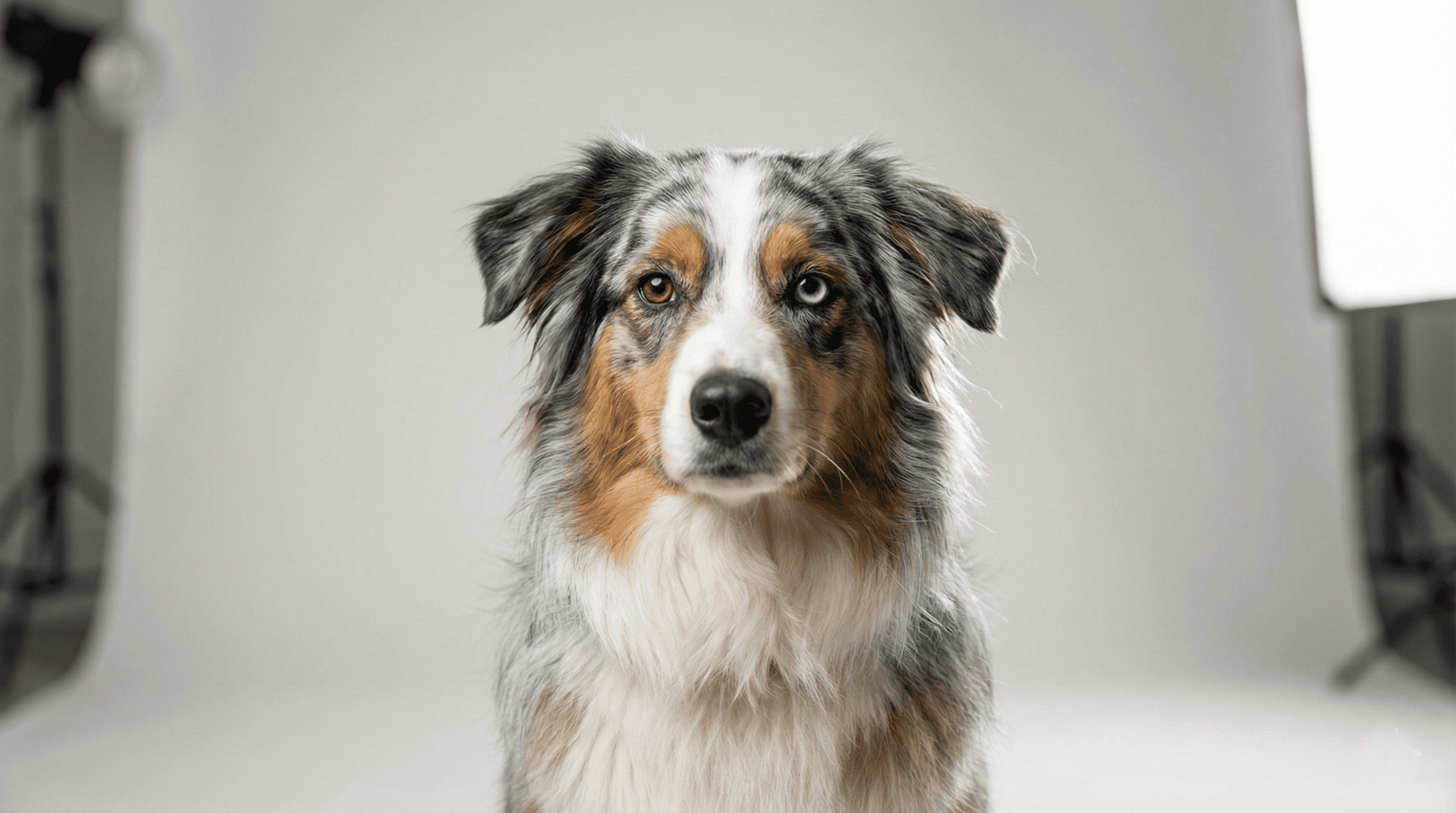
The Australian Shepherd's total lifecycle cost varies. The Baseline scenario reflects minimal veterinary intervention, while the Extended scenario accounts for managing chronic health conditions like Hip Dysplasia and Epilepsy. The initial puppy cost is $3000, with an estimated annual veterinary cost of $1840.
// IS THIS BREED RIGHT FOR YOU?
ThinkPets ratings are our editorial judgement from the breed's size, energy, trainability, temperament and care needs. They are not measured outcomes or probabilities. How we rate
Apartment Living
Fair
Families w/ Kids
Excellent
First-Time Owners
Excellent
Active Lifestyle
Excellent
Interactive Suitability Assessment
Answer these questions to calculate your personal compatibility score with Australian Shepherds.
How much time can you dedicate to exercise daily?
What size is your yard/living space?
Hours the dog will be alone daily?
Your Compatibility
—%
Select options to calculate your compatibility.
// BREED FACTS
Grooming
Coat Type
Double coat, medium length
Shedding Level
Moderate
Home Brushing
Weekly
Professional Grooming
Every 8 weeks
~$98 per session
Exercise
Energy Level
High
Daily Requirement
60+ minutes
Activity Type
Running, fetch, sports
Mental Stimulation
High (puzzles, training)
Diet
Daily Intake
2.5 to 3.5 cups
Split into 2 meals
Obesity Risk
Moderate
Monthly Food Cost
$78 - $128
Premium dry food
Special Considerations
Standard diet
The Australian Shepherd is a purebred herding dog of the Working Dogs group. Despite the name it was developed in the United States, refined on western stock ranches through the twentieth century, and named for the Basque shepherds who arrived by way of Australia. Adults weigh 18 to 32 kg and live 12 to 15 years.
Coat and grooming. A medium-length double coat with moderate year-round shedding and heavier seasonal moults. Weekly brushing is sufficient outside those periods; during a moult, expect daily work with an undercoat rake. The coat should never be shaved — it insulates against Australian summer heat as effectively as it does against cold, and shaving exposes skin to sunburn while doing nothing for shedding.
MDR1: the single most important thing to know
The Australian Shepherd carries the MDR1 mutation at one of the highest frequencies of any breed. Roughly half of Australian Shepherds carry at least one copy (Washington State University MDR1 breed table).
The mutation is a four-base-pair deletion in exon 4 of the MDR1 gene. It produces a truncated, non-functional P-glycoprotein, which compromises the blood–brain barrier. Affected dogs can be up to 200 times more sensitive to certain drugs than an unaffected dog.
The drugs that matter in ordinary Australian practice include ivermectin-class parasiticides, loperamide, several sedatives and opioids, and a number of chemotherapy agents. A routine worming product bought off a shelf can cause severe neurological injury or death in an affected dog.
Practical protocol: DNA test before any elective procedure and before selecting a parasite preventative. The test is a simple cheek swab. Record the result somewhere your veterinarian will see it, and state the breed explicitly before any sedation. This is the one piece of information an Australian Shepherd owner cannot afford to leave undocumented.
Other hereditary considerations
Collie Eye Anomaly. Caused by a 7.8 kb deletion in exon 4 of the NHEJ1 gene, identified in 2007 across Collies, Shetland Sheepdogs, Border Collies and Australian Shepherds. It remains the second most common congenital eye condition in the breed. Most affected dogs show choroidal hypoplasia; severe cases involve coloboma of the optic nerve, retinal detachment or blindness. DNA testing of breeding parents is available and is the only reliable screen.
Hip and elbow dysplasia. Present at moderate rates. Ask breeders for hip and elbow scores on both parents rather than assurances.
Progressive retinal atrophy and epilepsy are also documented in the breed. Epilepsy typically presents between one and five years of age and is manageable but lifelong.
Exercise and mental load
At least 60 minutes of daily activity, but duration is the less important half of the equation. This is a breed with a trainability score of 5 out of 5 and a working history of independent decision-making at distance. Physical exercise alone produces a fitter dog with the same unmet need.
Herding trials, agility, scent work, advanced obedience and structured problem-solving all suit the breed. Without that outlet, the herding instinct redirects — commonly onto children, bicycles, cars and livestock. This is the most frequent reason Australian Shepherds are surrendered in Australia, and it is a management failure rather than a temperament fault.
Separation tolerance is poor. The breed bonds intensely and copes badly with long periods alone.
Australian conditions
Well suited to rural and semi-rural Victoria, and workable in suburban settings only where the owner is genuinely committed to daily structured activity. A large yard is not a substitute for work. Heat tolerance is moderate — exercise in the cooler parts of the day through summer and watch for early heat stress, which presents quickly in a double-coated working dog.
Victorian regulatory requirements
Registration with your local council is compulsory by three months of age under the Domestic Animals Act 1994, renewed annually by 10 April. Microchipping is a prerequisite, not an alternative. Fees vary considerably by council — from around $19.50 to $93.30 for a desexed dog depending on where you live.
The Australian Shepherd, developed in the United States, belongs to the Working Dog group and exhibits a health complexity score of 2.0. The breed’s medium size ranges between 18 and 32 kg. It has a double coat of medium length, requiring weekly maintenance. Known for high intelligence (ranked 42nd) and suitability with children is excellent, it is highly trainable with a score of 5. This breed demonstrates high energy levels necessitating 60 minutes of daily exercise. However, they are prone to separation anxiety and moderate obesity risk. The average lifespan ranges from 12 to 15 years. Clinically, common health issues include Hip Dysplasia, Elbow Dysplasia, Progressive Retinal Atrophy, Epilepsy, and Collie Eye Anomaly. Initial cost for a puppy is estimated at $3000, with annual veterinary expenses approximating $1840. A contingency fund of $1600 is advisable to manage unforeseen health issues. Toys and puzzles for clever, energetic breeds are compared in our guide to eco-friendly dog toys.
// 02 Health Considerations
Regular veterinary check-ups are crucial for early detection of breed-specific hereditary conditions like Hip Dysplasia, Progressive Retinal Atrophy, and Epilepsy. Standard protocols should include annual vaccinations, parasite control, dental check-ups, and a balanced diet to mitigate obesity risks.
// 03 Care Requirements
Daily care for an Australian Shepherd involves 60 minutes of exercise, mental stimulation, and routine coat maintenance. Weekly brushing of their medium-length double coat is necessary to manage shedding and avoid matting. Regular checks for ear cleaning, dental hygiene, and nail trimming should also be part of the care routine.
// 04 FAQs
The average lifespan of an Australian Shepherd ranges from 12 to 15 years, depending on genetics, diet, and overall healthcare management.
No, Australian Shepherds are not hypoallergenic. They have a medium-length double coat and moderate shedding, requiring weekly grooming.
Common health issues include Hip Dysplasia, Elbow Dysplasia, Progressive Retinal Atrophy, Epilepsy, and Collie Eye Anomaly. Regular veterinary check-ups are essential for early detection.
Australian Shepherds require at least 60 minutes of exercise daily, including activities that stimulate their intelligence and energy levels.
They require weekly grooming to manage their medium-length double coat. Regular brushing reduces shedding and prevents matting.
Yes, Australian Shepherds are prone to separation anxiety due to their loyal and energetic temperament. Adequate mental and physical stimulation can help mitigate this issue.
Australian Shepherds are excellent with children, known for being protective and loyal. Proper socialization early on is essential.
Yes, Australian Shepherds generally exhibit good compatibility with other pets when properly socialized and monitored during initial interactions.
The estimated annual veterinary cost for an Australian Shepherd is approximately $1840, covering routine health checks and vaccinations.
The Australian Shepherd has a trainability score of 5, indicating high responsiveness to training due to its intelligence and eagerness to learn.