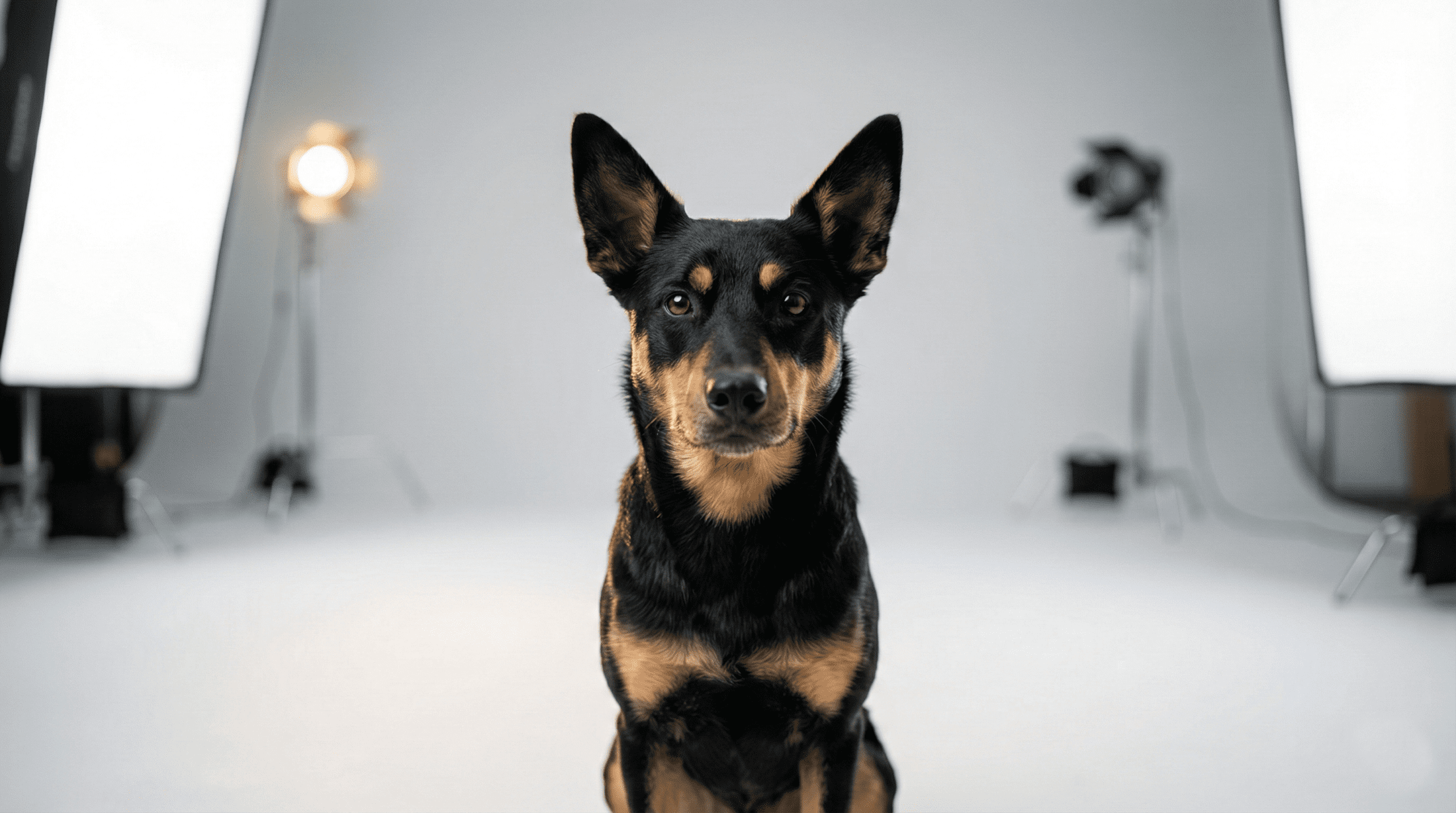
Australian Kelpie at a glance
| Lifespan |
12 to 15 years |
| Height |
46 to 51 cm (males), 43 to 48 cm (females) |
| Adult weight |
14 to 21 kg |
| Exercise |
About 90 minutes a day |
How long do Australian Kelpies live?
Most Kelpies live 12 to 15 years; Dogs Victoria gives a range of 12 to 16. They are a hardy working breed, and the main inherited risks are eye conditions and hip dysplasia, which responsible breeders screen for.
Are Kelpies good pets?
For the right home, yes. They are loyal, very intelligent and good with children. But they need about 90 minutes of hard exercise and mental work every day and are prone to separation anxiety, so a bored Kelpie left alone in a backyard tends to bark, dig and escape. They suit active owners with space and time, not most apartments.
Two Kelpies, two registries, two different dogs
Australia maintains two separate registries for this breed, and which one your puppy comes from matters more than almost any other decision you will make about it.
The Working Kelpie is registered with the Working Kelpie Council of Australia and/or the Australian Sheepdog Workers Association. These bodies select for working ability — stock sense, stamina, biddability under pressure — and permit a wide range of coat colours. The Show Kelpie (the ANKC-registered Australian Kelpie) is bred to a conformation standard with a restricted colour range.
Both are Kelpies. But a pup from generations of stock-working lines carries a drive that does not switch off because it now lives in a courtyard in Brunswick. If you want a Kelpie as a companion and sport dog rather than a stock dog, say so plainly to the breeder and let them steer you. Buying the highest-drive pup in the litter because it is the busiest one in the box is the classic error.
Cerebellar abiotrophy — and the Australian research that made it testable
Cerebellar abiotrophy is the health issue that distinguishes this breed, and the science behind it is largely Australian. It is a progressive degeneration of Purkinje and granule cells in the cerebellar cortex, inherited recessively, producing ataxia, head tremor, a wide-based stance, poor coordination and a high-stepping gait.
A genome-wide association study of 45 affected and 290 unaffected Kelpies identified two significant risk loci, on canine chromosomes 9 and 20. That work translated into two commercially available DNA markers, and they correspond to two clinically distinct presentations: the LINGO3-associated form typically becomes apparent in puppies between eight and twelve weeks, while the VMP1-associated form appears later, generally in dogs between four and sixteen months.
Both are recessive, which is the good news — two clear parents cannot produce an affected pup. Ask for both marker results, for both parents. This is a specific, answerable question, and a working-line breeder will not be surprised by it.
The rest of the health picture
Collie eye anomaly and progressive retinal atrophy are both present in the breed and both DNA-testable; ask for those certificates in the same conversation. Hip dysplasia is screened by radiographic scoring rather than DNA — request the parents’ actual scores, not an assurance.
Beyond the inherited conditions, the injuries Kelpies present with are occupational: cruciate strain, footpad damage, and eye injuries from working in stubble and scrub. Check feet after hard days.
The exercise requirement is not the real requirement
This dog is rated very high energy for good reason, and ninety minutes of hard physical work a day is the baseline. But physical exhaustion alone does not produce a settled Kelpie. A dog bred over generations to make independent decisions about moving livestock across a paddock needs problems to solve, not just distance to cover.
An under-occupied Kelpie is one of the most reliably destructive dogs in Australia. The behaviours are predictable: fence-running, obsessive chasing of cars, bikes, shadows and reflected light, compulsive herding of children, and digging. These are not defects; they are a working drive that found no legitimate outlet.
What works is structure. Herding trials or treibball where available, scent work, obedience, agility, and long-line retrieve with rules will do more in twenty focused minutes than an hour of aimless walking. With a trainability score at the top of our scale and a working-intelligence ranking in the top twenty, the raw capacity is not in question — the question is whether you will use it.
Registration, working-dog status and Australian conditions
In Victoria, microchipping and council registration from three months of age are required under the Domestic Animals Act 1994, renewing annually on 10 April. Desexed registration across the Victorian councils in our fee survey ranged from about $19.50 to $93.30.
Worth knowing if you are rural: several Victorian councils offer a reduced registration rate for a genuine working dog, with proof required. Hume City Council, for example, extends its lowest rate to working dogs alongside desexed and older dogs. Check your own council’s concession list rather than assuming the standard fee applies.
The Kelpie was built for Australian heat and handles it better than most breeds, but “better” is not “immune”. A Kelpie will keep working past the point of sense, which makes it more vulnerable to heat stress than a dog that self-regulates. On hot days you must impose the breaks — the dog will not. Shade, water and a hard stop are the owner’s job.
Registration is set by your local council. In Victoria, registering a desexed Australian Kelpie costs between $19.50 and $93.30 a year depending on where you live, and roughly three times that if the dog is not desexed. See every Victorian council’s 2026–27 fee, or compare registration costs in every state.
Related breeds
The Australian Kelpie is a medium-sized breed, classified under working dogs, originating from Australia. They typically weigh between 14 to 21 kg and have a lifespan ranging from 12 to 15 years. Their coat is short and dense, requiring weekly maintenance. The breed is not hypoallergenic and sheds moderately. Kelpies are highly energetic and require approximately 90 minutes of daily exercise, making them suitable for active owners. Their temperament is marked by alertness, eagerness, and loyalty, coupled with high intelligence, rendering them highly trainable. Behavioral compatibility includes high paediatric and interspecies sociability. However, separation anxiety is common. Health concerns include progressive retinal atrophy (PRA), hip dysplasia, and Collie eye anomaly (CEA). Financially, the first-year puppy cost is estimated at AUD $3,500, with annual veterinary costs around AUD $1,296. Total lifecycle costs vary by healthcare needs but may rise with chronic condition management. Toys and puzzles for clever, energetic breeds are compared in our guide to eco-friendly dog toys. Breeds that tend to roam benefit from a GPS tracker; the Tractive DOG 6 GPS tracker is reviewed here.
Australian Kelpies are susceptible to health issues like progressive retinal atrophy (PRA), hip dysplasia, and Collie eye anomaly (CEA). Regular veterinary checkups are essential for early diagnosis and prevention. Genetic screening and maintaining a healthy weight can mitigate some of these risks.
Australian Kelpies require 90 minutes of vigorous daily exercise to meet their high energy needs. Weekly brushing is necessary to manage their short, dense coat. Their high intelligence and trainability necessitate mental stimulation tasks and training sessions. Social interaction is crucial to prevent separation anxiety.