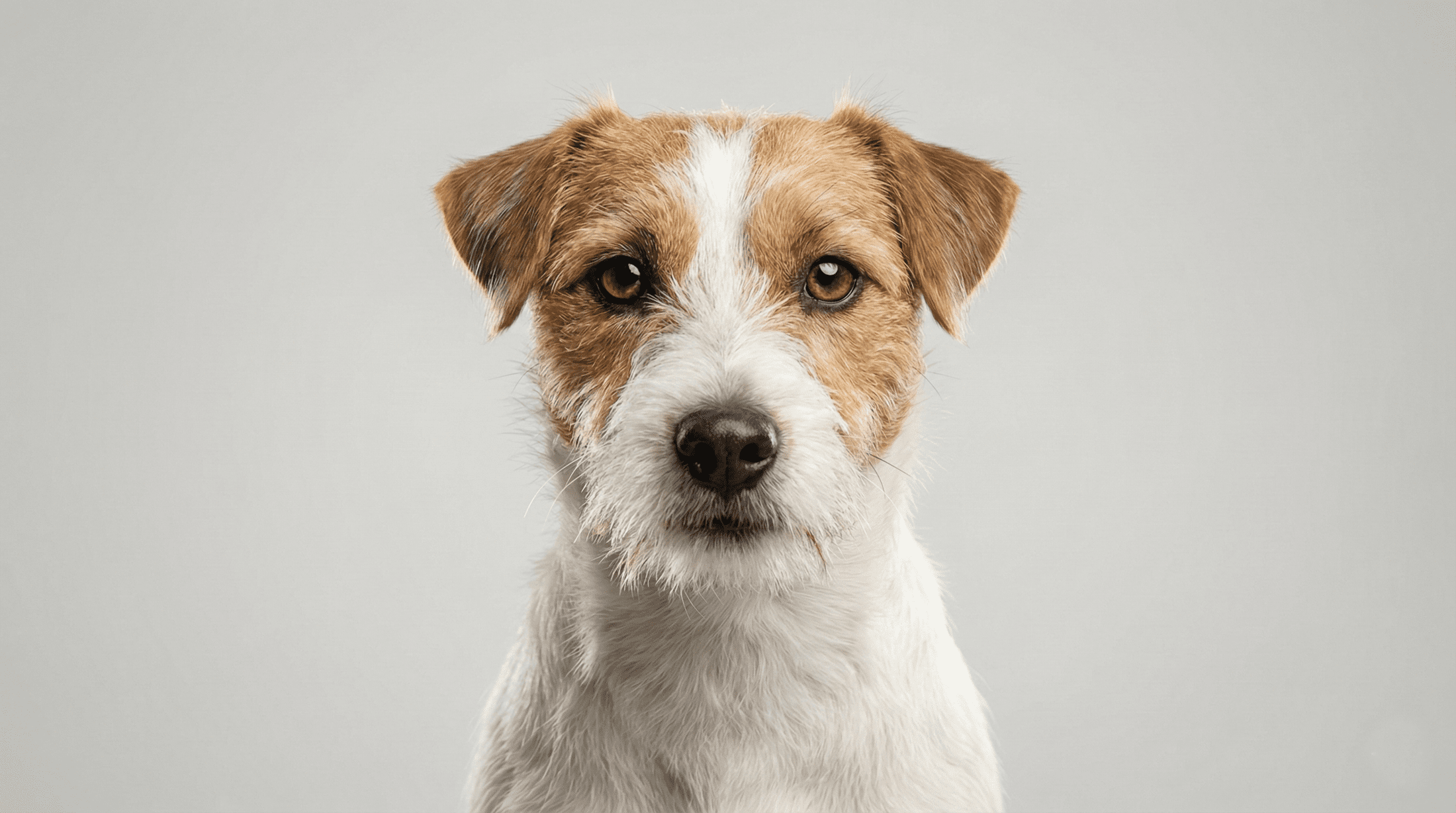
A working earth dog that happens to be small
The Jack Russell was developed in nineteenth-century England by the Reverend John Russell to bolt fox from underground — work that demanded a dog small enough to enter an earth, and bold enough to face a cornered animal alone in the dark. There is no part of that job description that produces a low-maintenance small pet.
At 6 to 8 kilograms the Jack Russell is rated very high energy on our scale, which is higher than most breeds three times its size. An hour of genuine daily activity is a floor, and it should include problem-solving rather than only walking. This is a dog that will dig through a lawn, bolt through a gap in a fence after something moving, and out-persist almost any owner in a contest of wills.
None of that is a fault. It is a working terrier being a working terrier, and it is much easier to channel than to suppress. A designated digging pit, daily scent games, flirt-pole work, and short varied training sessions do more in twenty minutes than an hour of lead walking. Earthdog trials and terrier racing exist in parts of Australia and suit the breed exactly.
Two consequences to plan for rather than discover. First, the prey drive is genuine and it does not distinguish between rats and the neighbour’s guinea pig or a cat. Second, same-sex dog intolerance is common in terriers, so multi-dog households need thought. Fencing must be checked properly — a Jack Russell will go under, through, or over with more determination than seems reasonable.
The upside is a robust, healthy, intensely rewarding dog with a 13 to 16 year lifespan — one of the longest on our register.
Primary lens luxation — the DNA test to ask for by name
This is the health issue most specific to the breed, and it is the one worth knowing in detail because the difference between early and late treatment is the difference between a saved eye and a lost one.
The lens is held in place by fine fibres called zonules. In primary lens luxation those fibres degenerate and the lens slips out of position, typically between three and six years of age. If it moves forward it blocks the drainage of fluid from the eye, causing an acute rise in pressure — glaucoma — which is intensely painful and destroys vision quickly.
The signs are sudden and unmistakable once you know them: a suddenly cloudy, red or watery eye, obvious pain, squinting, and a dog reluctant to have its head touched. This is a same-day emergency, not a next-week appointment. Vision can often be saved if the lens is dealt with quickly.
The condition is recessive and DNA-testable. Two clear parents cannot produce an affected dog, which makes this entirely preventable in a planned litter. Ask any breeder for both parents’ PLL results by name, and if you already own a Jack Russell of unknown status, the test is inexpensive and tells you whether to be watchful.
Legg-Calvé-Perthes disease
Degeneration of the head of the femur where it sits in the hip joint, caused by disrupted blood supply. It affects small breeds and typically appears between five and eight months of age. The sign is a young dog that becomes progressively lame on one hind leg, often with visible muscle wastage on that side over a few weeks.
It is painful and it is treatable — usually surgically, with generally good outcomes — but it needs diagnosis rather than a wait-and-see. Persistent hind-limb lameness in a Jack Russell puppy is not a knock it will walk off.
Patellar luxation
A dislocating kneecap, graded I to IV. Grades II and above often require surgical correction; grade I is managed with lean condition and controlled exercise. Given how much airtime this breed spends, keeping it lean matters.
Deafness
Congenital deafness occurs in predominantly white breeds, and the Jack Russell is one. Unilateral deafness is easy to miss without a BAER test. Ask whether a litter was tested.
Coat and Australian conditions
Grooming is genuinely low. Jack Russells come in smooth, broken and rough coats; all three shed moderately, and the short white hairs are more conspicuous on furniture than owners expect. A weekly rubber curry for smooths and a comb-through for broken and rough coats is sufficient, with occasional hand-stripping for rough coats if you want to keep the texture.
The predominantly white coat offers limited sun protection, particularly on a pink nose and thin belly coat. Provide shade, and in summer walk early or late — a very high-energy dog will keep going well past the point at which it should stop, so the decision to break is yours. Snake awareness matters too: a terrier that hunts in long grass in an Australian summer is exactly the dog most likely to find one.
Ownership in Australia
In Victoria, microchipping and council registration are required from three months of age under the Domestic Animals Act 1994, renewing annually on 10 April. Desexed registration across the Victorian councils in our fee survey ranged from about $19.50 to $93.30 a year.
The honest summary: this is one of the cheapest breeds on our register to groom and one of the most demanding to occupy. Budget your time, not your money.
Registration is set by your local council. In Victoria, registering a desexed Jack Russell Terrier costs between $19.50 and $93.30 a year depending on where you live, and roughly three times that if the dog is not desexed. See every Victorian council’s 2026–27 fee, or compare registration costs in every state.
Related breeds
The Jack Russell Terrier is a small, high-energy breed originating from England, classified under the terrier group. With a lifespan of 13 to 16 years, they typically weigh between 6 and 8 kg. Their coat is short and dense, coming in smooth, broken, or rough textures, and requires weekly brushing. Jack Russells are not hypoallergenic and have moderate shedding. They exhibit bold, energetic, and alert temperaments. With a trainability score of 4, they are intelligent and highly responsive to training. Their very high energy level necessitates at least 60 minutes of daily exercise. While they are good with children, their compatibility with other pets is moderate. Key health issues include Primary Lens Luxation, Legg-Calvé-Perthes Disease, and Patellar Luxation. The breed has moderate separation anxiety and obesity risk. The estimated first-year puppy cost is $3,500, and the annual veterinary cost is $1,088. A contingency fund of $1,280 is recommended for unforeseen medical expenses. Toys and puzzles for clever, energetic breeds are compared in our guide to eco-friendly dog toys. Breeds that tend to roam benefit from a GPS tracker; the Tractive DOG 6 GPS tracker is reviewed here.
Given the breed's propensity for conditions like Primary Lens Luxation and Patellar Luxation, regular veterinary checkups are vital. An annual veterinary visit should include a comprehensive physical examination, eye exams, and joint health assessments to monitor and manage hereditary conditions proactively.
Jack Russell Terriers require at least 60 minutes of rigorous daily exercise to manage their high energy levels. Daily activities can include walking, running, and interactive play. Coat maintenance involves weekly brushing to manage moderate shedding. Regularly check for any signs of skin conditions or parasites.