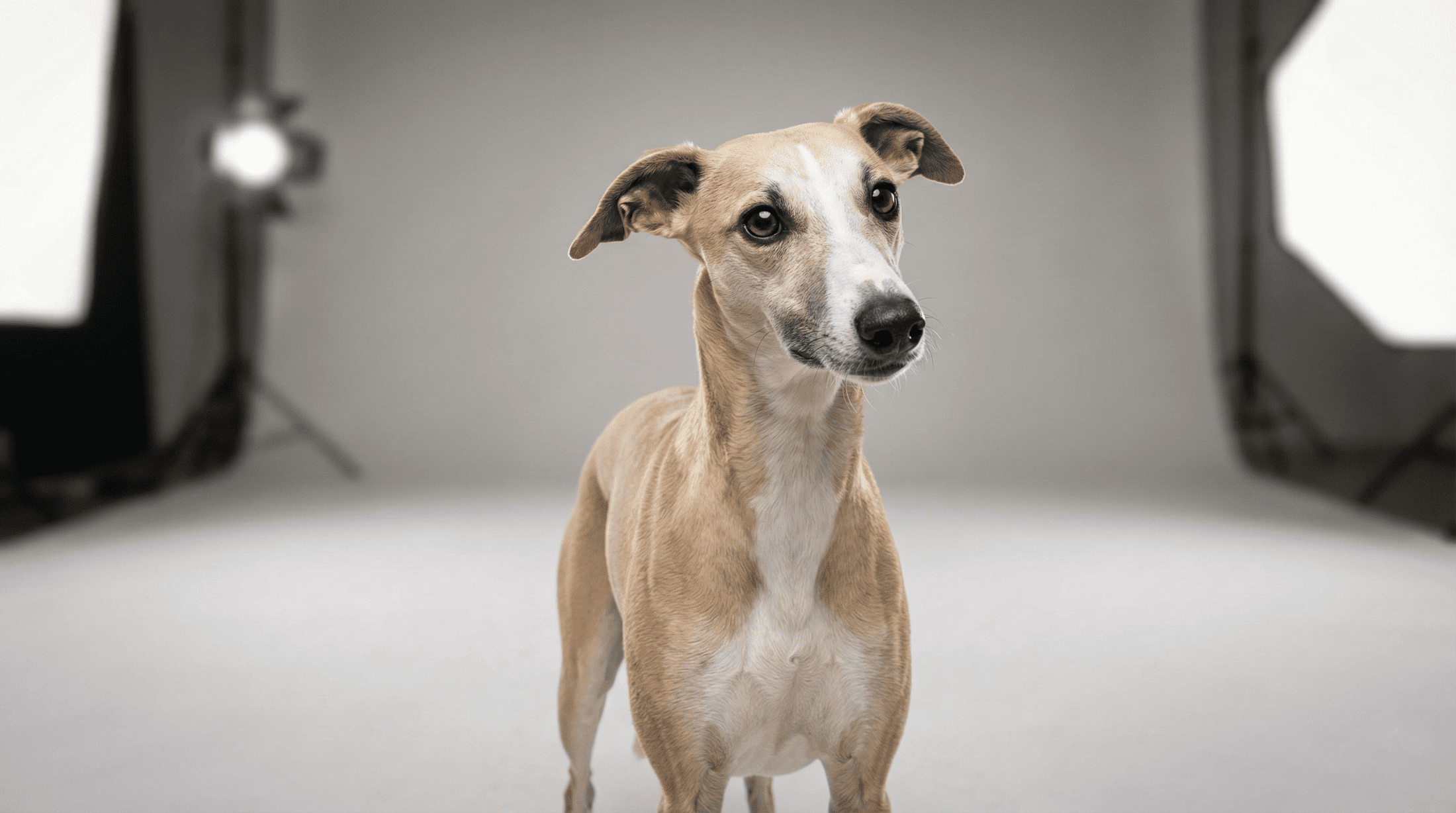
A sprinter that spends most of the day asleep
The Whippet is a British sighthound developed in the north of England, largely by working people, for coursing rabbit and for racing. It sits between the Italian Greyhound and the Greyhound in size, and it is often described as the ideal compromise: fast enough to be a genuine athlete, small enough at 9 to 13 kilograms to live comfortably anywhere.
Its energy profile confuses people. A Whippet needs a short burst of hard running — and then it lies down. Forty-five minutes of daily activity split between two lead walks and a free sprint in a securely fenced area satisfies most Whippets completely. Indoors they are among the quietest, calmest dogs you can own, and they rarely bark. Our health complexity score of 1.1 is one of the lowest on the register, and it is accurate.
Temperamentally they are gentle, affectionate, quiet and notably sensitive. Harsh handling produces an avoidant dog rather than a compliant one. They are people-focused and like to be in physical contact — usually under a blanket, on the furniture, which is a negotiation you will lose.
Three things every Whippet owner must plan for
1. Recall and the sighthound chase
A Whippet accelerates to full speed in a few strides and can cover ground faster than you can react. Once a chase is triggered, recall becomes unreliable — that is not a training failure, it is what a sighthound is. Secure fencing is essential, and off-lead freedom needs genuinely enclosed ground.
The prey drive is real. Cats, rabbits, poultry and small fluffy dogs can all trigger it. Some Whippets live happily with cats they were raised with; this needs managing rather than assuming.
2. Anaesthetic sensitivity
This is the single most important thing to tell a vet who has not treated sighthounds before. Whippets have very little body fat and, in common with other sighthounds, metabolise some anaesthetic agents differently, which can cause prolonged or difficult recovery.
Sighthounds also naturally run outside standard blood reference ranges — typically a higher packed cell volume and higher creatinine than other breeds — which can make a healthy Whippet look abnormal on a routine panel.
Before any procedure, tell the clinic your dog is a sighthound and ask whether they are familiar with breed-appropriate anaesthetic protocols. Most Australian vets are. It is a five-second conversation that prevents a real problem.
3. Skin tears
The Whippet has a fine, close-lying single coat with no undercoat over thin skin and almost no subcutaneous fat. The consequence is that lacerations happen easily — on fences, on scrub, on garden stakes, sometimes during ordinary play — and they often need veterinary closure rather than home care.
Check the yard for sharp edges and protruding wire, be thoughtful about where the dog runs at speed, and expect the occasional stitch-up over a lifetime.
Health
Whippets are among the healthier pedigree breeds, having been selected for function by working people rather than for appearance. At 12 to 15 years the lifespan is good.
Cardiac disease is the notable exception. Whippets have naturally large hearts and a slow resting heart rate, and arrhythmias that would be abnormal in another breed can be normal in a Whippet — another reason to see a vet familiar with sighthounds. Genuine heart disease, including mitral valve disease and dilated cardiomyopathy, does occur, so annual auscultation from middle age is sensible and any fainting or collapse should be investigated as cardiac.
Dental disease is more common in Whippets than their size suggests. Daily toothbrushing genuinely helps.
Eye conditions occur at low rates; ask a breeder about current eye certification.
Coat, warmth and Australian conditions
Grooming is rated very low and that is not an exaggeration: a weekly rubber curry and nothing else. Whippets are clean, low-odour dogs that shed lightly.
The trade-off is thermal. With no undercoat and almost no body fat, a Whippet feels the cold acutely. A coat on cool mornings is practical rather than indulgent, and the shivering is genuine. Soft bedding matters too, because bony points over thin skin develop pressure sores on hard floors — and the dog will find your bed if you do not provide an alternative.
In summer, the pale thin coat over light skin burns readily on the nose, ear tips and belly, so shade matters. And a sighthound will sprint into heat stress without noticing — keep runs short and early in the day.
Ownership in Australia
In Victoria, microchipping and council registration are required from three months of age under the Domestic Animals Act 1994, renewing annually on 10 April. Desexed registration across the Victorian councils in our fee survey ranged from about $19.50 to $93.30 a year.
The Whippet is not a restricted breed and is not subject to the muzzling requirements that apply to retired racing Greyhounds in some jurisdictions — a distinction worth making clear to landlords or owners corporations who sometimes conflate all sighthounds.
The honest summary: one of the lowest-maintenance, quietest, most apartment-suited dogs available, provided you can give it somewhere safe to run flat out a few times a week.
Registration is set by your local council. In Victoria, registering a desexed Whippet costs between $19.50 and $93.30 a year depending on where you live, and roughly three times that if the dog is not desexed. See every Victorian council’s 2026–27 fee, or compare registration costs in every state.
Related breeds
The Whippet is a purebred sighthound of the Hound group, originating in the United Kingdom. Adults typically weigh 9 to 13 kg and live 12 to 15 years. The coat is short, fine and close-lying with no undercoat, which makes grooming demands among the lowest of any breed — but also leaves the dog poorly insulated and prone to skin tears. Coats are advisable during Victorian winters, and soft bedding helps prevent pressure sores over bony prominences. Despite a racing heritage, the Whippet is notably quiet indoors and adapts well to apartments, provided it gets daily opportunity to run at speed in a securely fenced area. Recall is unreliable around moving stimuli: the chase drive is instinctive rather than disobedient. Health monitoring should focus on cardiac disease, particularly mitral valve disease, along with von Willebrand disease and a well-documented sighthound sensitivity to anaesthesia — flag the breed with your veterinarian before any procedure requiring sedation.
Routine veterinary review should monitor for cardiac disease, particularly mitral valve disease, which is a leading cause of mortality in the breed. Screen for von Willebrand disease before any surgical procedure. Critically, sighthounds including the Whippet metabolise anaesthetic agents differently and are sensitive to standard dosing — ensure your veterinarian is aware of the breed before sedation. Inspect skin regularly for tears and pressure sores given the thin coat and low body fat.
Daily care for a Whippet is light on grooming and specific on exercise. Brush weekly with a soft-bristle brush or mitt. Provide around 45 minutes of daily activity, ideally including a short opportunity to sprint in a securely fenced area rather than sustained leash walking. Provide soft, padded bedding to protect against pressure sores, and a coat in cold weather. Keep the dog leashed in unfenced areas regardless of training level.