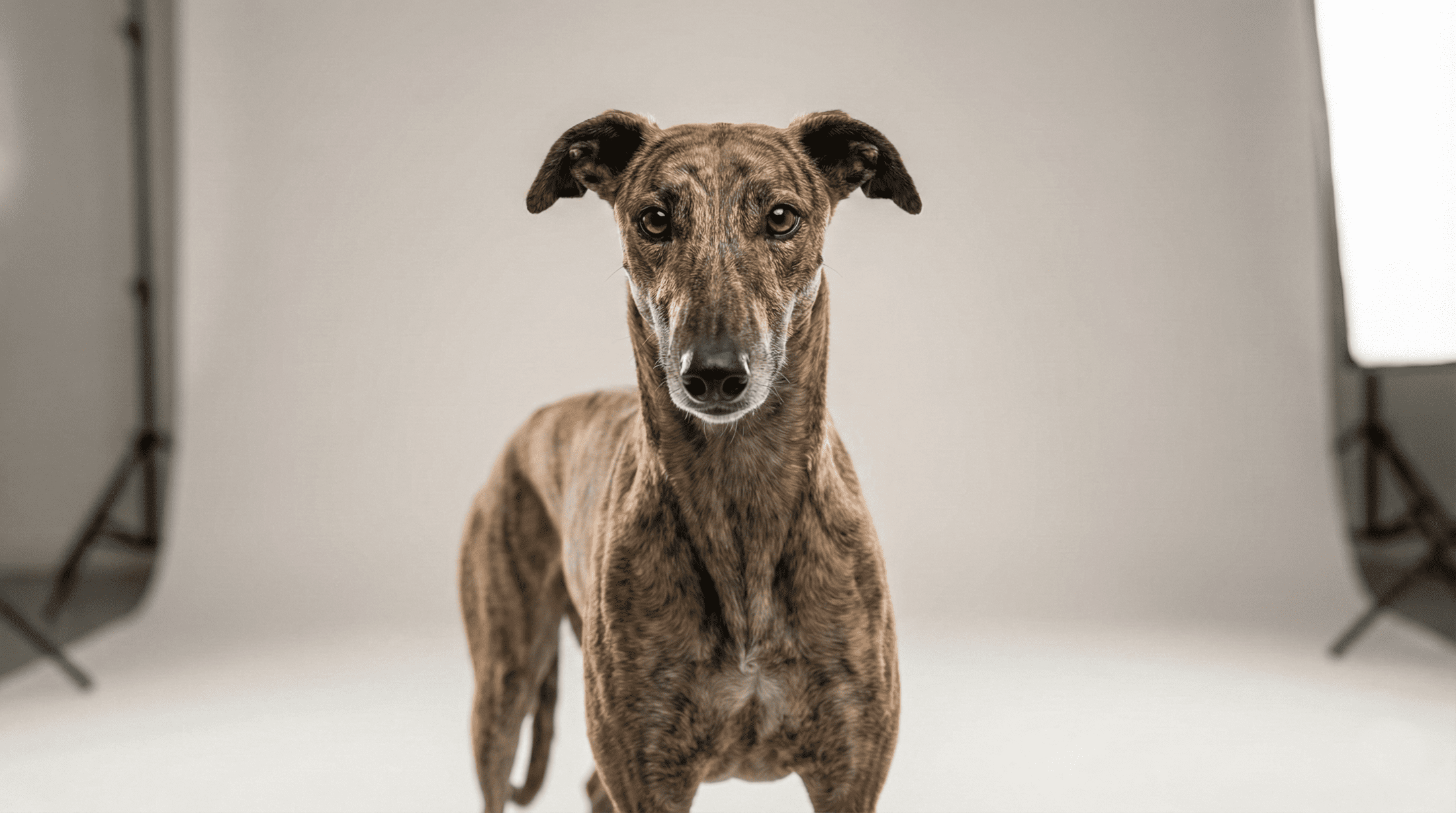
The 45-kilometre-an-hour couch dog
The Greyhound is the fastest dog on earth and one of the calmest to live with, and that contradiction is the whole point of the breed. It is a sighthound built for a short, explosive sprint — not for endurance. Having done that, it lies down.
Our specification table asks for an hour of daily exercise, and that hour looks nothing like an hour with a working breed. Two moderate lead walks and a short sprint in a securely fenced area satisfies most Greyhounds completely. They are famously described as forty-mile-an-hour couch potatoes, and the description is accurate: a retired racer typically sleeps eighteen hours a day and is one of the most apartment-suited large dogs available.
Temperamentally they are gentle, quiet, sensitive and undemonstrative. They rarely bark. They do not guard. They are poor watchdogs and excellent housemates.
Adopting a retired racer in Australia
Most Greyhounds available in Australia come through racing industry adoption programmes rather than from breeders, and there are a few things specific to that background worth knowing before you commit.
Muzzling laws differ by state and have changed. Several jurisdictions historically required Greyhounds to be muzzled in public, and most now provide an exemption for dogs that have passed an approved retraining or assessment programme — commonly referred to as a green collar scheme. The details and the exemption process vary by state and are periodically updated, so check the current requirement with your own state authority and council rather than relying on general advice. Ask the adoption organisation directly what your specific dog is certified for.
Cats and small dogs. A sighthound is built to chase small fast-moving things, and many ex-racers have never seen a cat. Adoption programmes assess and often specifically test for small-animal tolerance — ask for that assessment, and take it seriously. Some Greyhounds live happily with cats; some genuinely cannot.
Household novelty. A dog that has lived in a kennel may never have encountered stairs, glass doors, tiled floors, mirrors or a television. Expect an adjustment period of weeks rather than days, and be patient with it.
Secure fencing is non-negotiable. A Greyhound reaches full speed in a few strides, and recall is unreliable once a chase begins. That is not a training failure; it is what the breed is.
Health — and a physiology that surprises vets
Greyhounds are biochemically unusual
This is the single most useful thing an owner can know. Greyhounds have a naturally higher packed cell volume (red blood cell concentration), higher creatinine, and lower thyroid hormone levels than other breeds — and they have very little body fat.
The consequences are practical. Standard blood reference ranges can make a healthy Greyhound look abnormal, and a Greyhound can look normal while genuinely unwell. More seriously, low body fat changes anaesthetic handling — Greyhounds metabolise some anaesthetic agents differently and are prone to prolonged recovery.
Tell any vet who has not treated Greyhounds before that your dog is one, and ask whether they are familiar with breed-specific anaesthetic protocols and reference ranges. Most Australian vets are, given how common adopted Greyhounds now are — but it is a five-second conversation that prevents a real problem.
Bloat
The deep, narrow chest is classic conformation for gastric dilatation-volvulus. A hard distended abdomen, repeated retching that produces nothing, restlessness and rapid deterioration is a surgical emergency measured in hours. Know your nearest after-hours clinic before you need it, and feed two smaller meals rather than one large one.
Osteosarcoma
Bone cancer occurs disproportionately in large, long-limbed breeds and the Greyhound is among the most affected. It typically presents as persistent lameness with localised swelling, often in a front limb, in a middle-aged or older dog. Lameness in an older Greyhound that does not resolve deserves imaging rather than an assumption about arthritis.
Dental disease
Periodontal disease is unusually common in Greyhounds and many adopted dogs arrive with significant existing disease. Daily toothbrushing genuinely matters here, and a dental assessment should be part of the first veterinary visit after adoption.
Hypothyroidism
Interpret with the caveat above — Greyhounds naturally run lower on thyroid hormone, so a diagnosis should be made on clinical signs plus appropriate reference ranges, not on a number alone.
Thin skin, no fat, and Australian weather
Grooming is the easiest of any breed on our register: a weekly rubber curry and nothing else. But the same short coat means almost no insulation and very little padding.
Greyhounds feel the cold acutely and genuinely need a coat on cool mornings — this is not an affectation. They also need soft bedding, because bony points over a thin skin develop pressure sores on hard floors.
The thin skin tears easily, and lacerations from fences, scrub and even enthusiastic play are common and often need veterinary closure. In summer, the pale thin coat over pink skin burns readily, so shade matters, and a sighthound will sprint into heat stress without noticing — keep sprints short and early.
Ownership in Australia
In Victoria, microchipping and council registration are required from three months of age under the Domestic Animals Act 1994, renewing annually on 10 April. Desexed registration across the Victorian councils in our fee survey ranged from about $19.50 to $93.30 a year — and adopted dogs are registered free or at a heavily reduced rate by several Victorian councils, including Greater Dandenong, which registers pets adopted through recognised programmes at no charge. Check your own council’s adoption concession before you pay a standard fee.
The Greyhound is not a restricted breed. Muzzling requirements, where they apply, relate to the racing background rather than to any dangerous-breed classification — a distinction worth making clear to landlords and owners corporations, who sometimes conflate the two.
Registration is set by your local council. In Victoria, registering a desexed Greyhound costs between $19.50 and $93.30 a year depending on where you live, and roughly three times that if the dog is not desexed. See every Victorian council’s 2026–27 fee, or compare registration costs in every state.
Related breeds
The Greyhound is a large, purebred hound originating from the United Kingdom. This breed is renowned for its sleek, aerodynamic build, making it ideal for speed and agility. They typically weigh between 27 to 32 kg and have a short, smooth coat that requires minimal maintenance. Greyhounds exhibit a gentle and calm temperament with moderate reactivity and high sociability, particularly around children. Their trainability score stands at 3, indicating moderate learning potential. The breed is distinguished by its moderate-high energy levels, necessitating daily exercise of around 60 minutes. Greyhounds have a low hypoallergenic rating and shed minimally, making them relatively low-maintenance regarding coat care. Despite their lean build, they are prone to specific health issues, including Gastric Dilatation-Volvulus (GDV), Osteosarcoma, Hypothyroidism, Hip Dysplasia, and Periodontal Disease. The average lifespan of a Greyhound ranges from 10 to 14 years. In terms of veterinary expenses, the estimated annual cost is $1380, with a suggested contingency fund of $1200 available for unexpected medical interventions. The breed is relatively popular in Australia, ranking within the top 30. Breeds that tend to roam benefit from a GPS tracker; the Tractive DOG 6 GPS tracker is reviewed here.
Greyhounds require regular veterinary checkups to monitor and manage hereditary conditions like Gastric Dilatation-Volvulus, Osteosarcoma, and Hip Dysplasia. Annual blood tests for thyroid levels and regular dental cleanings are imperative due to their susceptibility to hypothyroidism and periodontal disease.
Daily care for a Greyhound involves 60 minutes of exercise, including walks or play. Their diet should be monitored to prevent obesity. Coat maintenance requires weekly brushing. Regular dental care and mental stimulation are essential due to the breed’s predisposition to periodontal disease and high intelligence.