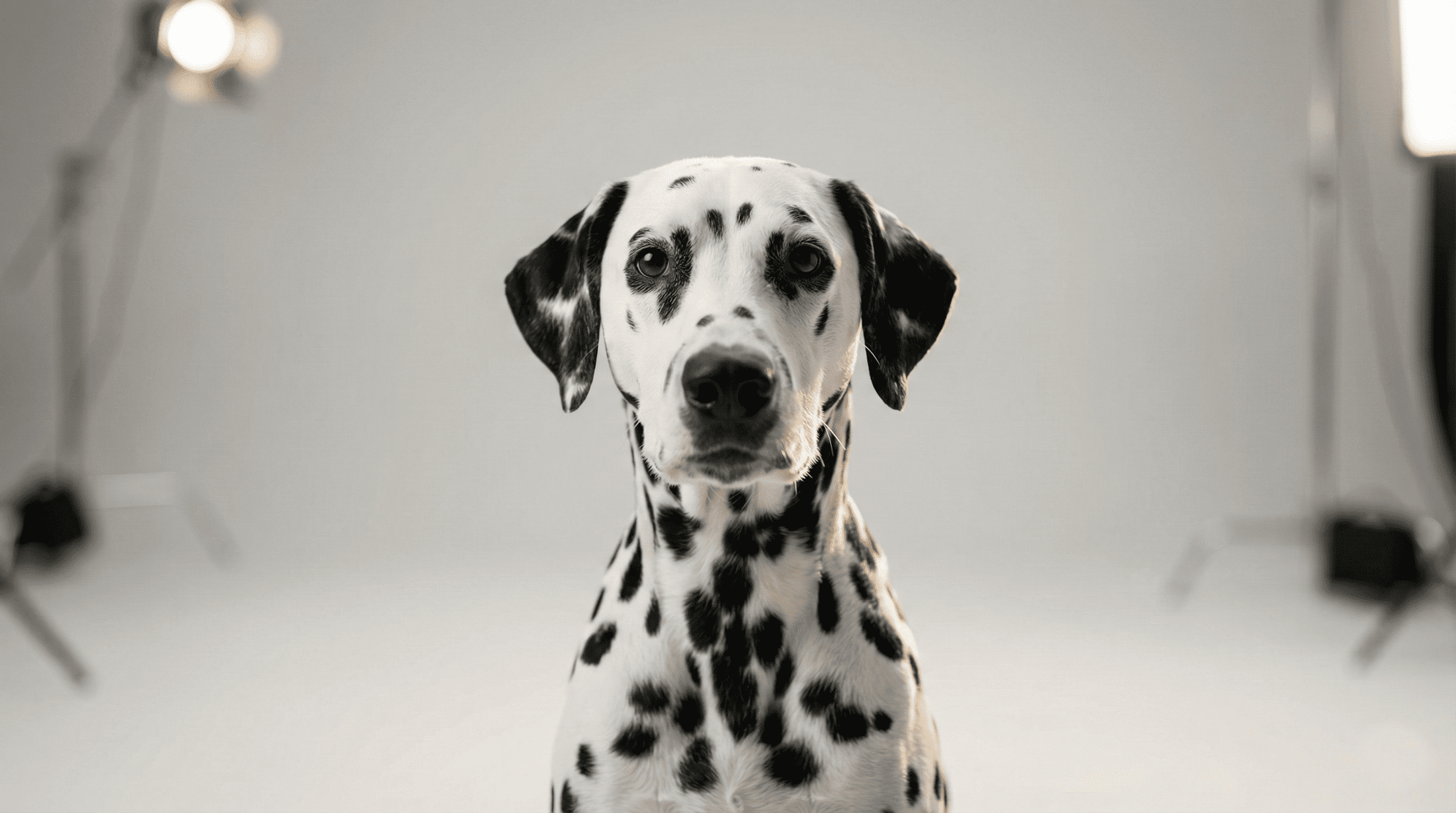
Dalmatians are medium-sized purebred dogs from Croatia. They possess a high energy level, require daily exercise, and have some known hereditary health issues.
The lifecycle cost of a Dalmatian includes $3000 for initial puppy expenses and $1656 annually for veterinary care. The Baseline scenario assumes minimal vet intervention, while the Extended scenario accounts for managing chronic conditions, increasing total expenditure.
// IS THIS BREED RIGHT FOR YOU?
ThinkPets ratings are our editorial judgement from the breed's size, energy, trainability, temperament and care needs. They are not measured outcomes or probabilities. How we rate
Apartment Living
Challenging
Families w/ Kids
Excellent
First-Time Owners
Excellent
Active Lifestyle
Excellent
Interactive Suitability Assessment
Answer these questions to calculate your personal compatibility score with Dalmatians.
How much time can you dedicate to exercise daily?
What size is your yard/living space?
Hours the dog will be alone daily?
Your Compatibility
—%
Select options to calculate your compatibility.
// BREED FACTS
Grooming
Coat Type
Short and dense
Shedding Level
Moderate
Home Brushing
Weekly
Professional Grooming
Every 12 weeks
~$98 per session
Exercise
Energy Level
High
Daily Requirement
90+ minutes
Activity Type
Running, fetch, sports
Mental Stimulation
High (puzzles, training)
Diet
Daily Intake
2.5 to 3.5 cups
Split into 2 meals
Obesity Risk
High
Monthly Food Cost
$78 - $128
Premium dry food
Special Considerations
Monitor treats strictly
A coaching dog, and two conditions unique to the breed
The Dalmatian was bred to run alongside horse-drawn carriages — sometimes for tens of kilometres a day — guarding the coach and clearing the road. That is the origin of both its athleticism and its temperament, and it is why our specification table asks for ninety minutes of daily exercise. This is an endurance animal, not a decorative one, and an under-exercised Dalmatian is a genuinely difficult dog to live with.
What makes the breed unusual medically is that its two defining health issues both trace back to the same genetics that produce its appearance. Neither is obscure and both are manageable, but an owner who does not know about them will be blindsided.
Deafness — ask whether the litter was BAER tested
Congenital deafness is more common in the Dalmatian than in any other breed. It is tied to the extreme piebald patterning: the same genetics that produce a white coat with discrete spots also affect the pigment cells required for normal inner ear development. Dogs with less pigment are at higher risk, and blue-eyed Dalmatians are at higher risk again.
A substantial minority of Dalmatian puppies are deaf in one or both ears. Unilateral (one-sided) deafness is very easy to miss — the dog compensates well and simply seems inattentive or poor at locating sound — and it is only reliably detected by a BAER test, performed on puppies from about five to six weeks of age.
Ask the breeder directly whether the litter was BAER tested and what each puppy’s result was. A responsible Dalmatian breeder tests every litter and will produce the results without being pushed. A bilaterally deaf Dalmatian can live a very good life with hand-signal training and permanently secure fencing — but that is a decision to make knowingly at eight weeks, not to discover at eight months.
Hyperuricosuria — a metabolic quirk found in every Dalmatian
This is the other condition unique to the breed, and it is one of the more interesting pieces of canine genetics.
Almost all dogs convert uric acid into allantoin, which is highly soluble and passes harmlessly in urine. The Dalmatian carries a mutation affecting uric acid transport, and it is fixed in the breed — effectively every purebred Dalmatian has it. The result is that they excrete far more uric acid than other dogs, which can crystallise into urate bladder stones.
Male dogs are at much greater risk because a stone can lodge in the narrower urethra. A male Dalmatian straining to urinate and producing little or nothing is a life-threatening emergency — a complete blockage is fatal within hours. Do not wait to see whether it resolves.
Management is largely practical and it works:
Water is the primary defence. Constant access, multiple bowls, and encouragement to drink. Dilute urine is the single most effective preventive measure.
Frequent opportunities to urinate. A dog holding on all day concentrates its urine.
Diet matters. Purine-rich foods — organ meat, some fish, game — increase uric acid load. Discuss an appropriate diet with your vet rather than choosing on marketing.
Straining, frequent small attempts, blood in the urine or discomfort while urinating warrants prompt veterinary attention in any Dalmatian.
The rest of the health picture
Hip dysplasia is screened radiographically — ask for the parents’ scores. Allergic skin disease is common in the breed and, in Australia, is usually seasonal and grass-pollen driven; identify which months affect your dog and treat ahead of the flare. The white coat and pink skin also mean genuine sunburn risk, particularly on the nose, ears and belly.
Exercise, temperament and training
Ninety minutes daily, and it should be sustained rather than explosive — this is a distance animal. Running alongside a bicycle, long structured walks and jogging suit it exactly. Wait until the skeleton has matured before serious distance work with a young dog.
Dalmatians are intelligent and trainable, with a score of 4, but they are also sensitive and they remember. Harsh handling produces an avoidant, wary dog rather than a compliant one. They can be reserved with strangers and benefit from broad early socialisation.
The breed is playful and good with children in an active family, but it is boisterous and 32 kilograms of enthusiastic Dalmatian at full speed is not a small-child-friendly proposition without supervision.
Coat and Australian conditions
Grooming is low: a short dense coat and a weekly rubber curry. Dalmatians shed constantly and the short white hairs weave into fabric with remarkable persistence — this is a real consideration and it is the complaint owners raise most often.
In summer, the pale coat over pink skin burns, so shade matters and pet-safe sunscreen on the nose and ear tips is reasonable for a dog spending time outdoors. Exercise early or late and carry water — a high-drive endurance dog will keep going well past the sensible point.
Ownership in Australia
In Victoria, microchipping and council registration are required from three months of age under the Domestic Animals Act 1994, renewing annually on 10 April. Desexed registration across the Victorian councils in our fee survey ranged from about $19.50 to $93.30 a year.
Two questions decide whether this breed suits you, and both can be answered before you buy: can you supply ninety minutes of real exercise every day for twelve years, and did the breeder BAER test the litter? Everything else about owning a Dalmatian is straightforward.
The Dalmatian, originating from Croatia, is a medium-sized purebred dog classified under the Utility group. With a health complexity score of 1.8, they feature a short, dense coat that is not hypoallergenic and sheds moderately. This breed exhibits high energy levels, necessitating at least 90 minutes of daily exercise. Dalmatians are known for their energetic and intelligent temperament but are also prone to separation anxiety and obesity. They are very good with children, but they require consistent socialization for moderate compatibility with other pets. The breed has a lifespan of 10 to 13 years and presents several key health issues, including deafness, urolithiasis, hip dysplasia, allergies, and hyperuricemia. Grooming needs are low, but weekly coat maintenance is recommended. Estimated first-year puppy cost is $3000, with an annual veterinary cost of $1656 and a contingency fund of $1440. Ranking 39th in intelligence and among the top 60 in Australian popularity, Dalmatians suit owners prepared for active care routines and vigilant health monitoring.
// 02 Health Considerations
Due to their health complexity, Dalmatians should have regular veterinary checkups to monitor for hereditary conditions such as deafness, hip dysplasia, urolithiasis, allergies, and hyperuricemia. Annual health screenings and prompt medical care are advisable.
// 03 Care Requirements
Daily exercise metrics for a Dalmatian include 90 minutes of activity such as running or agility training. Coat maintenance protocols involve weekly brushing to manage moderate shedding. A balanced diet and regular health monitoring are critical to prevent obesity and manage known hereditary conditions.
// 04 FAQs
Dalmatians typically live between 10 and 13 years. Factors such as diet, exercise, and healthcare can affect lifespan.
Yes, Dalmatians are very good with children. Proper socialization enhances child-friendly behavior.
Dalmatians require at least 90 minutes of daily exercise. High energy levels necessitate activities like running or agility training.
Dalmatians have a moderate shedding level. Weekly coat maintenance helps manage shedding effectively.
Yes, Dalmatians are prone to deafness, urolithiasis, hip dysplasia, allergies, and hyperuricemia. Regular veterinary checkups are essential.
Dalmatians are prone to separation anxiety and may not do well when left alone for extended periods.
Dalmatians rank 39th in intelligence. They are trainable but benefit from consistent, positive reinforcement methods.
The estimated annual veterinary cost for a Dalmatian is $1656, covering essential medical care.
No, Dalmatians have low grooming needs. Weekly at-home coat maintenance is sufficient.
Dalmatians are energetic, playful, loyal, protective, and intelligent. They benefit from regular mental and physical stimulation.