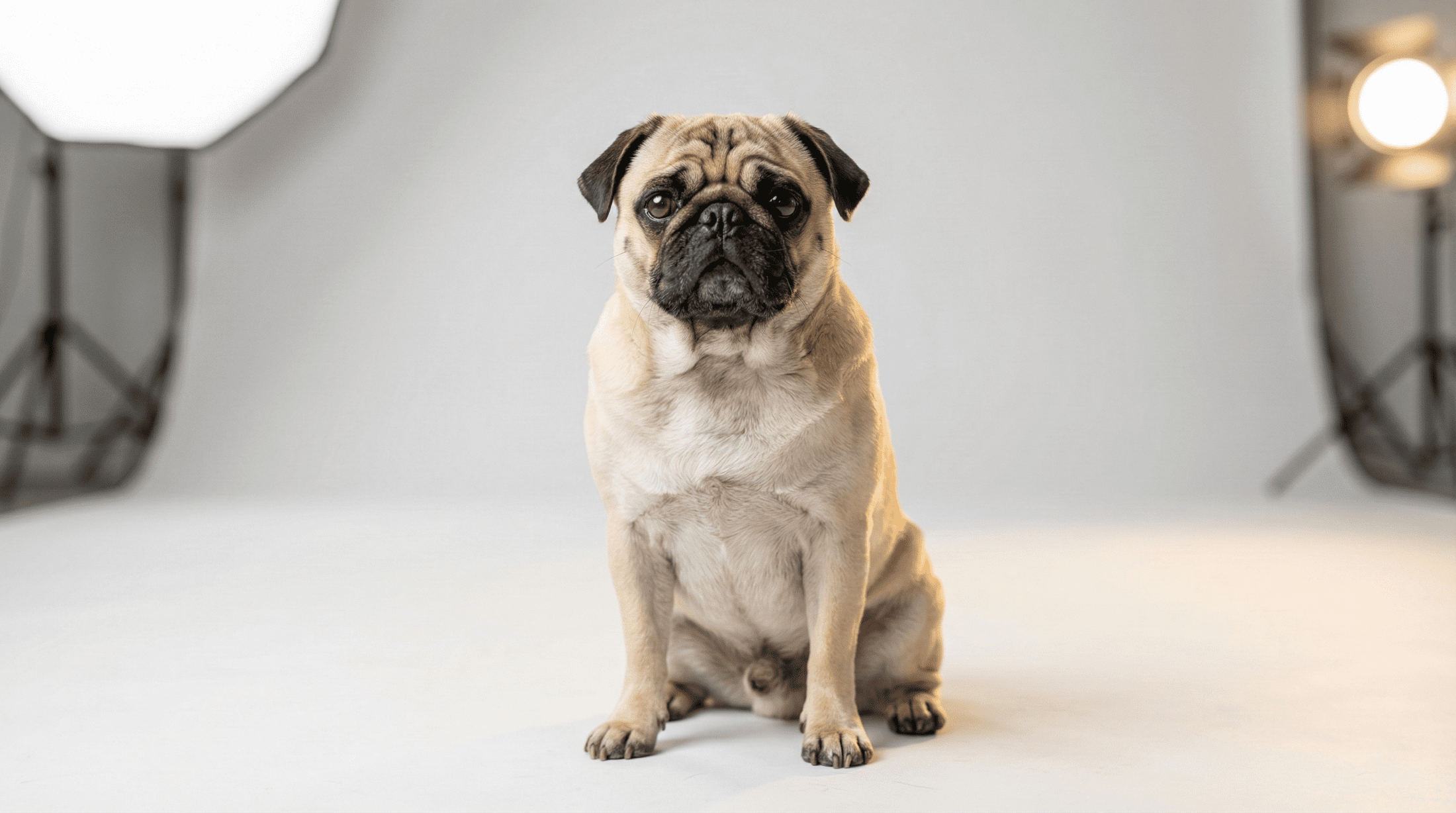
Pug at a glance
| Lifespan |
10 to 12 years in most breed guides; a UK veterinary study found a life expectancy at birth of about 7.7 years |
| Adult weight |
6 to 8 kg |
| Exercise |
About 30 minutes a day, avoiding heat |
| Lifetime cost |
About $19,300 to $28,500 over 10 years (calculator below) |
| Main health risks |
Breathing problems (BOAS), obesity, eye injuries, back problems (IVDD), hip dysplasia |
How long do Pugs live?
Breed guides usually give 10 to 12 years. Real-world data is less generous: a 2022 UK study of more than 30,000 dogs found a Pug’s life expectancy at birth was about 7.7 years, among the lowest of the breeds studied, compared with 11.2 years for dogs overall. Breathing problems are the main reason. Keeping your Pug lean, cool and treated early for breathing difficulty gives it the best chance of a long life.
How big does a Pug get?
Adult Pugs usually weigh 6 to 8 kg and are fully grown at around 9 to 12 months. A Pug that weighs much more than that is usually overweight rather than big-boned, and extra weight makes their breathing noticeably worse.
Comparing breeds? See French Bulldog vs Pug, compared side by side on size, cost and health, or what popular breeds cost.
A wonderful temperament in a body that needs managing
The Pug is an ancient Chinese companion breed, kept for centuries for no purpose other than company. It shows. This is a charming, comic, deeply people-oriented dog that is genuinely good with children and content in an apartment.
It is also the most extremely brachycephalic breed on our register, and that shapes every practical decision an owner makes. A VetCompass analysis of Pug health in the UK found the breed to have markedly different disorder predispositions from the wider dog population, concentrated in exactly the areas you would predict from the shape of the skull: airway, eyes and skin folds.
None of this makes the Pug a bad choice. It makes it a dog with a specific management burden that a good owner carries willingly and knowingly.
Breathing
Brachycephalic obstructive airway syndrome is a consequence of fitting normal soft tissue into a severely shortened skull. Research across brachycephalic breeds has consistently identified stenotic (narrowed) nostrils as a significant risk factor in Pugs, French Bulldogs and Bulldogs in every model tested, alongside facial foreshortening and a higher neck-to-chest girth ratio.
Critically, the same research found that higher body condition score independently increased BOAS risk in Pugs. Weight is therefore not a cosmetic issue in this breed — it is a respiratory one, and it is the single largest factor within an owner’s control.
When choosing a puppy, look at the nostrils first: open, or pinched to slits? Listen to the dog at rest and again after two minutes of play. Snorting, snuffling and snoring at rest are not breed charm — they are the sound of a dog working hard to move air. Choosing the puppy with the more open face is both the kinder decision and the cheaper one, because corrective airway surgery is common in Pugs and is not a minor procedure.
Heat — the Australian rule set
A dog that cannot cool efficiently by panting cannot cool efficiently at all, and panting is a dog’s primary cooling mechanism. UK research into heat-related illness identified flat-faced breeds including the Pug as being at significantly increased risk — and those findings come from a British climate, not an Australian one.
The rules are firm. Exercise only in the early morning or after dusk through the warmer months. Never leave a Pug in a stationary vehicle, not even briefly. Carry water, provide deep shade and airflow, and consider cooling mats indoors.
Know the emergency presentation: laboured noisy breathing that will not settle within a few minutes of stopping, brick-red or blue-tinged gums, staggering, vomiting or collapse. Cool the dog with room-temperature water and get to a vet immediately. This is the most likely emergency a Pug owner will face in Australia, and it is largely preventable.
Eyes
The large, prominent, shallow-set eyes that give the Pug its expression sit in very shallow sockets with limited protection. Corneal ulceration is common and often follows something minor — a scratch during play, a grass seed, a knock on furniture. Severe cases can threaten the eye itself.
A Pug that squints, weeps, paws at its face or holds an eye closed needs same-day veterinary attention. Corneal injuries deteriorate quickly and are far easier to treat early. Keep the nasal fold clean and dry, because hair from the fold rubbing the cornea is a recognised contributor.
The spine
The Pug’s screw tail is a marker for hemivertebrae — malformed vertebrae — and the breed is prone to intervertebral disc disease. Combined, these make spinal problems a real risk rather than a remote one.
Discourage jumping down from lounges and beds, support both ends when lifting, use a harness rather than a collar, and keep the dog lean. Sudden reluctance to move, a hunched back, yelping when handled, or hind-limb weakness or wobbliness is urgent.
Skin folds and weight
The facial folds trap moisture and debris and are prone to dermatitis. Wipe them and — the step people skip — dry them properly. Weekly as routine, daily in humid weather. The pocket beneath a screw tail needs the same attention.
Obesity deserves listing as a health issue in its own right here, because it is extremely common in Pugs and because it simultaneously worsens the breathing, the spine and the joints. You should be able to feel the ribs easily under a thin layer. Weigh food rather than estimating it, count treats within the daily total, and be firm with visitors. A Pug will convince anyone that it has not been fed.
Exercise and temperament
Thirty minutes of gentle daily activity, split into short sessions and timed around the heat. This is a companion dog, not an athlete, and pushing it is genuinely dangerous rather than merely unkind. Mental work suits it better than distance — short food-motivated training sessions and puzzle feeders, which also help manage the appetite.
The trainability score of 3 reflects stubbornness rather than incapacity. Pugs are perfectly trainable with food and patience, and impossible to bully.
They shed considerably more than the short coat suggests, particularly fawn dogs. A weekly rubber curry helps; the hair is fine, pale and gets everywhere regardless.
Ownership in Australia
In Victoria, microchipping and council registration are required from three months of age under the Domestic Animals Act 1994, renewing annually on 10 April. Desexed registration across the Victorian councils in our fee survey ranged from about $19.50 to $93.30 a year.
Budget realistically. Between eye emergencies, skin fold management, weight control and the realistic possibility of airway surgery, the Pug is one of the more veterinary-intensive small dogs to own well. Going in knowing that — and choosing the puppy with the most open nostrils you can find — is the fairest thing you can do for the animal.
Registration is set by your local council. In Victoria, registering a desexed Pug costs between $19.50 and $93.30 a year depending on where you live, and roughly three times that if the dog is not desexed. See every Victorian council’s 2026–27 fee, or compare registration costs in every state.
Related breeds
The Pug is a purebred canine originating from China, classified under the Toys breed group. This small dog weighs between 6 to 8 kilograms and has a short, smooth coat that is not hypoallergenic. The breed averages a lifespan of 10 to 12 years but is susceptible to numerous health issues, including Brachycephalic Syndrome, Intervertebral Disc Disease, Obesity, and Hip Dysplasia. These conditions necessitate regular veterinary care and increase the annual medical costs. The Pug has a moderate energy level requiring approximately 30 minutes of exercise per day. The breed is recognized for its charming and playful temperament, though it tends to be somewhat stubborn. Due to high sociability, Pugs are good with children but moderate compatibility with other pets. They are prone to separation anxiety and have a high risk of obesity, making routine monitoring critical. Grooming needs are moderate, requiring weekly brushing to manage shedding. Training can be a challenge due to their moderate trainability score. In terms of popularity, Pugs rank in the top 30 in Australia.
Routine veterinary checkups are critical for monitoring Brachycephalic Syndrome, Intervertebral Disc Disease, Obesity, and Hip Dysplasia. Early intervention can manage hereditary conditions effectively. Owners should ensure vaccinations, parasite control, and dental care are up-to-date.
Daily care for a Pug involves 30 minutes of physical activity to meet moderate energy needs. Weekly brushing controls moderate shedding. Due to high separation anxiety, consistent human interaction is essential. Balanced nutrition is crucial to mitigate high obesity risk.