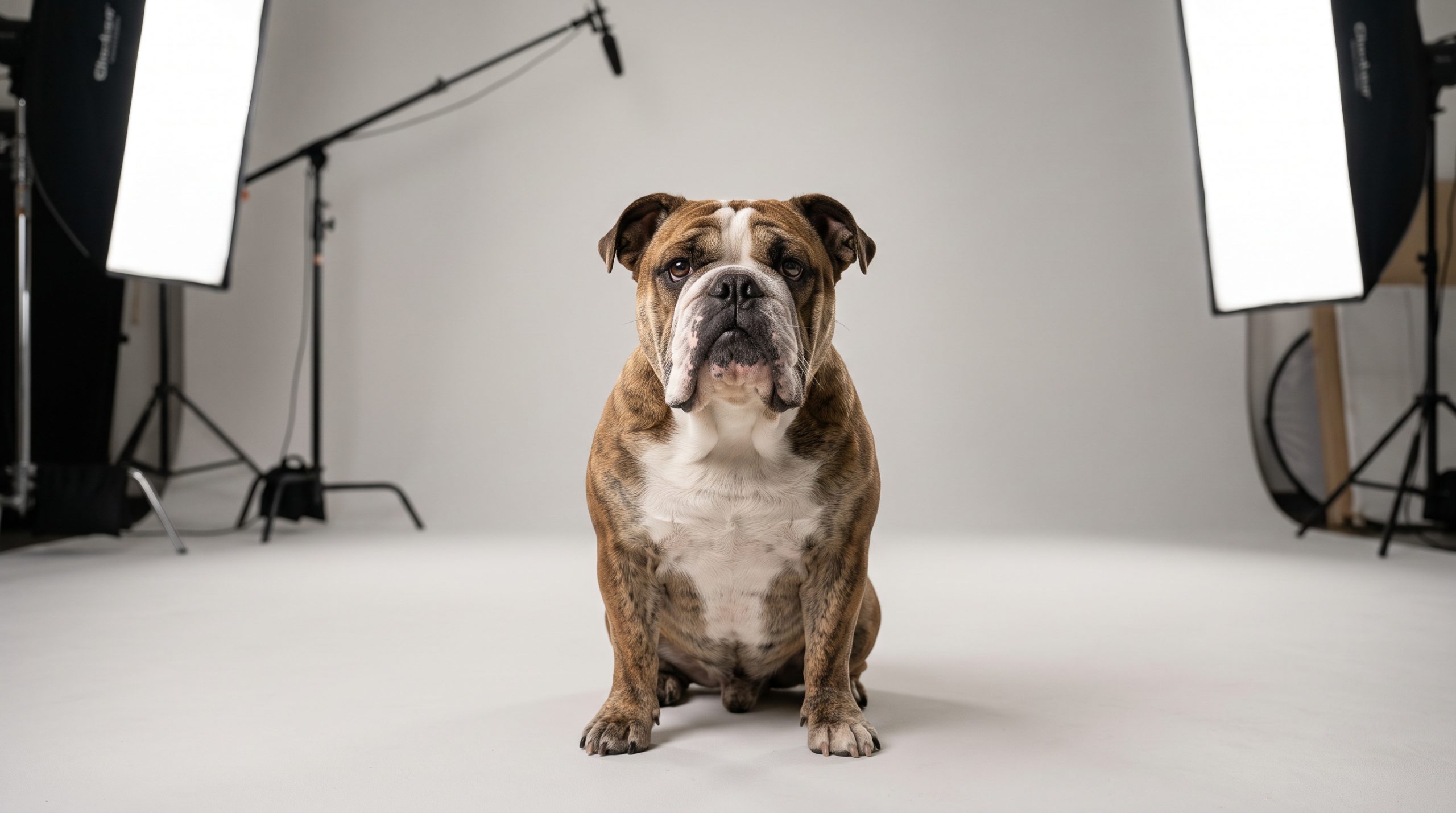
The British Bulldog is a calm, affectionate, medium-sized dog (about 22 to 25 kg) with serious inherited health problems. Its flat face causes breathing difficulty, its skin folds need daily care, and UK research puts its average life expectancy at about 7 years. It suits quiet homes that can keep it cool and budget for high vet bills.
The lifetime cost of a British Bulldog is driven mainly by vet bills. Our low-cost scenario assumes routine care only. The standard scenario adds the kind of treatment many Bulldogs need, such as airway surgery or treatment for cherry eye and skin infections. The high-cost scenario allows for several surgeries and ongoing skin, eye or breathing care. Budget about $900 to $2,500 a year for vet costs and set aside about $2,000 a year for unexpected bills. Because many insurers charge more for this breed or exclude existing conditions, check what a policy covers before relying on it.
// IS THIS BREED RIGHT FOR YOU?
ThinkPets ratings are our editorial judgement from the breed's size, energy, trainability, temperament and care needs. They are not measured outcomes or probabilities. How we rate
Apartment Living
Good
Families w/ Kids
Excellent
First-Time Owners
Fair
Active Lifestyle
Challenging
Interactive Suitability Assessment
Answer these questions to calculate your personal compatibility score with British Bulldogs.
How much time can you dedicate to exercise daily?
What size is your yard/living space?
Hours the dog will be alone daily?
Your Compatibility
—%
Select options to calculate your compatibility.
// BREED FACTS
Grooming
Coat Type
Short, fine and smooth
Shedding Level
Moderate
Home Brushing
Wipe and dry skin folds daily; brush weekly
Professional Grooming
Every 8 weeks
~$70 per session
Exercise
Energy Level
Low
Daily Requirement
30+ minutes
Activity Type
Walks, play sessions
Mental Stimulation
Moderate
Diet
Daily Intake
2 to 3 cups
Split into 2 meals
Obesity Risk
High
Monthly Food Cost
$50 - $100
Premium dry food
Special Considerations
Monitor treats strictly
// 01 Breed Profile
The British Bulldog, also called the English Bulldog, is a stocky, low-slung dog with a broad head, short muzzle and loose, wrinkled skin. The breed standard used in Australia sets a weight of about 25 kg for males and 23 kg for females. Despite its tough look, the modern Bulldog is a gentle, people-focused companion that is happy with short walks and plenty of time on the couch.
The breed's health problems are the most important thing to understand before buying one. A large UK study of 2,662 Bulldogs, published in 2022, found they were about twice as likely as other dogs to have at least one disorder in a given year, with much higher odds of skin fold infections, cherry eye, breathing obstruction (BOAS), turned-in eyelids, dry eye and cysts between the toes. A separate UK study of dogs that died between 2016 and 2020 put the breed's life expectancy at birth at about 7.4 years, compared with 11.2 years for dogs overall.
Most of these problems come from the shape the breed has been bred for: a flat face that narrows the airway, deep skin folds that trap moisture, and a large head that means most puppies are delivered by caesarean section. Choosing a puppy from parents with more open nostrils, a longer muzzle and a good airway grading, if the breeder has had it done, gives you the best chance of a healthier dog.
Bulldogs struggle in heat. In an Australian summer, walk only in the early morning or late evening, provide shade, water and air-conditioning, and never leave a Bulldog in a car. Heatstroke can kill a Bulldog quickly.
They are not demanding to groom, but the face, tail and body folds need wiping and drying every day to prevent infection. Budget for higher than average vet costs: airway surgery, eye surgery and ongoing skin treatment are common.
// 02 Health Considerations
Breathing problems (BOAS) are the most serious health issue for Bulldogs. Signs include loud breathing or snoring, struggling with exercise or heat, gagging, and sleeping sitting up. Surgery to widen the nostrils and shorten the soft palate can help many dogs, and works best before the problem becomes severe. Skin fold infections, eye problems (cherry eye, turned-in eyelids and dry eye) and cysts between the toes are also common and need prompt treatment. When buying a puppy, ask whether the parents have open nostrils and have had a breathing assessment, and see the parents exercise if you can. Hip dysplasia is also common, so ask for hip X-ray results.
// 03 Care Requirements
Daily care for a Bulldog means cleaning and drying skin folds, keeping the dog cool, and keeping it lean. Wipe the facial folds with a damp cloth or vet-recommended wipe and dry them thoroughly. Check eyes daily for redness, discharge or a red lump in the corner (cherry eye). Keep the home cool in summer and avoid exercise in the heat. Weigh your dog monthly. Book a vet check every six months, because problems with breathing, eyes and skin are easier to treat early.
// 04 FAQs
A large UK study of dogs that died between 2016 and 2020 found a life expectancy at birth of about 7.4 years for English (British) Bulldogs, compared with 11.2 years for dogs overall. Many Bulldogs live longer, but breathing, skin and heart problems shorten many lives. Keeping your dog lean and cool and treating breathing problems early give it the best chance.
UK research on more than 2,600 Bulldogs found much higher odds of skin fold infections, cherry eye, breathing obstruction (BOAS), turned-in eyelids, dry eye and cysts between the toes than other breeds. Hip dysplasia and heatstroke are also common. Most of these problems are linked to the breed's flat face, skin folds and heavy build.
Our cost model puts the lifetime cost at about $23,000 in a low-cost scenario and about $33,500 in our standard scenario, with a high-cost scenario of about $52,000 if your dog needs several surgeries. Vet bills are the biggest variable. Use the calculator on this page to add your own puppy price.
Not well. Their short airway makes it hard for them to cool down by panting, so they overheat much faster than most dogs. Walk only in the early morning or evening in summer, provide air-conditioning, shade and water, and never leave a Bulldog in a car. Heatstroke is a genuine emergency for this breed.
Not all, but many do. Surgery to widen the nostrils and shorten the soft palate can make a big difference to dogs with noisy breathing or poor exercise tolerance. Ask your vet to assess your dog's breathing while it is young, because surgery tends to work best before the airway is badly damaged.
Usually, yes. Bulldogs are gentle, patient and very attached to their families. As with any dog, supervise young children, and teach them not to play rough or pull on skin folds. Their low energy also means they won't keep up with long games of running and fetch.
They are affectionate but stubborn, and Stanley Coren's ranking places them among the breeds slowest to learn new commands. Short, positive training sessions with food rewards work best. Avoid long sessions or anything physically demanding, especially in warm weather.
No. The British Bulldog is not a restricted breed in any Australian state or territory. It is registered with your council like any other dog. Don't confuse it with the American Bulldog or with the American Pit Bull Terrier, which is a restricted breed.
Ask to see both parents and how they breathe at rest and after a short walk. Look for open nostrils and a less extreme face. Ask for hip X-ray results, any breathing assessment the parents have had, and whether the puppies were born by caesarean section, which is common in this breed. A good breeder will be open about the breed's health problems.
Yes, more than their short coat suggests. They are not hypoallergenic. A weekly brush keeps loose hair under control, but the skin folds need more attention than the coat.