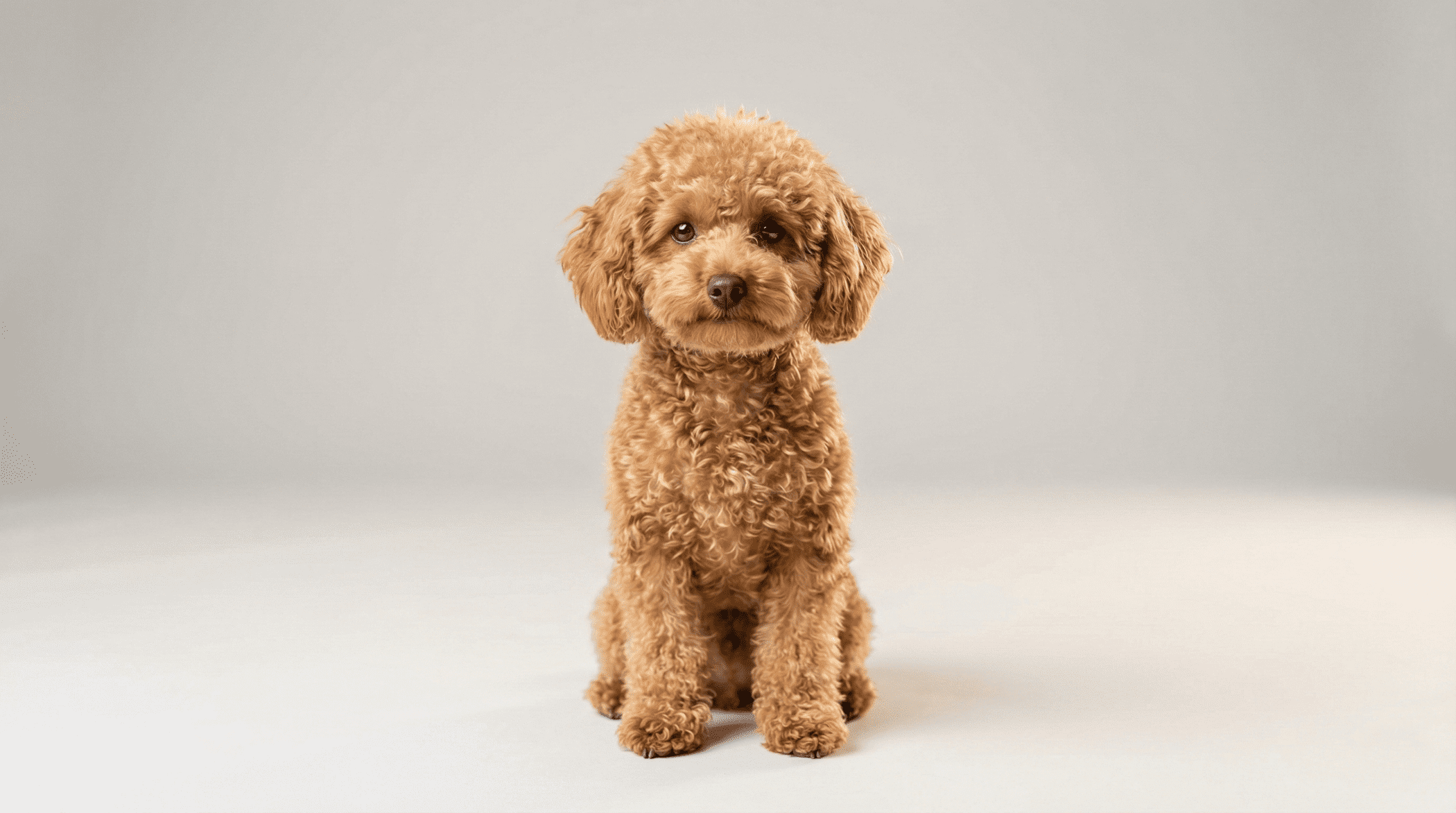
Toy Poodle at a glance
| Lifespan |
12 to 15 years |
| Adult weight |
2 to 4 kg |
| Height (breed standard) |
Under 28 cm at the shoulder |
| Shedding |
Very low, but no dog is fully hypoallergenic |
| Lifetime cost |
About $21,500 to $30,300 over 12 years (calculator below) |
| Main health risks |
Kneecap problems (luxating patella), Legg-Calvé-Perthes disease (hip), epilepsy, dental disease, progressive retinal atrophy |
Are Toy Poodles hypoallergenic?
No dog is completely hypoallergenic, because the allergens people react to are in saliva and skin flakes as well as hair. Toy Poodles shed very little, though, and their tightly curled coat holds loose hair, so many people with mild dog allergies cope better with a Poodle than with a shedding breed. Spend time with the breed before committing if anyone in your home has allergies.
How long do Toy Poodles live?
Most live 12 to 15 years, and many live longer. Dental disease is the most common long-term problem in such a small mouth, so daily tooth brushing from puppyhood is one of the best things you can do for a Toy Poodle’s health.
The same working brain in the smallest package
The Toy Poodle is a size variety of the Poodle, a French and German water retriever, rather than a separate ornamental breed. It carries the same intelligence ranking of 2 and the same maximum trainability score as its larger relatives — in a 2 to 4 kilogram body.
That combination is the thing to understand. A Toy Poodle learns quickly and keeps learning whether or not you are teaching, and a bright dog with a moderate-to-high energy rating and nothing to do will find its own occupation. Barking at every passing sound is the usual result, and it is far easier to prevent with early work on a settle cue than to fix after three years.
Around an hour of daily activity suits this breed, and a real share of it should be mental rather than physical. Trick training, scent games, obedience and food puzzles all cost nothing and satisfy far more than distance walking. This is a dog that visibly enjoys being asked to do things.
Small-dog structure: what to protect
Legg-Calvé-Perthes disease
Degeneration of the head of the femur in the hip joint, caused by disrupted blood supply. It affects toy breeds and typically appears between five and eight months. The sign is a young dog that becomes progressively lame on one hind leg, often with visible muscle wastage on that side over a few weeks. It is painful and treatable, usually surgically with good outcomes — but persistent hind-limb lameness in a Toy Poodle puppy needs diagnosis, not patience.
Patellar luxation
A dislocating kneecap, graded I to IV. Grades II and above frequently require surgery; grade I is generally managed with lean body condition and controlled exercise. Discourage jumping down from lounges and beds — steps or a small ramp for a 3-kilogram dog is orthopaedic sense.
Tracheal collapse and lead pressure
Toy breeds are prone to weakening of the cartilage rings supporting the windpipe, producing a dry, honking cough that worsens with excitement and heat. Use a well-fitted harness rather than a collar from the first walk. It costs nothing and the damage it prevents does not reverse.
Dental disease
Periodontal disease is close to universal in unmanaged toy jaws, where a full complement of teeth is crowded into very little space. Daily toothbrushing from puppyhood is the single highest-value habit for this dog, and retained baby teeth around five to seven months should be checked rather than left.
Puppy hypoglycaemia
A puppy this small carries almost no glycogen reserve and can crash into low blood sugar if a meal is missed. Feed small amounts frequently in the first months, and treat wobbliness, lethargy or unresponsiveness as urgent.
Eyes and neurology
Progressive retinal atrophy is DNA-testable via the prcd mutation. It is recessive, so two clear parents cannot produce an affected dog — which makes this entirely avoidable in a planned litter. Ask any breeder for both parents’ results by name.
Idiopathic epilepsy occurs in Poodles, typically first appearing between one and five years. A first seizure warrants veterinary assessment; a seizure lasting more than five minutes, or seizures in clusters, is an emergency. Most affected dogs are well controlled on medication and live a normal lifespan.
Poodles are also over-represented for hormonal disease across a long life — Cushing’s disease and Addison’s disease both occur. The signs are gradual and easily attributed to ageing: marked increases in drinking and urinating, symmetrical coat loss along the flanks, or a pattern of unexplained lethargy and poor appetite. Any of those is worth raising with a vet rather than accepting.
The coat is the defining cost
The dense curly Poodle coat sheds very little, which is why the breed is so often described as allergy-friendly. It is not hypoallergenic — no dog is. The proteins people react to are in dander, saliva and urine rather than hair, and a low-shedding coat simply circulates less of that material through a home. Some allergy sufferers do cope better, but it is a difference of degree, not a guarantee. If allergies are your reason for choosing this breed, spend real time with the individual dog first.
Low shedding also has a permanent cost. Hair that does not fall out mats instead, and an unattended Poodle coat felts against the skin, which is painful and can only be resolved by shaving off. Brush thoroughly through the week — right to the skin, not just over the surface — and expect a professional groom every four to six weeks for the dog’s whole life.
That is the highest recurring grooming requirement of any breed on our register, and over a fifteen-year lifespan it will exceed what you spend on food. Budget for it before you buy.
Poodles also grow hair inside the ear canal which, with drop ears, makes otitis a recurring theme. Have ears checked at every groom and dried thoroughly after any bath.
Ownership in Australia
In Victoria, microchipping and council registration are required from three months of age under the Domestic Animals Act 1994, renewing annually on 10 April. Desexed registration across the Victorian councils in our fee survey ranged from about $19.50 to $93.30 a year.
In summer, ask your groomer to leave enough coat on the back and shoulders for sun protection — a closely clipped Poodle has very little. And because a 3-kilogram dog walks close to hot ground, test the pavement with the back of your hand before setting out.
Registration is set by your local council. In Victoria, registering a desexed Toy Poodle costs between $19.50 and $93.30 a year depending on where you live, and roughly three times that if the dog is not desexed. See every Victorian council’s 2026–27 fee, or compare registration costs in every state.
Related breeds
The Toy Poodle, originating from France, is a purebred member of the Toys group and features a health complexity score of 1.5. They typically weigh between 2 to 4 kg and are classified as small. Sporting a curly, dense, low-shedding coat, they require substantial grooming: weekly brushing and professional grooming every 4-6 weeks. Toy Poodles have a lifespan of 12 to 15 years. They exhibit high intelligence (ranking 2nd in intelligence), making them highly trainable but necessitate moderate to high daily exercise (30 to 60 minutes). They have a moderate energy level and moderate reactivity with other pets. They are good with children, but they have a moderate risk of separation anxiety. Key health issues include Progressive Retinal Atrophy, Luxating Patella, Legg-Calve-Perthes Disease, Epilepsy, and Dental Disease. First-year puppy costs estimate to $3500, with an annual veterinary cost of approximately $960 and a contingency fund recommendation of $1200.
Monitor for hereditary conditions such as Progressive Retinal Atrophy, Luxating Patella, Legg-Calve-Perthes Disease, and Epilepsy. Regular veterinary check-ups are necessary to manage these conditions effectively. Dental hygiene is crucial due to their predisposition to dental disease.
Daily care for Toy Poodles involves 30 to 60 minutes of exercise, including walks and mental stimulation exercises. Weekly brushing and grooming every 4-6 weeks are essential to maintain their low-shedding coat. A balanced diet tailored to small breeds should be maintained, alongside regular vet check-ups.