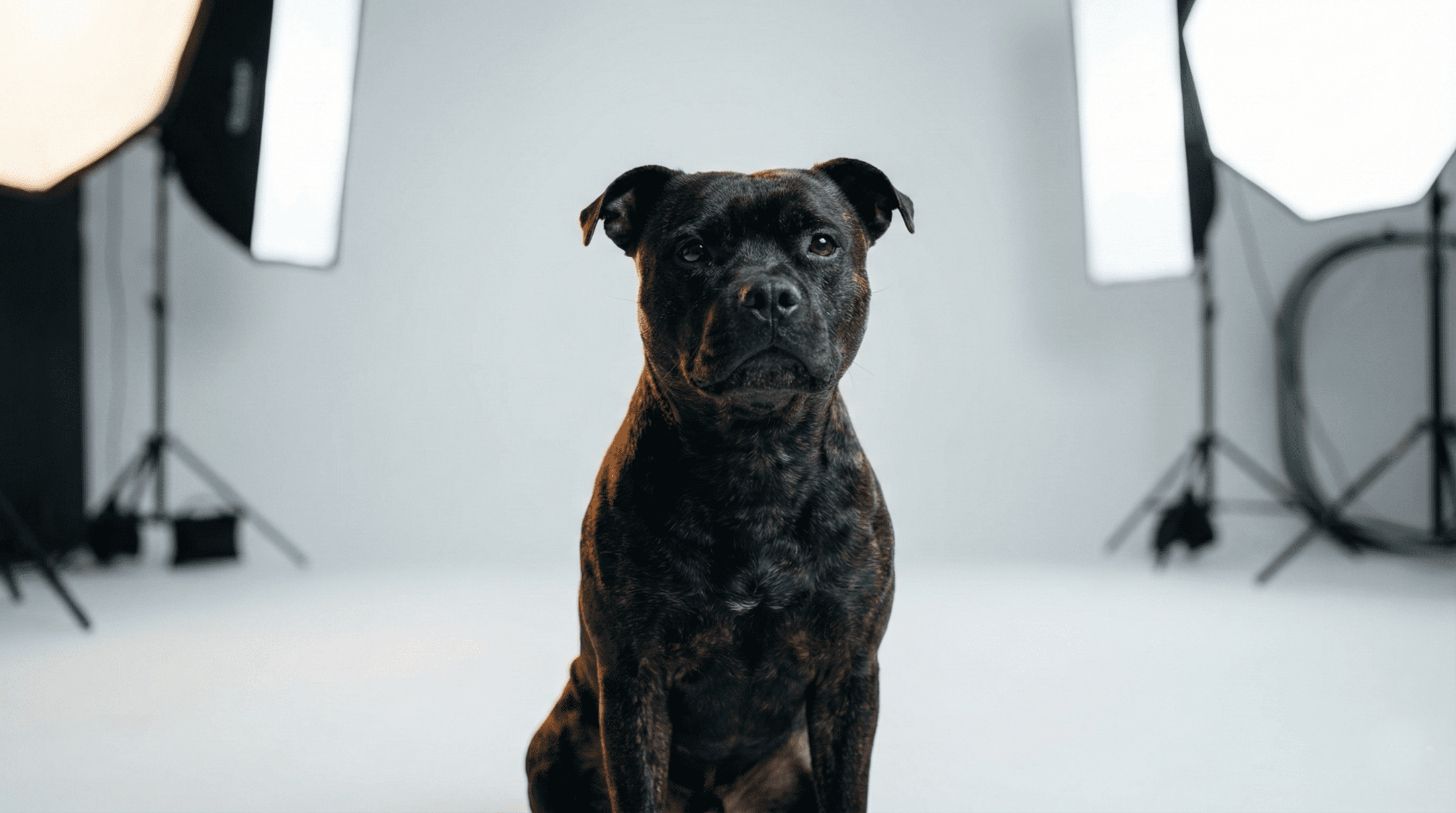
Staffordshire Bull Terrier at a glance
| Lifespan |
12 to 14 years |
| Adult weight |
11 to 17 kg |
| Restricted breed? |
No, not anywhere in Australia (explained below) |
| Exercise |
Around an hour a day |
| Main health risks |
Skin allergies, L-2-HGA, hereditary cataract, hip dysplasia, mast cell tumours |
Staffordshire Bull Terrier health issues
Two of the breed’s inherited conditions can be ruled out completely with a DNA test of the parents. The rest are managed rather than prevented.
| Condition |
What it does |
Can the parents be screened? |
| L-2-hydroxyglutaric aciduria (L-2-HGA) |
Neurological: seizures, tremors and wobbliness, usually from 6 to 12 months of age |
Yes, DNA test |
| Hereditary cataract (HSF4) |
Cataracts in both eyes, leading to blindness by two to three years |
Yes, DNA test |
| Persistent hyperplastic primary vitreous (PHPV) |
Eye defect present from birth |
Yes, by eye examination |
| Hip dysplasia |
Malformed hip joints, causing arthritis and pain |
Yes, by hip-scoring X-rays |
| Skin allergies (atopy) |
Itching, licking and skin infections, often flaring with grass pollen and humid weather |
No. Lifelong management |
| Mast cell tumours |
The breed is prone to this skin cancer |
No. Have any new lump checked by a vet promptly |
| Demodectic mange |
Patchy hair loss, mostly in young dogs |
No |
The DNA-testable conditions are explained in detail below, along with what to ask a breeder.
How long do Staffies live?
Most Staffordshire Bull Terriers live 12 to 14 years. Keeping your Staffy lean, getting on top of skin allergies early and checking new lumps promptly do more for a long life than anything else, because skin disease and mast cell tumours are the problems Australian owners meet most often.
First, the question everyone actually arrives with
The Staffordshire Bull Terrier is not a restricted breed anywhere in Australia. It is a Dogs Australia (ANKC) recognised breed with a published breed standard, shown in the Terrier group, and it can be registered with any council like any other dog.
The confusion is understandable, because “pit bull” is used loosely in public conversation to cover several distinct bully-type breeds. The breeds actually restricted under Australian law are the American Pit Bull Terrier (or Pit Bull Terrier), Dogo Argentino, Japanese Tosa, Fila Brasileiro and Perro de Presa Canario. The Staffordshire Bull Terrier is on none of those lists, and neither is the American Staffordshire Terrier.
Where this matters practically is at the point of rental applications, body corporate approvals and insurance questionnaires, where a form may ask about restricted breeds. The answer for a Staffy is no. If you are asked to prove it, your council registration and any ANKC pedigree paperwork are the documents to produce. Restricted-breed status in Victoria is determined by declaration under the Domestic Animals Act 1994, not by appearance alone.
Three DNA tests that make this breed largely screenable
The Staffordshire Bull Terrier is unusual among purebred dogs in that its two signature hereditary conditions both have a direct, inexpensive DNA test. A responsible breeder can therefore eliminate both entirely from a litter, and there is no good reason for a buyer to accept less.
L-2-hydroxyglutaric aciduria (L-2-HGA)
A neurometabolic disorder specific to this breed, causing seizures, tremors, ataxia and behavioural change, typically emerging between six months and one year. It is recessive: two clear parents cannot produce an affected puppy. DNA testing is required by the breed’s parent kennel club in the United Kingdom and is standard practice among registered Australian breeders.
Hereditary cataract (HC)
Recognised in the breed since the late 1970s, the juvenile form produces cataracts in both eyes early in life, progressing to total opacity and blindness by two to three years of age. It is caused by a mutation in the HSF4 gene, is also recessive, and is likewise DNA-testable.
Ask for both certificates, for both parents, by name. “Clear by parentage” is acceptable only if the grandparents’ certificates are produced. Persistent hyperplastic primary vitreous (PHPV), a separate eye condition, is screened by ophthalmological examination rather than DNA and is worth asking about as well.
What DNA testing does not cover
Hip dysplasia, mast cell tumours, demodectic mange and atopic skin disease remain in the breed and are not screenable by a single test. Skin is the one most Australian Staffy owners encounter: atopy is common, it flares with grass pollens and warm humid conditions, and it is a lifelong management problem rather than a curable one. Establish early which season triggers your dog and treat proactively.
Temperament and the reputation problem
The Staffy was bred to be handled — historically it had to be safely separable by its owner mid-conflict — and the result is a dog that is unusually people-focused and famously tolerant of children. It earned the nickname “the nanny dog” honestly, though no dog of any breed should be left unsupervised with a small child.
What the breed is not reliably tolerant of is other dogs. Terrier-typical dog-directed reactivity is a real trait in some individuals, it is not a training failure, and it is best managed by early, structured, well-chosen socialisation rather than by hoping for the best at an off-leash park. A Staffy that is confident and neutral around other dogs is usually one whose owner did deliberate work in the first year.
This is also a physically powerful, high-energy dog in a compact frame. Around an hour of daily activity is a working minimum, and it responds well to effortful, structured exercise — hill work, tug with rules, scent games — rather than distance walking alone.
Ownership in Australia
Microchipping and council registration from three months of age are required in Victoria under the Domestic Animals Act 1994, with annual renewal on 10 April. Desexed registration across the Victorian councils in our fee survey ranged from about $19.50 to $93.30, with entire dogs charged several times that.
Two Australian specifics for this breed: the short coat offers almost no sun protection on a pink nose or thin-coated belly, so shade and timing matter more than owners expect; and the broad head and heavy build make heat tolerance poorer than the short coat suggests. Walk early, walk late, and carry water.
Registration is set by your local council. In Victoria, registering a desexed Staffordshire Bull Terrier costs between $19.50 and $93.30 a year depending on where you live, and roughly three times that if the dog is not desexed. See every Victorian council’s 2026–27 fee, or compare registration costs in every state.
Related breeds
The Staffordshire Bull Terrier, classified as a purebred within the Terrier group, originates from the United Kingdom. Characterised by a health complexity score of 2.0, the breed exhibits bravery, loyalty, and high energy levels. The Staffie has a short and smooth coat with moderate shedding, requiring weekly brushing for optimal maintenance. Standing between 11 to 17 kilograms, this medium-sized breed faces moderate grooming needs and is not hypoallergenic. Given its high-energy disposition, it demands at least 60 minutes of exercise daily. The breed are very good with children but displays moderate sociability with other pets, necessitating proper socialisation. Common health issues include hip dysplasia, cataracts, mast cell tumors, demodectic mange, and atopy. Overall, the Staffie enjoys a lifespan ranging from 12 to 14 years and holds an intelligence ranking of 49. With an 8th popularity rank in Australia, it remains a favourite for those seeking a robust and energetic companion. For strong chewers, the Beco Rough & Tough recycled toys are built to stand up to heavy chewing.
The Staffordshire Bull Terrier should receive regular veterinary checkups to monitor and manage hereditary conditions such as hip dysplasia and cataracts. Early detection and management are crucial for mast cell tumors, demodectic mange, and atopy.
To maintain optimal health, Staffordshire Bull Terriers require at least 60 minutes of rigorous exercise daily. Weekly brushing is recommended to manage their short, smooth coat. A balanced diet and regular veterinary checkups are also essential.