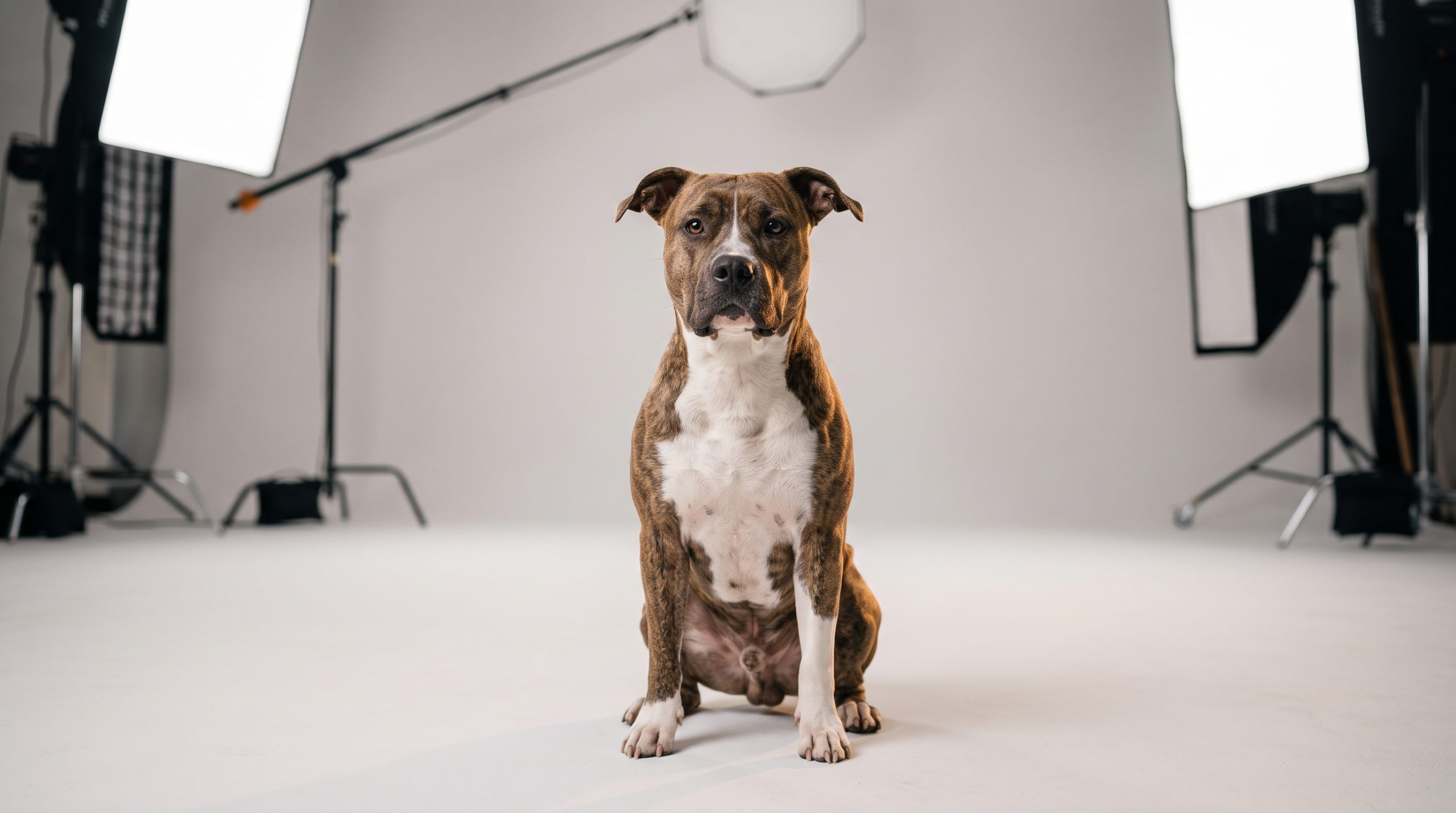
The American Staffordshire Terrier (AmStaff) is a strong, muscular, people-loving dog of about 18 to 32 kg that lives 12 to 16 years. It is not a restricted breed in Australia, but it is often mistaken for one. It needs an hour of exercise a day, firm, positive training and careful management around other dogs.
Our low-cost scenario assumes routine care over a long life of around 13 years. The standard scenario adds the kind of treatment many AmStaffs need, such as ongoing allergy management or treatment for a joint problem. The high-cost scenario allows for major events like cruciate ligament surgery or treatment for serious illness. Budget about $700 to $1,600 a year for vet costs and set aside about $1,600 a year for unexpected bills.
// IS THIS BREED RIGHT FOR YOU?
ThinkPets ratings are our editorial judgement from the breed's size, energy, trainability, temperament and care needs. They are not measured outcomes or probabilities. How we rate
Apartment Living
Fair
Families w/ Kids
Excellent
First-Time Owners
Good
Active Lifestyle
Excellent
Interactive Suitability Assessment
Answer these questions to calculate your personal compatibility score with American Staffordshire Terriers.
How much time can you dedicate to exercise daily?
What size is your yard/living space?
Hours the dog will be alone daily?
Your Compatibility
—%
Select options to calculate your compatibility.
// BREED FACTS
Grooming
Coat Type
Short, close and stiff
Shedding Level
Moderate
Home Brushing
Brush weekly
Professional Grooming
Every 12 weeks
~$60 per session
Exercise
Energy Level
High
Daily Requirement
60+ minutes
Activity Type
Running, fetch, sports
Mental Stimulation
Moderate
Diet
Daily Intake
2.5 to 3.5 cups
Split into 2 meals
Obesity Risk
Moderate
Monthly Food Cost
$65 - $115
Premium dry food
Special Considerations
Standard diet
// 01 Breed Profile
The American Staffordshire Terrier, usually called the AmStaff, is a medium-to-large, muscular terrier with a broad head and short coat. Males stand about 46 to 48 cm at the shoulder and females about 43 to 46 cm, and most adults weigh between 18 and 32 kg. It is a recognised breed with Dogs Australia, separate from the smaller Staffordshire Bull Terrier.
AmStaffs are affectionate and very attached to their people. They are energetic, strong and often exuberant, so they need daily exercise, training from an early age and an owner who can handle a powerful dog on lead. Breed clubs describe them as strong-willed but sensitive: they respond far better to reward-based training than to harsh handling.
The main behaviour issue to plan for is other dogs. Even well-socialised AmStaffs can become intolerant of other dogs as they mature, so early, careful socialisation and supervised play are important, and many do best as the only dog in the home.
The AmStaff is not a restricted breed anywhere in Australia. It is, however, often confused with the American Pit Bull Terrier, which is restricted. If you own an AmStaff, keep its pedigree papers and council registration handy for rentals, insurance forms and council enquiries.
The breed is generally robust. The conditions breeders should screen for are hip dysplasia and cerebellar ataxia (NCL-A), a fatal inherited nerve disease that a DNA test can rule out. Heart checks, eye checks and a test for hyperuricosuria are also available. Skin allergies are common and can need lifelong management.
// 02 Health Considerations
Two inherited conditions matter most when choosing a puppy. Cerebellar ataxia (NCL-A) is a fatal nerve disease that causes worsening wobbliness and loss of coordination, usually from early adulthood; a DNA test of the parents can rule it out. Hip dysplasia causes painful arthritis and is screened by X-ray. Breed clubs also recommend heart and eye checks, and a DNA test for hyperuricosuria, which can lead to bladder stones. Skin allergies are the most common day-to-day problem: watch for licking, scratching and ear infections, and see your vet early.
// 03 Care Requirements
Day to day, an AmStaff needs exercise, training and company more than grooming. Give it an hour of activity, a weekly brush, and regular checks of skin and ears for signs of allergy. Keep up socialisation throughout life, and supervise any play with other dogs. Book an annual vet check, and twice-yearly checks once your dog is around eight.
// 04 FAQs
No. The AmStaff is not restricted anywhere in Australia. The restricted breeds are the American Pit Bull Terrier, Dogo Argentino, Japanese Tosa, Fila Brasileiro and Perro de Presa Canario. Because AmStaffs look similar to Pit Bulls, keep your dog's pedigree papers and council registration handy in case you are asked.
In Victoria, an authorised council officer can declare a dog a restricted breed if they believe it is a Pit Bull type. Proof that the dog is an AmStaff under the approved breed standard, such as Dogs Australia pedigree papers, means it is not a restricted breed dog. You can also ask VCAT to review a declaration within 14 days.
Most AmStaffs live 12 to 16 years. Keeping your dog lean, managing skin allergies early and buying from parents tested for hip dysplasia and cerebellar ataxia give it the best chance of a long life.
They are separate breeds. The Staffordshire Bull Terrier is smaller, usually 11 to 17 kg, while the AmStaff is taller and heavier, usually 18 to 32 kg. Both are affectionate, people-focused dogs, and neither is a restricted breed in Australia.
At a minimum, ask for hip X-ray results and a DNA test for cerebellar ataxia (NCL-A) on both parents. Breed clubs also recommend heart and eye checks, and a DNA test for hyperuricosuria. A good breeder will show you the results without being asked twice.
Breed clubs describe AmStaffs as good with children, and most are affectionate and tolerant with their own family. They are strong and boisterous, though, so supervise young children closely and teach both dog and child good manners.
Not always. Even well-socialised AmStaffs can become intolerant of other dogs as they mature. Start careful socialisation early, supervise play, and be prepared for your dog to do best as the only dog in the home.
About an hour a day of walks, play and training. They are strong pullers, so lead training and a well-fitted harness make a big difference. In summer, exercise early or late in the day.
Our cost model puts the lifetime cost at about $32,700 in a low-cost scenario and $42,500 in our standard scenario, over a life of about 13 years. Ongoing allergy treatment and joint surgery are the costs most likely to push this higher. Use the calculator on this page to add your own puppy price.
Yes, moderately, all year round. They are not hypoallergenic. A weekly brush with a rubber mitt keeps loose hair under control.