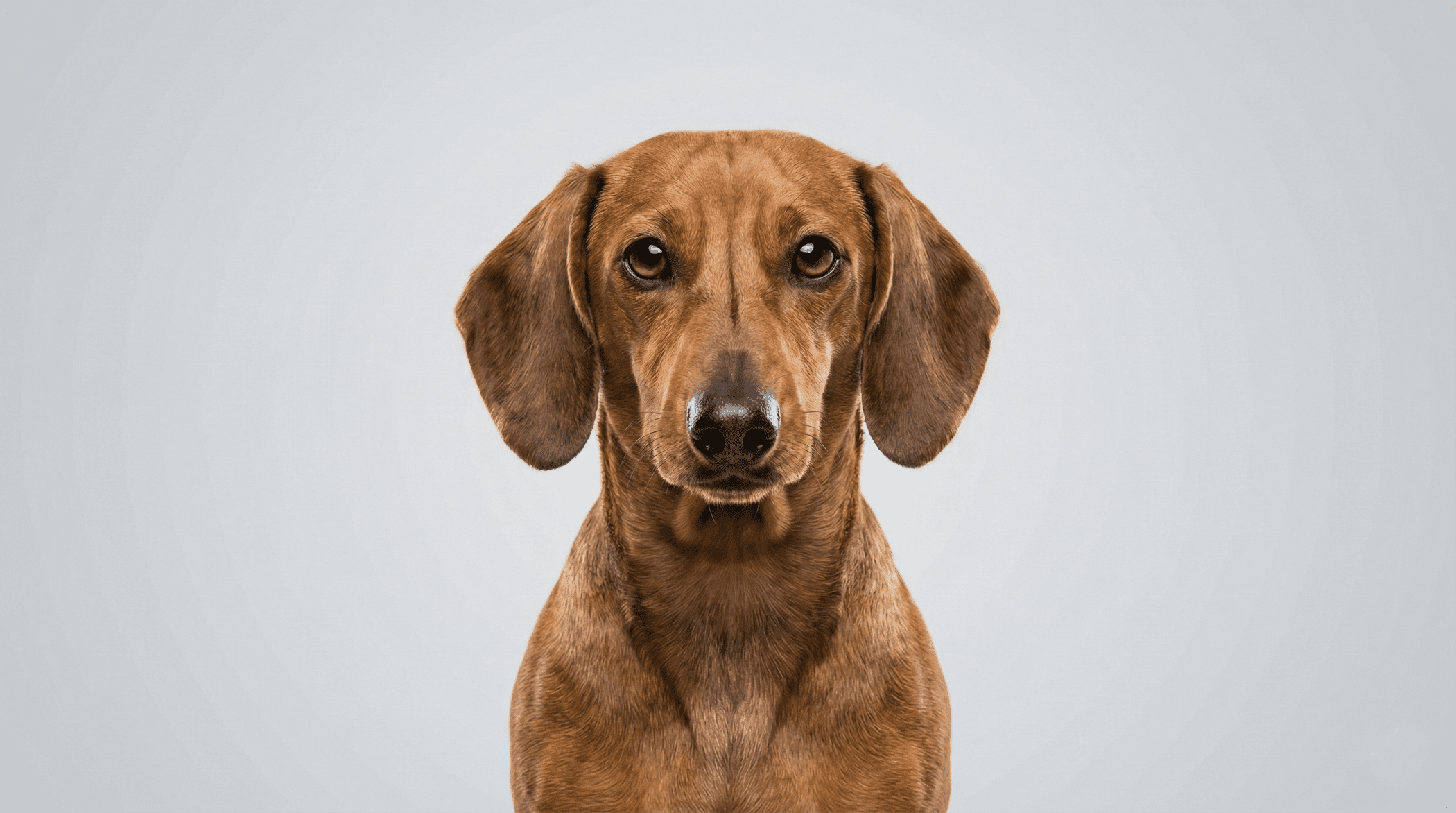
The total lifecycle cost of a Standard Dachshund varies based on medical needs. The Baseline scenario assumes minimal vet intervention, likely costing standard annual veterinary expenses. The Extended scenario accounts for chronic conditions such as Intervertebral Disc Disease (IVDD) and Progressive Retinal Atrophy (PRA), requiring additional financial planning for potential long-term care.
// IS THIS BREED RIGHT FOR YOU?
ThinkPets ratings are our editorial judgement from the breed's size, energy, trainability, temperament and care needs. They are not measured outcomes or probabilities. How we rate
Apartment Living
Excellent
Families w/ Kids
Excellent
First-Time Owners
Good
Active Lifestyle
Good
Interactive Suitability Assessment
Answer these questions to calculate your personal compatibility score with Dachshund (Standard)s.
How much time can you dedicate to exercise daily?
What size is your yard/living space?
Hours the dog will be alone daily?
Your Compatibility
—%
Select options to calculate your compatibility.
// BREED FACTS
Grooming
Coat Type
Smooth, Longhaired, or Wirehaired
Shedding Level
Moderate
Home Brushing
Weekly
Professional Grooming
Every 8 weeks
~$77 per session
Exercise
Energy Level
Moderate-High
Daily Requirement
60+ minutes
Activity Type
Walks, play sessions
Mental Stimulation
Moderate
Diet
Daily Intake
1.5 to 2.5 cups
Split into 2 meals
Obesity Risk
High
Monthly Food Cost
$51 - $101
Premium dry food
Special Considerations
Monitor treats strictly
A badger dog, and the spine that comes with the job
The Dachshund was developed in Germany to follow badger and fox into their setts — the name means “badger dog”. The long body and short legs let it work in a tunnel; the loud voice let a handler locate it underground; the famous stubbornness was a working requirement, because a dog that gives up when a badger objects is no use at all.
All of that is still present. The Standard Dachshund is a 7 to 14 kilogram scent hound with a moderate-to-high energy rating, a real prey drive and an independent streak that the trainability score of 3 reflects honestly. It is devoted, funny and brave well beyond its size. It is not, and never was, an ornament.
Intervertebral disc disease — the one thing that matters most
The Dachshund is the breed most strongly associated with intervertebral disc disease in all of veterinary medicine. Its chondrodystrophic build means the discs between the vertebrae degenerate and calcify early, and a degenerated disc can herniate into the spinal canal, causing pain, hind-limb weakness and, in severe cases, paralysis.
This is not a rare complication. It is the expected risk of the breed, and how you manage the dog materially changes the odds. Build these into the household from day one:
No jumping down. Off the lounge, off the bed, out of the car. Ramps and pet steps are spinal protection for this breed, not indulgence — and a Dachshund will learn to use them readily if introduced as a puppy.
Support both ends when lifting. One hand under the chest, one under the hindquarters, keeping the back level. Never lift a Dachshund by the front end and let the rear hang.
Keep the dog lean. This is the highest-value thing you control, and Dachshunds gain weight very easily — hound appetite, short legs, moderate exercise. Every extra kilogram is load on discs that are already compromised by design. You should be able to feel the ribs easily under a thin layer.
Harness, not collar. Lead pressure on the neck is the wrong force for this spine.
Limit stairs and repetitive jumping. Steady walking is excellent; twisting, launching and hard landings are not.
Know the warning signs and act on them the same day: sudden reluctance to move, a hunched or arched back, trembling, yelping when picked up, dragging a back foot, or wobbliness in the hindquarters. Spinal cases treated early have a much better prognosis, and the sentence that changes outcomes is “we watched it over the weekend”.
The rest of the health picture
Progressive retinal atrophy occurs in the breed and is DNA-testable — ask a breeder for both parents’ results. Hip dysplasia is screened radiographically.
One point specific to coat type: the double dapple pattern, produced by breeding two dapple (merle) dogs together, is associated with serious eye defects and deafness. Reputable breeders do not make that pairing. If you are offered a strikingly patterned puppy with a lot of white and blue eyes, ask directly whether both parents were dapple, and treat the answer as informative.
Obesity deserves listing as a health issue in its own right for this breed, because it is both extremely common and the direct multiplier on every spinal risk above.
Exercise, the nose, and the noise
An hour of daily activity keeps a Dachshund fit, and it should be steady rather than explosive. Long lead walks suit the structure far better than ball-chasing and hard turns.
The nose and the digging instinct are real. Scent games in the backyard are the single most satisfying enrichment you can give this breed and cost nothing; a designated digging area saves the garden. Recall is unreliable once a scent takes over — that is not disobedience, it is the job it was bred for — so off-lead freedom needs genuinely secure ground.
Dachshunds are also loud. The voice was selected deliberately so a handler could hear the dog underground, and it has not diminished. Early work on a settle cue is much easier than retraining an established barker, and it matters in a townhouse or apartment.
Coat and Australian conditions
Three coat types exist: smooth, longhaired and wirehaired. Smooths need a weekly rubber curry; longhairs need brushing several times a week with attention to ear and leg feathering; wirehairs need combing and periodic hand-stripping to keep the harsh texture. All shed moderately.
In summer, a low-slung dog walks with its chest and belly close to hot ground, which radiates heat back at it. Walk early or late, test the pavement with the back of your hand, and provide shade and water. Grass seeds are a seasonal hazard for a low, feathered dog — check between the toes and inside the ear leathers after walks in dry paddock country.
Ownership in Australia
In Victoria, microchipping and council registration are required from three months of age under the Domestic Animals Act 1994, renewing annually on 10 April. Desexed registration across the Victorian councils in our fee survey ranged from about $19.50 to $93.30 a year.
The honest financial picture for this breed: routine costs are modest, but spinal surgery is not, and it is a realistic possibility rather than a remote one. Ramps, a harness and disciplined feeding are free or close to it. They are also the difference between an easy sixteen years and a difficult one.
The Standard Dachshund, originating from Germany, falls under the Hounds group and is classified as a purebred dog. With an average lifespan of 12 to 16 years, this breed exhibits a moderate to high energy level necessitating 60 minutes of daily exercise. Weighing between 7 to 14 kg, it is considered a medium-sized dog. The Dachshund are very good with children but moderate compatibility with other pets and moderate susceptibility to separation anxiety. Coat types vary as smooth, longhaired, or wirehaired, requiring weekly maintenance and exhibiting moderate shedding. Known for a temperament characterised by curiosity, liveliness, stubbornness, bravery, and devotion, the breed has a trainability score of 3. Key health considerations include Intervertebral Disc Disease (IVDD), obesity, hip dysplasia, and Progressive Retinal Atrophy (PRA). Financially, the first-year puppy cost is estimated at $3800 with annual veterinary costs around $1332. Behaviorally, the breed is ranked 49th in intelligence and holds the 9th position in Australian popularity.
// 02 Health Considerations
The Dachshund's health complexity necessitates diligent health monitoring. Conditions such as Intervertebral Disc Disease (IVDD), hip dysplasia, and Progressive Retinal Atrophy (PRA) should be regularly evaluated. Annual veterinary checkups are imperative, along with routine dental care and weight management.
// 03 Care Requirements
Standard Dachshunds need 60 minutes of daily exercise to manage their energy levels. Weekly grooming is required across all coat types—smooth, longhaired, or wirehaired. Regular checks for common health issues, such as Intervertebral Disc Disease (IVDD) and obesity, are vital. Balanced diets and portion control help mitigate obesity risk.
// 04 FAQs
The average lifespan of a Standard Dachshund is 12 to 16 years. Regular veterinary checkups and a balanced diet can help maximise their longevity.
Yes, Standard Dachshunds are very good with children. Their curious and lively nature can make them engaging companions for children.
Standard Dachshunds require 60 minutes of daily exercise. This helps manage their moderate to high energy levels and reduces obesity risk.
Common health issues include Intervertebral Disc Disease (IVDD), obesity, hip dysplasia, and Progressive Retinal Atrophy (PRA). Regular vet checkups are crucial.
Standard Dachshunds exhibit moderate shedding levels. Routine coat maintenance protocols, including weekly grooming, can help manage shedding.
No, Standard Dachshunds are not hypoallergenic. They can affect individuals with dog allergies due to their shedding and dander.
Standard Dachshunds have a trainability score of 3, indicating moderate trainability. Consistent, patient training methods yield the best results.
Standard Dachshunds require weekly grooming. This routine helps manage their coat maintenance needs and reduces shedding.
The estimated first-year cost for a Standard Dachshund puppy is $3800. This covers initial vaccinations, desexing, microchipping, and basic supplies.
Standard Dachshunds have a moderate susceptibility to separation anxiety. They fare better with mental stimulation and not being left alone for extended periods.