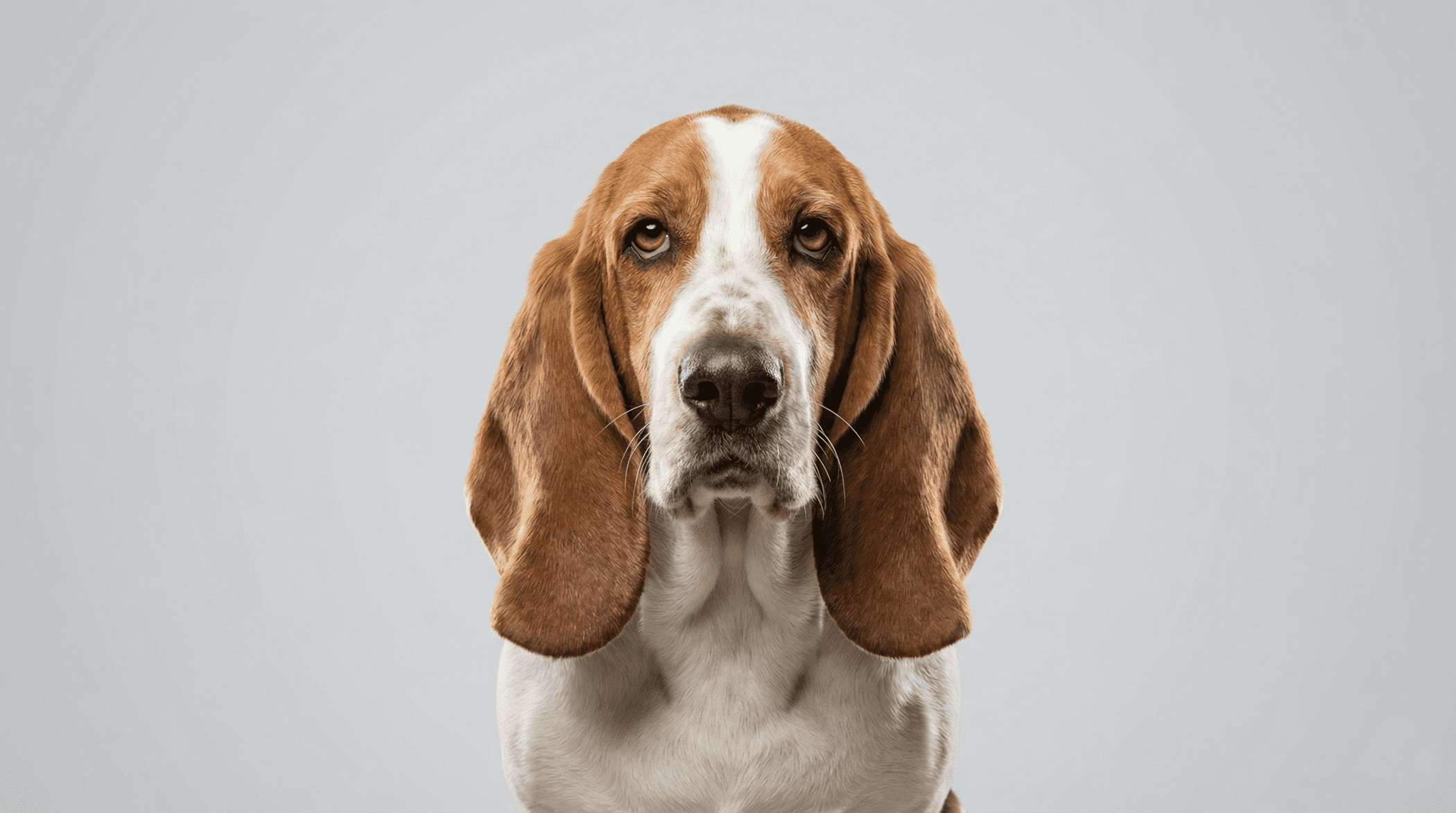
The baseline lifecycle cost for a Basset Hound includes an estimated first-year puppy cost of $3000 and annual veterinary costs of $1602. The baseline scenario assumes minimal medical intervention. An extended scenario, accounting for chronic conditions such as hip dysplasia and IVDD, necessitates a contingency fund of $1440 for unexpected expenses.
// IS THIS BREED RIGHT FOR YOU?
ThinkPets ratings are our editorial judgement from the breed's size, energy, trainability, temperament and care needs. They are not measured outcomes or probabilities. How we rate
Apartment Living
Good
Families w/ Kids
Excellent
First-Time Owners
Good
Active Lifestyle
Fair
Interactive Suitability Assessment
Answer these questions to calculate your personal compatibility score with Basset Hounds.
How much time can you dedicate to exercise daily?
What size is your yard/living space?
Hours the dog will be alone daily?
Your Compatibility
—%
Select options to calculate your compatibility.
// BREED FACTS
Grooming
Coat Type
Short, smooth
Shedding Level
Moderate
Home Brushing
Weekly brushing
Professional Grooming
Every 8 weeks
~$95 per session
Exercise
Energy Level
Moderate
Daily Requirement
60+ minutes
Activity Type
Walks, play sessions
Mental Stimulation
Moderate
Diet
Daily Intake
2.5 to 3.5 cups
Split into 2 meals
Obesity Risk
High
Monthly Food Cost
$74 - $124
Premium dry food
Special Considerations
Monitor treats strictly
A heavy dog on short legs — and why that shapes everything
The Basset Hound is a French scent hound built deliberately to a chondrodystrophic pattern: normal-length body and substantial bone mass carried on shortened legs. At 20 to 29 kilograms it is far heavier than its height suggests — people are routinely surprised trying to lift one. Almost every practical consideration in owning a Basset follows from that single structural fact.
Temperamentally it is gentle, affectionate and famously tolerant, which is why the breed has such a reputation with families. It is also stubborn in a way that is genuinely characteristic rather than a training deficiency. With a trainability score of 3 and an intelligence ranking in the seventies, the Basset is not slow — it is a scent hound bred to follow a trail independently for hours without instruction, and it simply weighs your request against what its nose is telling it. Reward-based, patient, short sessions work. Repetition and frustration do not.
The spine: the condition that defines this breed
Intervertebral disc disease is the single most important thing to understand about a Basset. In chondrodystrophic breeds the discs between the vertebrae degenerate early and can herniate into the spinal canal, causing pain, weakness in the hind limbs and, in severe cases, paralysis.
The practical consequences are specific and worth building into the household from day one:
No jumping down. Off the lounge, off the bed, out of the car boot. A ramp or a set of pet steps is not indulgent for this breed — it is spinal protection. Lifting a Basset out of a car is safer than letting it land.
Support the back when carrying. One arm under the chest and one under the hindquarters, always. Never lift a Basset by the front end alone.
Keep the dog lean. This is the highest-value thing an owner controls. Every extra kilogram is load on discs that are already compromised by design, and Bassets gain weight easily on a moderate energy level and a hound’s enthusiasm for food.
Harness, not collar. A harness distributes lead pressure across the chest instead of the neck.
Sudden reluctance to move, a hunched posture, yelping when picked up, or wobbliness and dragging in the hind legs are all urgent. Spinal cases have a much better prognosis treated early, and “we watched it for a few days” is the sentence that changes outcomes.
Ears, eyes and the rest
Ears
Those ears are the longest in dogdom and they seal the canal completely, creating a warm, humid, airless environment — effectively an incubator. Chronic otitis externa is the most common ongoing complaint in the breed. Check and clean weekly with a veterinary ear cleaner, dry thoroughly after any swim or bath, and lift the leathers to let air in on hot days. Recurrent infection despite good routine usually means an underlying allergy, which is worth investigating properly rather than treating on repeat.
The ears also drag through food and water. Many owners use a tall narrow bowl or a snood at mealtimes; both are reasonable.
Eyes
The loose facial skin that gives the Basset its expression also produces droopy lower lids and visible haw. That exposes the eye to dust and grass seed and predisposes to conjunctivitis. Wipe the folds, and treat any squinting, discharge or a red painful eye as a veterinary matter rather than a cosmetic one — glaucoma occurs in the breed and is sight-threatening.
Bloat
As a deep-chested dog the Basset is at risk of gastric dilatation-volvulus. A distended, hard abdomen with repeated unproductive retching and rapid decline is a surgical emergency measured in hours. Know your nearest after-hours clinic before you need it.
Skin folds
The wrinkles around the face and neck trap moisture and debris. Wipe and dry them as part of the weekly routine; fold dermatitis is easy to prevent and tedious to treat.
Exercise, the nose, and Australian conditions
An hour of daily activity keeps a Basset in condition, and it should be steady rather than explosive — long lead walks suit the structure far better than jumping, twisting or repetitive stair work.
Do not underestimate the nose. This is one of the finest scenting breeds in the world, and a Basset on a trail is functionally deaf to recall. Off-lead freedom needs to be in a genuinely secure area, and fencing must be checked properly — a Basset will not jump out, but it will patiently work under. Scent games in the backyard are the single most satisfying enrichment you can offer this breed and cost nothing.
In Australian summers the short coat is misleading. A low-slung dog is close to hot ground, radiating heat back at its chest and belly, and the breed carries real mass to cool. Walk early or late, test the pavement with the back of your hand, and provide shade and water.
Ownership in Australia
In Victoria, microchipping and council registration are required from three months of age under the Domestic Animals Act 1994, renewing annually on 10 April. Desexed registration across the Victorian councils in our fee survey ranged from about $19.50 to $93.30 a year.
One budgeting note specific to the breed: the recurring costs here are ear care and weight management, and the expensive risk is spinal surgery. Ramps, a harness, disciplined feeding and weekly ear checks are cheap. They are also, collectively, the difference between an easy Basset and a difficult one.
The Basset Hound is a medium-sized breed hailing from France, classified under the Hounds group. Known for their gentle, affectionate, and tenacious temperament, they are very good with children and sociable with other pets. Their health complexity score is 1.8, denoting relatively low maintenance. The breed has a lifespan of 10 to 12 years and an average weight range of 20 to 29 kg. Coat maintenance involves weekly brushing due to a short and smooth coat. Despite moderate shedding, they are not hypoallergenic. Basset Hounds exhibit moderate trainability (score: 3) and require approximately 60 minutes of daily exercise. However, their high obesity risk necessitates vigilant dietary management. Common health issues include hip dysplasia, ear infections, intervertebral disc disease (IVDD), bloat, and obesity. Veterinary costs are estimated at $1602 annually. The initial puppy cost is around $3000, and a contingency fund of $1440 is advisable for unexpected medical expenses.
// 02 Health Considerations
Basset Hounds have specific hereditary conditions, including hip dysplasia, ear infections, IVDD, and bloat. Regular veterinary checkups, typically bi-annually, are essential for early detection and managing these conditions. Weight control and a balanced diet further aid in overall health maintenance.
// 03 Care Requirements
Daily care for Basset Hounds includes 60 minutes of exercise, such as walks and supervised play. Coat maintenance involves weekly brushing due to their short, smooth coat. Monitor diet closely to mitigate their high obesity risk. Regular veterinary checkups are crucial for early detection of common health issues.
// 04 FAQs
Basset Hounds commonly face hip dysplasia, ear infections, intervertebral disc disease (IVDD), bloat, and obesity. Regular veterinary checkups can help in early diagnosis and management of these conditions.
Basset Hounds require approximately 60 minutes of exercise daily. This can include walks and supervised play. Regular activity is crucial to managing their moderate energy levels and reducing obesity risk.
Yes, Basset Hounds are very good with children and are generally good with other pets. Their gentle and low-reactivity nature makes them suitable for multi-pet households and families.
Basset Hounds typically have an average lifespan of 10 to 12 years. Their longevity can be influenced by regular health monitoring and management of hereditary conditions.
No, Basset Hounds are not hypoallergenic. They have a short, smooth coat and moderate shedding, which can trigger allergies in susceptible individuals.
Basset Hounds require weekly brushing to manage their short, smooth coat. Regular grooming routines help in reducing shedding and maintaining skin health.
The average weight range for a Basset Hound is between 20 to 29 kg. Monitoring their weight is essential due to their high obesity risk, typically managed through regular exercise and diet control.
The estimated annual veterinary cost for a Basset Hound is $1602. This amount covers standard medical interventions and does not include emergency or chronic conditions.
Basset Hounds exhibit moderate separation anxiety. They benefit from gradual training to stay alone for short periods, and providing adequate mental and physical stimulation reduces anxiety levels.
A balanced diet for a Basset Hound should include high-quality protein, controlled fat intake, and essential nutrients to maintain optimal health and weight. Due to their high obesity risk, portion control is critical.